Crypto Gambling License in Estonia (2026): Cost & Setup License Estonia: Complete 2026 Guide
Estonia has long been a frontrunner in digital innovation, and its approach to crypto licensing is no exception. For founders looking to combine cryptocurrency services with gambling operations, the crypto gambling license Estonia offers a regulated path under the Financial Intelligence Unit (FIU). This page covers everything you need to know: the license type, capital requirements, tax treatment, timeline, and step-by-step process. Whether you are launching a crypto casino, a sports betting platform, or a tokenized gaming site, Estonia provides a clear legal framework.
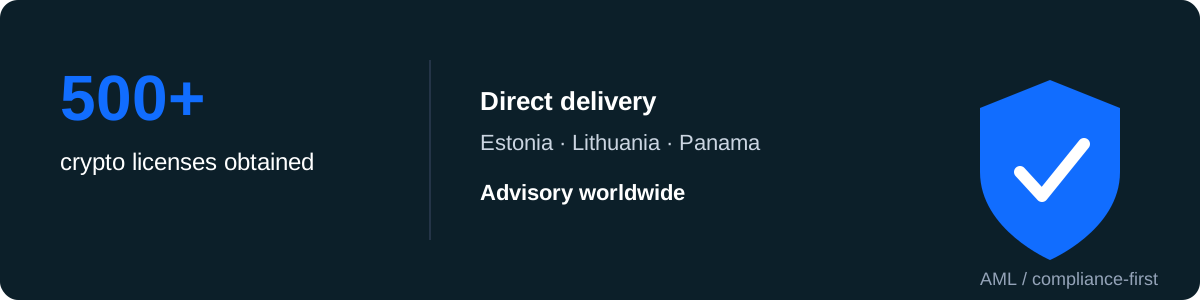
Consulting24 advises and coordinates crypto licensing in Estonia, Lithuania, and Panama. For other jurisdictions, we help you choose the right route and set up where we operate. Our team has secured over 500 licenses globally, giving you confidence in the process. Read on for a detailed breakdown of the Estonia crypto license for gambling activities.
What Is a Crypto Gambling License in Estonia?
A crypto gambling license in Estonia is not a single license but a combination of two regulatory approvals: a crypto license (virtual currency service provider license) from the Financial Intelligence Unit (FIU) and a gambling license from the Estonian Tax and Customs Board (EMTA). The crypto license allows you to offer services like exchanging virtual currencies, transferring tokens, and operating a wallet. The gambling license permits you to organize games of chance, betting, or lottery services. Together, they enable a fully regulated crypto gambling business.
The FIU regulates virtual currency service providers under the Money Laundering and Terrorist Financing Prevention Act. Since 2020, the FIU has tightened requirements, including a minimum capital of EUR 12,000 for the crypto license and mandatory AML compliance. The gambling license has its own capital and operational rules. As of 2026, both licenses are fully operational and subject to ongoing supervision.
Who Needs This License?
This license is essential for any business that combines cryptocurrency with gambling. Typical applicants include:
- Online casinos accepting Bitcoin, Ethereum, or stablecoins
- Sports betting platforms that use crypto for deposits and withdrawals
- Tokenized gaming sites where players earn or wager tokens
- White-label gambling operators using crypto infrastructure
- Startups offering crypto-based lottery or prediction markets
If your business involves both virtual currencies and games of chance, you need both licenses. Operating without them can lead to fines, license revocation, or criminal charges. Estonia is a respected EU jurisdiction, so compliance is taken seriously.
License Type and Regulator
The crypto component is a virtual currency service provider license issued by the Financial Intelligence Unit (FIU) of Estonia. The gambling component is a gambling license issued by the Estonian Tax and Customs Board (EMTA). Both regulators work together to ensure that crypto gambling operators meet AML, KYC, and consumer protection standards.
The FIU license covers activities such as exchanging virtual currency against fiat or other virtual currencies, transferring virtual currencies, and providing virtual currency wallet services. The EMTA gambling license covers organizing games of chance, betting, and lottery. For crypto gambling, you typically need both. The FIU license is valid for an indefinite period but requires annual reporting. The gambling license is usually issued for 5 years and renewable.
Cost and Timeline
The total cost for a crypto gambling license in Estonia includes state fees, capital requirements, and professional service fees. Below is a typical breakdown. Exact pricing is confirmed in a consultation.
| Item | Cost (EUR) | Notes |
|---|---|---|
| FIU license state fee | 3,000 - 5,000 | One-time, non-refundable |
| Gambling license state fee | 10,000 - 20,000 | Depends on type of gambling |
| Minimum capital (FIU) | 12,000 | Must be paid up and held |
| Minimum capital (gambling) | 50,000 - 100,000 | Varies by activity |
| Legal and compliance setup | 5,000 - 15,000 | AML policies, board, etc. |
| Consulting24 coordination fee | From 6,000 | Flat for Panama; Estonia quoted individually |
The timeline from application to approval is typically 3 to 6 months for the crypto license and another 2 to 4 months for the gambling license, assuming all documents are in order. Total time: 5 to 10 months.
Capital Requirement
The minimum capital for the crypto license is EUR 12,000 paid up. For the gambling license, the minimum capital ranges from EUR 50,000 to EUR 100,000 depending on the type of gambling (e.g., online casino vs. betting). This capital must be deposited in an Estonian bank account or a recognized credit institution. The funds must be fully paid before the license is granted. The capital serves as a buffer for operational risks and ensures the business can cover potential liabilities.
Note that if you also offer other crypto services (like exchange or wallet), additional capital may be required under MiCA if you hold client assets. As of 2026, MiCA is fully in force in the EU, and Estonia applies capital tiers of EUR 50,000 / 125,000 / 150,000 by service class. However, for pure gambling activities, the above figures apply.
Tax Treatment
Estonia has a unique corporate tax system: 0% tax on retained and reinvested profits. Corporate income tax is only payable on distributed profits (dividends) at a rate of 20% (or 14% on regular dividends). This makes Estonia highly attractive for crypto gambling businesses that plan to reinvest earnings. Gambling operators also pay a gambling tax on gross gaming revenue (GGR): typically 5% for betting and 6% for games of chance. VAT does not apply to gambling services.
For crypto transactions, Estonia does not levy VAT on virtual currency exchanges. However, income from crypto activities is subject to corporate income tax when distributed. Personal income tax on crypto gains is 20%. Overall, the tax burden is low compared to other EU jurisdictions.
Allowed Activities
With a crypto gambling license in Estonia, you can:
- Accept cryptocurrencies (BTC, ETH, stablecoins) as payment for gambling
- Exchange virtual currencies for fiat or other crypto within the platform
- Operate a crypto wallet for players
- Offer online casino games, slots, table games
- Provide sports betting, live betting, and virtual sports
- Conduct crypto lottery or tokenized gaming
- Transfer virtual currencies between players or to external wallets
You cannot operate without a license, nor can you offer unregulated gambling products. All games must be fair and certified. The FIU and EMTA will audit your AML and KYC procedures regularly.
Step-by-Step Process
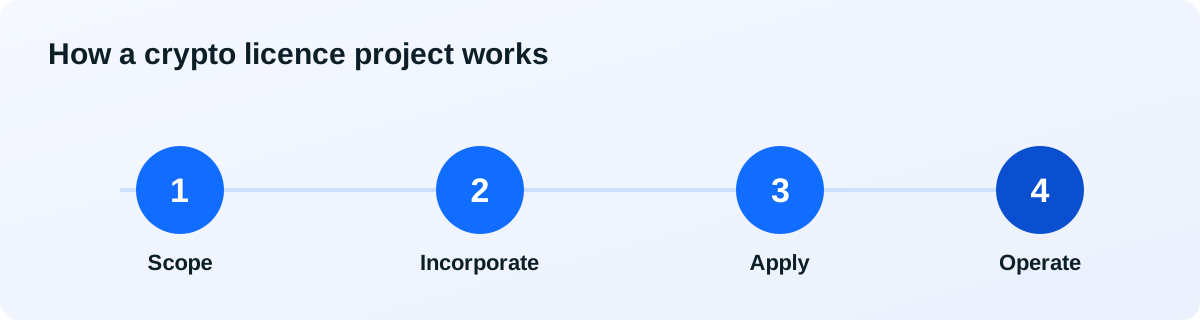
Obtaining a crypto gambling license in Estonia involves several stages. Consulting24 advises and coordinates each step.
- Company incorporation: Register an Estonian private limited company (OÜ) with a minimum share capital of EUR 2,500. The company must have a physical address in Estonia (virtual office accepted).
- AML compliance setup: Draft AML/KYC policies, appoint a money laundering reporting officer (MLRO), and implement internal controls. This is critical for the FIU application.
- FIU license application: Submit the crypto license application with business plan, financial projections, AML documentation, and proof of capital. The FIU reviews within 30 days but may take longer.
- Gambling license application: Apply to EMTA with separate documentation, including game rules, responsible gambling policies, and technical system description. EMTA conducts a thorough review.
- Bank account opening: Open a business bank account in Estonia or an EU bank. Crypto-friendly banks are limited but available.
- License approval and launch: Once both licenses are granted, you can start operations. Ongoing compliance includes annual reporting and AML audits.
Consulting24 can handle the entire process, from company setup to license submission. For a fixed fee of EUR 6,000, we offer a Panama crypto license, but for Estonia we provide tailored advice and coordination.
Banking and Payments
Opening a bank account for a crypto gambling business in Estonia can be challenging. Traditional banks are often reluctant to serve high-risk sectors. However, several EU-based payment institutions and fintechs offer accounts for crypto companies. Options include LHV Bank (Estonia), which is crypto-friendly, and other EMIs like Paysera or MisterTango. You may also use a Lithuanian payment institution for EUR IBAN accounts.
For gambling, you need a merchant account to process payments. Some providers specialize in crypto gambling, such as Coinbase Commerce, BitPay, or CoinsPaid. Estonia's regulatory framework allows crypto-to-fiat conversion through licensed exchanges. Consulting24 can introduce you to banking partners that accept crypto gambling operators.
Benefits of Estonia for Crypto Gambling
Estonia offers several advantages for crypto gambling businesses:
- EU membership: A license allows you to operate across the EU under passporting rules (for services not covered by MiCA).
- Low corporate tax: 0% on retained profits, ideal for reinvestment.
- E-residency: Easy company management from anywhere in the world.
- Digital infrastructure: Advanced e-governance, fast company registration.
- Reputation: Estonia is a trusted jurisdiction with a clear regulatory framework.
- No VAT on crypto: Reduces operational costs.
Compared to other jurisdictions, Estonia strikes a balance between regulation and innovation. It is not as expensive as Malta or Switzerland but offers more credibility than some offshore centers.
Compliance and Trust
Compliance is non-negotiable for crypto gambling in Estonia. The FIU and EMTA require strong AML/KYC procedures, transaction monitoring, and suspicious activity reporting. You must appoint a board member who is an Estonian resident or a qualified professional. Annual audits are mandatory. Failure to comply can result in fines up to EUR 5 million or license revocation.
Consulting24 helps you build a compliant framework. We provide templates for AML policies, risk assessments, and internal controls. Our team includes former regulators and compliance officers. Note: This is general guidance, not legal advice. Always consult with a qualified lawyer for your specific case.
Common Mistakes
Founders often make these errors when applying for a crypto gambling license in Estonia:
- Incomplete AML documentation: The FIU rejects applications that lack detailed AML policies. Ensure your documents cover all required areas.
- Underestimating capital: The minimum capital is just the start. You need sufficient working capital for operations.
- Ignoring gambling license requirements: The crypto license alone does not permit gambling. You must apply separately to EMTA.
- Poor bank account setup: Waiting until after license approval can delay launch. Start banking early.
- Not using a local agent: The FIU expects a local contact. Consulting24 can act as your local representative.
Avoid these pitfalls by working with an experienced advisor like Consulting24.
Alternatives and Comparison
If Estonia does not suit your needs, consider these alternatives:
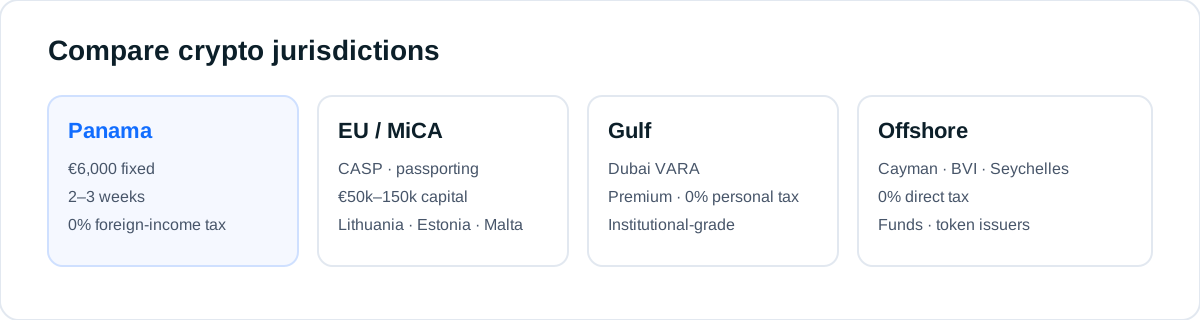
- Panama: A flat fee of EUR 6,000 for a crypto license. No minimum capital, but no gambling license separate. You would need a Panama gambling license as well. Panama is not an EU member, so passporting is not available.
- Lithuania: Offers a crypto license under the Bank of Lithuania. Minimum capital EUR 2,500 (for CASP) but higher for gambling. Lithuania has a faster process (1-3 months) but higher ongoing costs. See our comparison page.
- Malta: Malta has a comprehensive framework for crypto and gambling. However, costs are higher (EUR 10,000+ for license fees) and capital requirements are steeper (EUR 100,000+). Malta is EU but with a different regulatory style.
Each jurisdiction has pros and cons. Consulting24 can help you choose the best fit. For Estonia, we advise and coordinate; for Panama and Lithuania, we deliver directly.
Frequently asked questions
Do I need both a crypto license and a gambling license in Estonia?
Yes. The crypto license (from the FIU) allows you to handle virtual currencies, and the gambling license (from EMTA) allows you to offer games of chance. Both are required for a crypto gambling business.
How long does it take to get a crypto gambling license in Estonia?
Typically 5 to 10 months total. The crypto license takes 3-6 months, and the gambling license takes an additional 2-4 months, depending on application completeness and regulator workload.
What is the minimum capital for a crypto gambling license in Estonia?
For the crypto license, EUR 12,000. For the gambling license, EUR 50,000 to EUR 100,000 depending on the type of gambling. Both must be paid up before license issuance.
Can I use a virtual office address for the license?
Yes, a virtual office in Estonia is accepted for company registration and license applications. However, you must have a physical address for AML purposes, which a virtual office provider can supply.
Is Estonia's corporate tax really 0% on retained profits?
Yes. Estonia does not tax retained and reinvested profits. Corporate income tax is only paid on distributed profits (dividends) at 20% (or 14% on regular dividends). Gambling tax applies separately on GGR.
Can I passport my Estonian license to other EU countries?
For crypto services under MiCA, passporting is available. For gambling services, passporting is limited as gambling is not harmonized across the EU. You may need separate licenses in each target market.
What are the ongoing compliance obligations?
Annual AML audits, suspicious activity reporting, transaction monitoring, and renewal of the gambling license every 5 years. The FIU also requires annual reporting on virtual currency activities.
Can Consulting24 help with the application?
Yes, Consulting24 advises and coordinates the entire process for Estonia. We handle document preparation, liaise with regulators, and ensure compliance. For Panama and Lithuania, we deliver directly.
Are there any restrictions on who can apply?
Applicants must be at least 18 years old, with no criminal record related to money laundering or financial crimes. The company must have a board member who is an Estonian resident or a qualified professional.
What cryptocurrencies can I accept?
You can accept any cryptocurrency that complies with Estonian AML regulations. Commonly used are Bitcoin, Ethereum, Litecoin, and stablecoins like USDT. You must verify the source of funds for large transactions.
How does Estonia compare to Panama for crypto gambling?
Panama offers a cheaper crypto license (EUR 6,000 flat) but no separate gambling license. Estonia is EU-regulated, more reputable, and allows passporting. Panama is better for cost-sensitive startups; Estonia for those needing EU credibility.
Official sources
Related jurisdictions

Talk to a crypto-licensing expert
500+ licenses across Estonia, Lithuania, Panama and beyond. Tell us your model and we'll map the right route, honestly.
💬 Talk to an expertFree consultationGeneral guidance, not legal advice. Rules and fees evolve, and we confirm current requirements for your case.