USA Crypto License: Your Complete Guide to US Crypto Licensing in 2026
The United States does not have a single federal crypto license. Instead, crypto businesses must navigate a patchwork of state-level money transmitter licenses (MTLs), federal registration with FinCEN, and securities regulations enforced by the SEC. In 2026, this multi-jurisdictional approach remains the standard, with over 40 states requiring a license to operate. For crypto founders, understanding the usa crypto license sector is critical to legally serve US customers.
This guide explains the key regulatory bodies, typical costs and timelines, capital requirements, and tax treatment for crypto businesses in the US. Consulting24 advises and coordinates licensing strategies for US operations, helping you choose the right states and manage the application process. Whether you are an exchange, wallet provider, or payment processor, this page covers everything you need to know about obtaining a usa crypto license in 2026.
We also compare the US approach with more cost-effective alternatives like Panama and other jurisdictions where Consulting24 delivers directly. For US licensing, we provide expert guidance and coordination, but do not file applications ourselves.
What Is a USA Crypto License?
A usa crypto license is not a single permit but a combination of state and federal registrations. At the federal level, crypto businesses must register as a Money Services Business (MSB) with FinCEN and comply with the Bank Secrecy Act (BSA). At the state level, most states require a Money Transmitter License (MTL) to transmit fiat or virtual currency. Some states, like New York, have a dedicated BitLicense. In 2026, the regulatory framework is mature, with most states requiring licensing for custodial services, exchange, and transmission.
The exact requirements vary by state. For example, New York's BitLicense is one of the most stringent, while states like Wyoming have passed crypto-friendly laws. Consulting24 helps you identify which states you need licenses for based on your business model and customer locations.
It is important to understand that the US system is not harmonized. A license in one state does not automatically allow you to operate in another. You must obtain a license in each state where you have customers or conduct business. This can lead to significant costs and complexity. For example, a startup targeting all 50 states may need to file over 40 separate applications, each with its own fees, capital requirements, and compliance obligations.
Who Needs a USA Crypto License?
Any business that engages in the transmission of virtual currency, holds customer funds, or operates a cryptocurrency exchange must obtain a usa crypto license. This includes:
- Centralized and decentralized exchanges (if they control private keys)
- Wallet providers (custodial wallets)
- Payment processors handling crypto
- Kiosk and ATM operators
- Broker-dealers offering crypto trading
- Lending platforms (if they take custody)
If you only develop software or provide non-custodial services, you may not need a license. However, any touchpoint with customer funds triggers licensing requirements. Consulting24 can assess your specific activities and advise on your licensing obligations.
Even if you are based outside the US, if you have US customers, you likely need a license. Many foreign crypto firms mistakenly believe they can serve US customers without a license, but regulators actively pursue enforcement actions. In 2026, several high-profile cases have resulted in fines and cease-and-desist orders for unlicensed operations.
License Type & Regulator
The primary regulators for crypto in the US are:
- FinCEN (Financial Crimes Enforcement Network) - federal registration as an MSB
- State financial regulators - each state issues its own MTL or BitLicense
- SEC (Securities and Exchange Commission) - if tokens are deemed securities
- CFTC (Commodity Futures Trading Commission) - for crypto derivatives
In 2026, the most common license type is the Money Transmitter License (MTL), required in over 40 states. New York's BitLicense is a separate, more rigorous license. Some states, like Florida and Texas, have their own specific requirements. Consulting24 advises on which licenses you need based on your target states.
The SEC's role remains contentious. While Bitcoin and Ether are generally not considered securities, many other tokens are. If your platform lists tokens that the SEC deems securities, you may need to register as a broker-dealer or exchange. The CFTC oversees crypto derivatives, so if you offer futures or options, you need to register with them.
Cost & Timeline
The cost and timeline for a usa crypto license vary significantly by state. Below is a typical range:
| Item | Cost Range | Timeline |
|---|---|---|
| FinCEN MSB registration | No fee | 1-2 weeks |
| State MTL application fee | $500 - $5,000 per state | 4-12 months per state |
| BitLicense (New York) | $5,000 application fee | 6-12 months |
| Legal & compliance setup | $10,000 - $50,000+ | Ongoing |
| Annual renewal fees | $500 - $5,000 per state | Annual |
| Surety bond (if required) | $10,000 - $500,000 bond premium | Paid annually |
Total costs for a multi-state rollout can range from $50,000 to $200,000 or more. Consulting24 provides exact pricing during a consultation, as figures depend on your specific states and business complexity.
Timelines are often underestimated. A single state MTL can take 6 months if the application is complete. For multiple states, expect 12-18 months. New York's BitLicense is notoriously slow, with some applications taking over a year. Planning ahead is essential.
Capital Requirement
Capital requirements for a usa crypto license are set by each state and typically range from $25,000 to $500,000 in net worth or surety bond. For example:
- New York BitLicense: $200,000 minimum net worth (but often higher in practice)
- California MTL: $250,000 minimum net worth
- Texas MTL: $100,000 surety bond
- Florida MTL: $100,000 net worth
- Wyoming: No specific capital requirement, but must maintain a compliant program
These are minimums; regulators may require more based on transaction volume. Consulting24 can help you structure your capital to meet requirements across multiple states.
Some states allow a combination of net worth and surety bond. For example, you might need $100,000 net worth plus a $50,000 bond. The bond is typically obtained from a licensed surety company and costs a percentage of the bond amount annually (usually 1-3%).
Tax Treatment
The IRS treats cryptocurrency as property for tax purposes. This means each transaction is a taxable event. For businesses, income from crypto is taxed as ordinary income, and capital gains apply to crypto held as an investment. State tax treatment varies, with some states (like Wyoming) offering tax incentives for crypto businesses. In 2026, federal corporate tax rate is 21%, and state rates range from 0% to 9.99%. Consulting24 advises on tax-efficient structures, but always consult a tax professional.
Sales tax may also apply to crypto transactions in some states. For example, using crypto to purchase goods is treated as a barter transaction, potentially triggering sales tax. Additionally, if your business issues its own token, the IRS may treat it as income at issuance. Proper tax planning is crucial.
Allowed Activities
A usa crypto license typically allows the following activities:
- Transmission of virtual currency
- Exchange of fiat for crypto and vice versa
- Custodial wallet services
- Operation of crypto ATMs/kiosks
- Payment processing using crypto
Activities like lending, staking, or offering derivatives may require additional licenses (e.g., SEC registration). Consulting24 can clarify which activities your license covers.
Some states explicitly prohibit certain activities under an MTL, such as lending customer assets or offering interest-bearing accounts. If you plan to offer staking rewards, you may need a separate license or registration. Always check state-specific regulations.
Step-by-Step Process
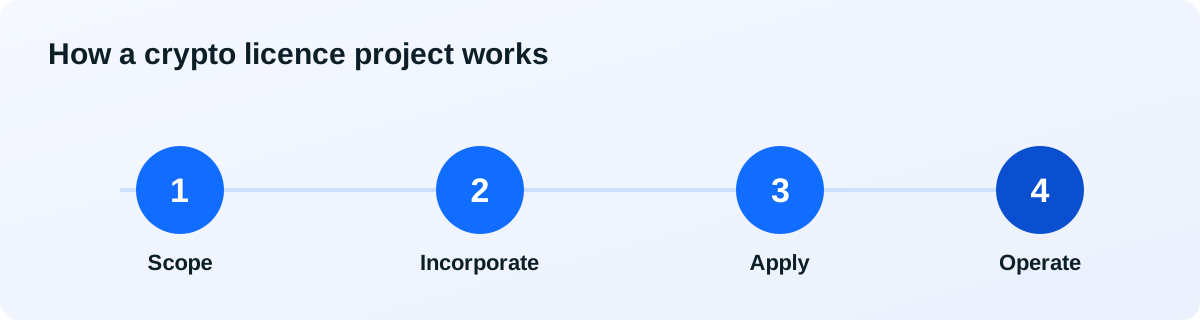
Obtaining a usa crypto license involves these steps:
- Business structure - Incorporate in a suitable state (e.g., Delaware, Wyoming).
- FinCEN registration - Register as an MSB and implement BSA/AML program.
- State selection - Identify states where you need licenses based on customers.
- Prepare application - Gather financial statements, business plan, AML policies, background checks.
- Submit applications - File with each state regulator, pay fees.
- Review and interview - Regulators may request additional info or conduct interviews.
- Approval and bonding - Obtain surety bonds if required, receive license.
- Ongoing compliance - File reports, renew licenses, maintain AML program.
Consulting24 coordinates the entire process, from document preparation to regulator communication.
It is advisable to start with a few key states (e.g., where you have the most customers) and expand gradually. Some states, like New York, require a separate application for the BitLicense, which is more detailed and includes a public hearing. The process can be streamlined by using a licensed compliance consultant.
Banking & Payments
Access to banking is a major challenge for crypto businesses in the US. Many banks are reluctant to work with crypto firms due to regulatory risk. In 2026, some banks have opened up, but most require a licensed entity and a strong compliance program. Consulting24 can introduce you to crypto-friendly banks and payment processors. Typical requirements include a valid MTL, AML program, and a minimum deposit of $50,000-$100,000.
Payment processing is also complex. Traditional processors like Stripe and PayPal have crypto services, but they may not be available to all businesses. Specialized crypto payment gateways like BitPay or Coinbase Commerce are options, but they often require your business to be licensed. Having a US license makes it easier to open merchant accounts and accept credit card payments.
Benefits of a USA Crypto License
Obtaining a usa crypto license offers several advantages:
- Legal operation in the world's largest economy
- Access to US customers and investors
- Enhanced credibility with partners and banks
- Clear regulatory framework (compared to unregulated markets)
- Potential for federal preemption in some states
Despite the complexity, a US license can open doors to significant growth.
For example, a licensed exchange can list on US trading platforms and attract institutional investors who require regulatory compliance. Additionally, having a license can help in negotiations with banks and payment processors.
Compliance & Trust
Compliance is non-negotiable. A usa crypto license requires a strong AML/CFT program, including KYC, transaction monitoring, and suspicious activity reporting. Regulators conduct periodic examinations. Failure to comply can result in fines or license revocation. Consulting24 helps you build a compliant framework. This is general guidance, not legal advice; consult an attorney for your specific situation.
In 2026, regulators are increasingly focusing on travel rule compliance (for transactions over $3,000) and sanctions screening. You must implement systems to screen customers against OFAC lists and report suspicious transactions. Many businesses use third-party compliance software to automate these processes.
Common Mistakes
Avoid these pitfalls when pursuing a usa crypto license:
- Underestimating timeline - expect 6-18 months for multi-state licensing
- Ignoring state-specific nuances (e.g., New York's BitLicense)
- Inadequate AML program - regulators scrutinize this heavily
- Not budgeting for legal and compliance costs
- Operating without a license in a state where you have customers
- Assuming a federal license exists - it does not
Consulting24 can help you avoid these errors.
Another common mistake is failing to renew licenses on time. Many states have annual renewal deadlines, and missing them can result in automatic revocation. Keep a calendar of all renewal dates and required filings.
Alternatives & Comparison
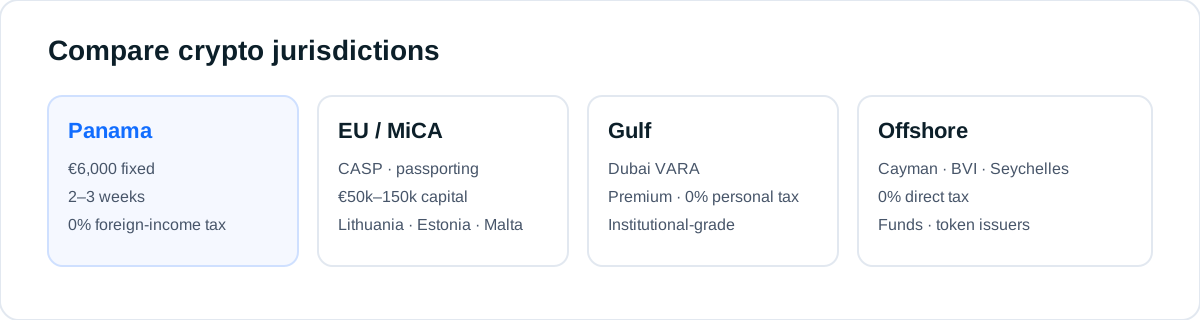
For crypto founders, the US is one of the most expensive and time-consuming jurisdictions. Alternatives include:
- Panama - Flat fee of EUR 6,000, no minimum capital, no tax on offshore income. Ideal for non-US operations. Panama offers a faster and cheaper route.
- Estonia - EU member with a straightforward license process, capital from EUR 50,000 under MiCA. Estonia crypto license is popular for EU market access.
- Lithuania - Another EU option with lower capital (EUR 25,000) and fast processing. Lithuania crypto license is a cost-effective choice.
Consulting24 advises on the best jurisdiction for your business. For a full comparison, see our jurisdictions page.
If your primary market is outside the US, obtaining a license in a simpler jurisdiction like Panama or Lithuania may be more efficient. You can always add US licenses later if needed.
Frequently asked questions
Do I need a federal crypto license in the US?
No, there is no single federal crypto license. You must register with FinCEN as an MSB and obtain state MTLs. The SEC may also require registration if you deal in securities.
How long does it take to get a USA crypto license?
Timelines vary by state. FinCEN registration takes 1-2 weeks. State MTLs take 4-12 months each. Multi-state licensing can take 6-18 months total.
What is the cost of a USA crypto license?
Costs include state application fees ($500-$5,000 per state), legal fees ($10,000-$50,000+), and surety bonds. Total for multi-state can be $50,000-$200,000.
What is the minimum capital for a USA crypto license?
Capital requirements vary by state, typically $25,000-$500,000 in net worth or surety bond. New York BitLicense requires $200,000 minimum net worth.
Can I operate a crypto exchange with a USA crypto license?
Yes, a state MTL or BitLicense typically allows exchange of fiat for crypto and vice versa. Additional licenses may be needed for derivatives or securities.
Is the New York BitLicense required for all US operations?
No, only if you have customers in New York. Many businesses avoid New York to bypass the BitLicense, but it is mandatory for NY-based customers.
What are the ongoing compliance requirements?
You must maintain an AML program, file suspicious activity reports (SARs), conduct periodic audits, and renew licenses annually. Regulators may conduct examinations.
Can a foreign company get a USA crypto license?
Yes, foreign companies can obtain US state licenses, but they must register with FinCEN and establish a US presence (e.g., registered agent, bank account).
What happens if I operate without a license?
Operating without a license can lead to cease-and-desist orders, fines, and even criminal charges. Regulators actively pursue unlicensed crypto businesses.
How does the US compare to Panama for crypto licensing?
Panama offers a flat fee of EUR 6,000, no minimum capital, and no tax on offshore income. The US is much more expensive and time-consuming. See our Panama page for details.
Does Consulting24 provide US crypto licenses directly?
Consulting24 advises and coordinates US licensing strategies but does not file applications directly. We help you choose the right states and manage the process.
Official sources
- FinCEN - Financial Crimes Enforcement Network
- New York State Department of Financial Services (BitLicense)

Talk to a crypto-licensing expert
500+ licenses across Estonia, Lithuania, Panama and beyond. Tell us your model and we'll map the right route, honestly.
💬 Talk to an expertFree consultationGeneral guidance, not legal advice. Rules and fees evolve, and we confirm current requirements for your case.