Crypto OTC Desk License (2026): Cost, Process & Requirements: Your Complete Guide for 2026
An OTC (over-the-counter) desk facilitates large-volume crypto trades directly between buyers and sellers, bypassing public order books. To operate legally, you need a crypto OTC desk license that covers the relevant activities. In 2026, the rules is mature: the EU’s MiCA regime is fully in force, and jurisdictions like Panama offer straightforward licensing. Consulting24 advises and coordinates licensing across multiple jurisdictions, with direct delivery in Estonia, Lithuania, and Panama.
Whether you are launching a new OTC desk or expanding an existing one, understanding the license type, capital requirements, tax treatment, and timeline is critical. This page covers everything you need to know about obtaining a crypto OTC desk license in 2026, with a focus on Panama’s flat-fee company setup and the EU’s CASP framework. We provide concrete examples, cost breakdowns, and step-by-step guidance to help you make an informed decision.
The OTC desk market is growing rapidly, with institutional investors demanding regulated counterparties. A licensed OTC desk can access prime brokerage services, bank accounts, and a wider client base. Without a license, you risk regulatory action and limited growth. Consulting24 has helped over 500 crypto businesses obtain licenses worldwide. Contact us to discuss your project.
What Is a Crypto OTC Desk License?
A crypto OTC desk license is a regulatory authorisation that permits a company to conduct over-the-counter trading of crypto assets. Unlike exchange trading, OTC desks handle large blocks of trades with negotiated prices, often for institutional clients or high-net-worth individuals. The license typically covers activities such as:
- Buying and selling crypto assets as principal or agent
- Providing custody of client funds and crypto assets
- Executing trades on behalf of clients (brokerage)
- Offering price quotes and market-making in certain jurisdictions
In the EU, under MiCA, an OTC desk license falls under the Crypto Asset Service Provider (CASP) regime. In Panama, a Panama company with an AML/CFT programme can operate an OTC desk with a flat cost of EUR 6,000; there is no separate crypto licence. Consulting24 advises and coordinates licensing in all major crypto-friendly jurisdictions. The license ensures that your OTC desk complies with AML/KYC regulations, protects client assets, and meets capital adequacy standards. For example, a typical OTC desk handling trades of EUR 500,000 or more per transaction would need to demonstrate strong risk management and reporting procedures.
Who Needs a Crypto OTC Desk License?
Any business that facilitates large-scale crypto trades for clients, whether as a broker, dealer, or market maker, needs a crypto OTC desk license. Typical applicants include:
- Startups launching an OTC trading desk
- Existing crypto exchanges expanding into OTC services
- Family offices or asset managers offering crypto trading
- Fintech firms integrating crypto trading into their platform
If you handle client funds or execute trades on behalf of others, you are likely providing a regulated activity. Operating without a license can lead to fines, reputational damage, and even criminal liability. For instance, in 2025, several unlicensed OTC desks in the EU faced enforcement actions under MiCA, resulting in penalties of up to EUR 5 million. Consulting24 helps you determine the right jurisdiction and license type for your business model. We assess your target market, trading volume, and client profile to recommend the optimal path.
License Type and Regulator
The regulatory body and license type depend on the jurisdiction. In the EU, the European Securities and Markets Authority (ESMA) coordinates national regulators under MiCA. Each EU member state designates a competent authority: for example, the Bank of Lithuania or the Estonian Financial Supervision Authority (FSA). Under MiCA, a CASP license covers OTC desk activities. In Panama, there is no crypto licence; crypto firms register with the UAF (Financial Intelligence Unit) for AML under Law 23 of 2015 and operate as a Panama company with an AML/CFT programme. Consulting24 delivers directly in Estonia, Lithuania, and Panama, and advises and coordinates in other jurisdictions such as Dubai, Switzerland, and Malta. For a full list, see our jurisdictions hub.
In Lithuania, the Bank of Lithuania is the primary regulator for CASPs. In Estonia, the FSA handles licensing. Panama has no crypto-specific licence, so the setup is more straightforward: the company operates with an AML/CFT programme and registers with the UAF for AML reporting, with no separate crypto authorisation. Consulting24 can guide you through the nuances of each regulator’s requirements.
Cost and Timeline
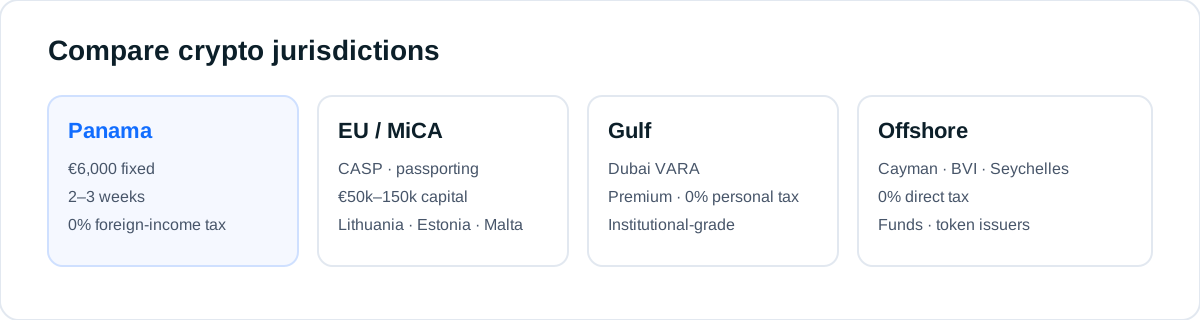
The cost of a crypto OTC desk license varies widely by jurisdiction. Below is a comparison of typical costs and timelines as of 2026. Exact pricing is confirmed in a consultation with Consulting24.
| Jurisdiction | License Cost (EUR) | Timeline |
|---|---|---|
| Panama | 6,000 (flat fee for company + AML programme) | 4-6 weeks |
| Lithuania (CASP) | From 2,500 application fee + capital | 3-6 months |
| Estonia (CASP) | From 3,000 application fee + capital | 3-6 months |
| Other EU (MiCA) | 5,000 - 15,000 (varies) | 4-8 months |
For a detailed breakdown, see our cost page. The Panama flat fee includes company incorporation, registered address, and the AML/CFT compliance programme; there is no separate crypto licence. In Lithuania and Estonia, additional costs include legal fees, translation of documents, and capital deposit. Consulting24 provides transparent pricing with no hidden fees.
Capital Requirement
Capital requirements are jurisdiction-specific. Under MiCA, CASPs must hold minimum capital based on the services they offer:
- EUR 50,000 for custody and transfer services
- EUR 125,000 for exchange and trading services
- EUR 150,000 for full-service OTC desks including market-making
In Panama, there is no statutory minimum capital for a crypto company, but the company must demonstrate sufficient financial resources to operate. Typically, a paid-up capital of USD 10,000 is recommended. Consulting24 advises on the appropriate capital structure for your business. For example, if you plan to offer custody alongside OTC trading, you may need to meet the higher capital tier under MiCA. We help you calculate the required capital based on your planned activities and volume.
Tax Treatment
Tax treatment of OTC desk income varies. In Panama, companies are taxed on income sourced in Panama at a rate of 25%, but offshore income (from clients outside Panama) may be exempt. In Lithuania, corporate income tax is 15% (or 5% for small companies), and crypto trading profits are taxable. Estonia offers a unique 0% tax on retained profits, with 20% upon distribution. Under MiCA, no specific crypto tax regime exists, so general corporate tax rules apply. Consulting24 recommends consulting a tax advisor for your specific situation. For example, if your OTC desk serves clients globally, Panama’s territorial tax system may offer significant savings. We can connect you with tax specialists familiar with crypto taxation.
Allowed Activities Under a Crypto OTC Desk License
A crypto OTC desk license typically permits the following activities:
- Execution of orders for crypto assets on behalf of clients
- Dealing in crypto assets as principal (proprietary trading)
- Providing custody and administration of crypto assets
- Offering price quotes and liquidity
- Brokerage services for large block trades
Some jurisdictions may restrict certain activities, such as offering derivatives or lending. For instance, under MiCA, if you offer margin trading or derivatives, you may need additional authorisation under MiFID II. Consulting24 ensures your license covers the exact activities you need. We review your business plan and map it to the permitted activities in your chosen jurisdiction. For a list of activities in each jurisdiction, see our requirements page.
Step-by-Step Application Process
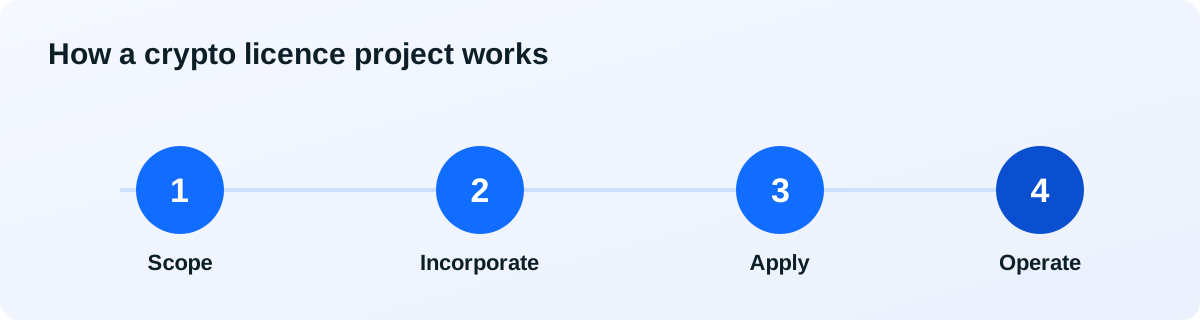
The process for obtaining a crypto OTC desk license typically involves these steps:
- Jurisdiction selection - Based on your target market, budget, and timeline. Consulting24 provides a free consultation to assess your needs.
- Company incorporation - Register a legal entity (e.g., in Panama or Lithuania). This includes drafting articles of association, appointing directors, and registering with the commercial registry.
- Document preparation - Business plan, AML/KYC policies, risk management framework, and financial projections. These must be tailored to your specific OTC desk operations.
- Application submission - File with the regulator, including background checks on directors and shareholders. In Lithuania, the application is submitted via the Bank of Lithuania’s e-service portal.
- Regulatory review - The regulator assesses compliance and may request additional information. This stage can involve interviews with key personnel.
- License issuance - Once approved, you receive your license and can begin operations. You may need to post a security bond or maintain a minimum capital balance.
Consulting24 manages the entire process, from company setup to regulatory filing. For a detailed guide, see our application process page. We typically handle all communication with regulators, reducing your administrative burden.
Banking and Payment Solutions for OTC Desks
Access to banking is a common challenge for crypto businesses. OTC desks need fiat accounts to settle trades. In Panama, banks are more open to crypto companies, but due diligence is strict. In Lithuania and Estonia, several fintech-friendly banks and payment institutions offer accounts. Consulting24 can introduce you to compliant banking partners. For example, we work with banks that accept crypto clients subject to enhanced KYC. We also help you set up multi-currency accounts for EUR, USD, and GBP settlements. For more on banking, see our company setup page. Additionally, some OTC desks use stablecoins for settlement, but fiat rails remain essential for institutional clients.
Benefits of a Crypto OTC Desk License
Obtaining a license offers several advantages:
- Legal certainty and regulatory compliance
- Access to institutional clients who require regulated counterparties
- Ability to open bank accounts and partner with financial institutions
- Enhanced reputation and trust
- Protection against regulatory enforcement actions
Without a license, your OTC desk may face operational risks and limited growth potential. For instance, a licensed OTC desk can participate in prime brokerage programs offered by major exchanges. In contrast, unlicensed desks often struggle to maintain banking relationships and may be blacklisted by regulated entities. Consulting24 has seen many unlicensed desks forced to shut down after regulatory crackdowns. Investing in a license is a strategic move for long-term success.
Compliance and Trust: Ongoing Obligations
After obtaining your license, you must maintain compliance through:
- Regular AML/CFT reporting
- Annual audits and financial reporting
- Transaction monitoring and suspicious activity reporting
- Ongoing capital maintenance (if applicable)
- Periodic regulatory filings
Consulting24 offers ongoing compliance support, including AML training for staff, transaction monitoring setup, and audit preparation. Note: This is general guidance, not legal advice. Always consult a qualified legal professional for your specific obligations. For example, under MiCA, you must report suspicious transactions to the Financial Intelligence Unit within 24 hours. We help you implement the necessary systems to meet these requirements.
Common Mistakes When Applying for an OTC Desk License
Avoid these pitfalls:
- Choosing a jurisdiction based solely on cost without considering tax and operational needs
- Incomplete or poorly prepared documentation
- Underestimating the timeline and budget
- Ignoring ongoing compliance requirements
- Failing to secure banking before applying
Consulting24 helps you avoid these mistakes with expert guidance. For example, one client chose a cheap jurisdiction but later found it lacked banking infrastructure, delaying operations by six months. We conduct thorough due diligence on each jurisdiction to ensure it fits your business model. See our blog for more case studies.
Alternatives and Comparison: Panama vs. Lithuania vs. Estonia
When choosing a jurisdiction for your OTC desk license, consider the following comparison:
| Factor | Panama | Lithuania | Estonia |
|---|---|---|---|
| Cost | EUR 6,000 flat | EUR 2,500+ capital | EUR 3,000+ capital |
| Capital | No statutory minimum | EUR 50,000-150,000 (MiCA) | EUR 50,000-150,000 (MiCA) |
| Tax | 25% on local income | 15% corporate | 0% on retained profits |
| Timeline | 4-6 weeks | 3-6 months | 3-6 months |
| Banking | Moderate | Good | Good |
Panama offers the fastest and most cost-effective route for a crypto OTC desk license, while EU jurisdictions provide access to the single market. For a full comparison, see our vs Lithuania page and jurisdictions hub. If your target clients are in Europe, Lithuania or Estonia may be better despite higher costs. Consulting24 can help you weigh the trade-offs.
Why Choose Consulting24?
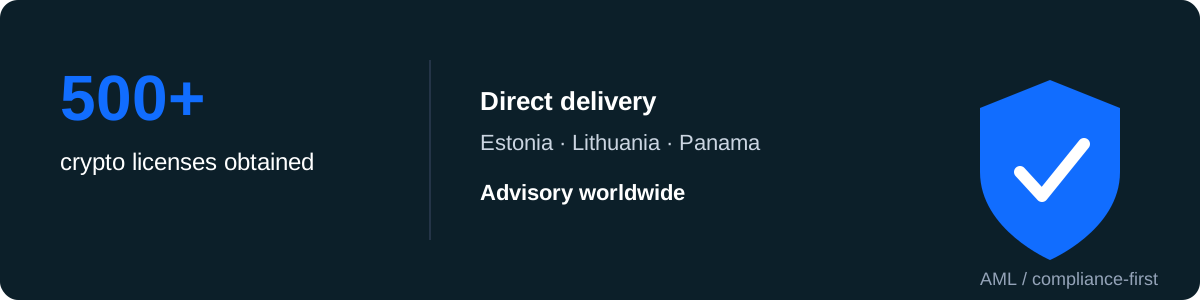
Consulting24 has obtained over 500 crypto licenses since 2018. We deliver directly in Estonia, Lithuania, and Panama, and advise and coordinate in all other jurisdictions. Our team provides end-to-end support, from company incorporation to regulatory filing and ongoing compliance. We do not guarantee approval, but our track record speaks for itself. Contact us on WhatsApp or book a consultation to discuss your OTC desk license. We are committed to transparent pricing, honest advice, and timely delivery.
Frequently asked questions
What is a crypto OTC desk license?
A crypto OTC desk license is a regulatory authorisation that allows a company to conduct over-the-counter trading of crypto assets, including executing large trades, providing custody, and offering brokerage services. It ensures compliance with AML/KYC regulations and capital requirements.
How much does a crypto OTC desk license cost in Panama?
Panama offers a flat fee of EUR 6,000 for company setup and the AML/CFT compliance programme; there is no separate crypto licence. This is one of the most cost-effective options globally. Additional costs may include legal fees for document preparation, but Consulting24 includes these in the flat fee.
What are the capital requirements for an OTC desk license under MiCA?
Under MiCA, capital requirements are EUR 50,000 for custody, EUR 125,000 for exchange/trading, and EUR 150,000 for full-service OTC desks including market-making. These must be maintained as own funds.
Can I operate an OTC desk without a license?
Operating without a license is risky and often illegal. In the EU, unlicensed CASP activity can result in fines up to EUR 5 million or 5% of annual turnover. In Panama, unlicensed crypto businesses may face closure and reputational damage.
How long does it take to get a crypto OTC desk license?
Timelines vary: Panama takes 4-6 weeks, Lithuania and Estonia take 3-6 months, and other EU jurisdictions may take 4-8 months. The timeline depends on the completeness of your application and the regulator’s workload.
What documents are needed for an OTC desk license application?
Typical documents include a business plan, AML/KYC policies, risk management framework, financial projections, background checks on directors, and proof of capital. Consulting24 provides templates and guidance.
Is Panama a good jurisdiction for a crypto OTC desk?
Yes, Panama offers low cost, fast setup, and no statutory capital. However, it may not be ideal if your target market is the EU, as Panama is not an EU member. It is excellent for serving clients in Latin America, Asia, and the US.
What are the ongoing compliance obligations for an OTC desk license?
Ongoing obligations include AML/CFT reporting, annual audits, transaction monitoring, capital maintenance, and periodic regulatory filings. Consulting24 offers compliance support packages to help you meet these requirements.
Can Consulting24 help with banking for my OTC desk?
Yes, we can introduce you to compliant banking partners in Panama, Lithuania, and Estonia. We have relationships with banks that accept crypto clients subject to enhanced due diligence.
What is the difference between a CASP license and an OTC desk license?
A CASP license under MiCA covers a broad range of crypto services, including OTC trading. An OTC desk license is essentially a CASP license that specifically authorises OTC activities. The terms are often used interchangeably.
Official sources
Related jurisdictions

Talk to a crypto-licensing expert
500+ licenses across Estonia, Lithuania, Panama and beyond. Tell us your model and we'll map the right route, honestly.
💬 Talk to an expertFree consultationGeneral guidance, not legal advice. Rules and fees evolve, and we confirm current requirements for your case.