Crypto Gambling License Thailand: What You Need to Know in 2026
Thailand has emerged as a significant hub for digital asset activity, but for crypto gambling, the regulatory framework is complex. As of 2026, Thailand does not offer a specific crypto gambling license. Instead, operators must get through the country's general gambling laws, which are highly restrictive, and the evolving digital asset regulations overseen by the Securities and Exchange Commission (SEC) and the Ministry of Finance. This page provides a factual overview of the current environment and explains how Consulting24 can help you establish a compliant crypto gambling operation in jurisdictions where licensing is available, such as Panama.
For most crypto gambling founders, the most practical route is to obtain a license in a jurisdiction with a clear regulatory framework for digital asset gaming. Panama offers a flat-fee company setup of EUR 6,000 and a flexible regime that accommodates crypto gambling. Consulting24 advises and coordinates licensing across multiple jurisdictions, but we deliver directly in Estonia, Lithuania, and Panama. If you are considering Thailand, we recommend you first understand the legal risks and then explore alternative jurisdictions that provide legal certainty and lower operational hurdles.
What Is a Crypto Gambling License in Thailand?
Thailand does not have a dedicated crypto gambling license. The country's gambling industry is largely illegal under the Gambling Act of 1935, with only state-run lotteries and horse racing permitted. Crypto gambling, whether based in Thailand or targeting Thai players, faces significant legal barriers. The Thai SEC regulates digital asset businesses, but it does not issue licenses for gambling activities. Operators considering Thailand must be aware that running a crypto gambling platform from within the country is not feasible under current law.
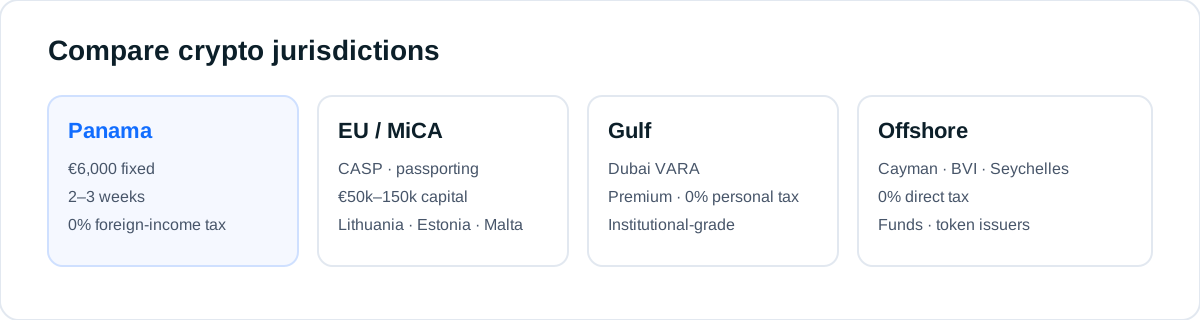
Instead, international operators often set up in jurisdictions like Panama, where a company can be formed for EUR 6,000 and obtain a license that covers crypto gambling activities. Consulting24 advises clients on the best jurisdiction for their specific business model, including the possibility of serving Thai players from a licensed entity abroad.
Who Needs a Crypto Gambling License?
Any business that offers online casino games, sports betting, or other gambling services using cryptocurrency as a payment method or as a stake needs a license. This includes:
- Online casinos accepting Bitcoin, Ethereum, or stablecoins
- Sports betting platforms with crypto deposits
- Poker rooms and lottery sites using digital assets
- Fantasy sports platforms that pay out in crypto
If you target Thai players, you must consider both the licensing requirements of your chosen jurisdiction and the legal risks in Thailand. Most reputable operators choose a jurisdiction with a clear licensing framework, such as Panama, Malta, or Curacao. Consulting24 helps you evaluate these options and set up the appropriate structure.
License Type & Regulator in Thailand
In Thailand, the relevant authorities for digital assets are the Securities and Exchange Commission (SEC) and the Ministry of Finance. However, they do not issue gambling licenses. The SEC regulates crypto exchanges, brokers, dealers, and fund managers under the Digital Asset Business Decree. Gambling falls outside their scope. The only legal gambling in Thailand is the Government Lottery and horse racing at specific venues.
For a crypto gambling license, you must look to jurisdictions like Panama, where the regulator is the Gaming Control Board (Junta de Control de Juegos). Panama offers a license that covers online gambling and explicitly allows cryptocurrency transactions. Consulting24 can coordinate the application process in Panama and advise on other jurisdictions such as Estonia or Lithuania, which have strong crypto licensing regimes but do not permit gambling.
Cost & Timeline for a Crypto Gambling License
The cost of a crypto gambling license varies significantly by jurisdiction. Below is a comparison of typical costs and timelines. Note that Thailand does not offer a license, so direct costs are not applicable. For Panama, the company setup is a flat EUR 6,000, and the license fee depends on the type of gambling activities. Consulting24 provides exact pricing during a consultation.
| Jurisdiction | Setup Cost (EUR) | License Fee (Annual) | Timeline |
|---|---|---|---|
| Panama | 6,000 (company) | 20,000 - 40,000 | 3-6 months |
| Curacao | 10,000 - 15,000 | 15,000 - 30,000 | 2-4 months |
| Malta | 25,000 - 50,000 | 25,000 - 50,000 | 6-12 months |
Timelines are estimates and depend on the completeness of your application and the regulator's workload. Consulting24 can help you prepare the necessary documentation and liaise with regulators.
Capital Requirement
Capital requirements for a crypto gambling license vary by jurisdiction. In Panama, there is no fixed minimum capital for the company itself, but the Gaming Control Board may require a bank guarantee or a deposit to ensure player funds are protected. Typically, this ranges from EUR 50,000 to EUR 200,000 depending on the scale of operations. In Curacao, the minimum capital is around EUR 50,000. Malta requires a minimum share capital of EUR 40,000 for a Class 1 license.
Thailand does not have a capital requirement for crypto gambling because the activity is not licensed. However, if you operate from another jurisdiction, you must meet that jurisdiction's capital rules. Consulting24 can advise on the specific capital needed for your chosen route.
Tax Treatment
Tax treatment for crypto gambling income depends on where your company is registered. Panama operates a territorial tax system: income earned outside Panama is not taxed. This makes Panama attractive for crypto gambling operators targeting global players. Corporate income tax on Panama-source income is 25%, but most gambling revenue is considered foreign-source if processed through a Panama entity. There is no withholding tax on dividends.
In contrast, Thailand taxes worldwide income for residents. If you were to operate from Thailand, you would face corporate income tax of 20% and potential withholding taxes. However, since Thailand does not license crypto gambling, operating there is not advisable. Consulting24 recommends Panama for tax efficiency and legal clarity.
Allowed Activities Under a Crypto Gambling License
A crypto gambling license typically permits the following activities:
- Online casino games (slots, table games, live dealer)
- Sports betting (pre-match and in-play)
- Poker and other card games
- Lottery and bingo
- Fantasy sports
- eSports betting
In Panama, the license covers all forms of online gambling and explicitly allows cryptocurrency transactions, including deposits, wagers, and withdrawals in Bitcoin, Ethereum, and other digital assets. Some jurisdictions restrict certain games or require separate licenses for different verticals. Consulting24 can help you define your activity scope and ensure compliance with local laws.
Step-by-Step Process to Obtain a Crypto Gambling License
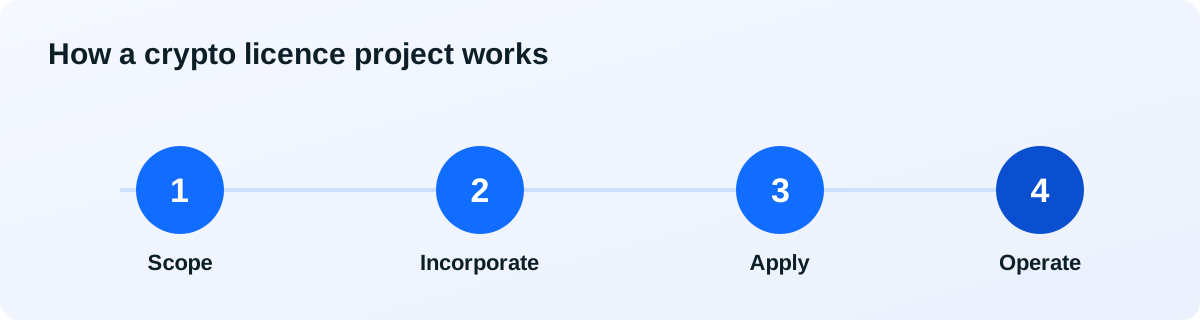
While Thailand does not offer a license, the process for obtaining a crypto gambling license in a jurisdiction like Panama involves the following steps:
- Company Formation: Register a Panama corporation with a local registered agent. Cost: EUR 6,000 flat fee through Consulting24.
- Document Preparation: Prepare a business plan, anti-money laundering (AML) policies, know-your-customer (KYC) procedures, and technical documentation for your platform.
- Bank Account: Open a corporate bank account or a crypto-friendly payment processor account. Consulting24 can introduce you to partner banks.
- License Application: Submit the application to the Gaming Control Board, including background checks on directors and shareholders.
- Compliance Review: The regulator reviews your AML/KYC policies, platform security, and financial stability.
- Approval & License Issuance: Once approved, you receive the license. Timeline: 3-6 months.
Consulting24 advises and coordinates the entire process, ensuring you meet all requirements. For jurisdictions where we do not deliver directly, we partner with local experts.
Banking & Payment Solutions
One of the biggest challenges for crypto gambling operators is finding banking partners. Many traditional banks are reluctant to work with gambling companies due to compliance risks. In Panama, several banks accept gambling businesses, but they require a valid license and strong AML procedures. Consulting24 can introduce you to banks that are familiar with the crypto gambling industry.
For payment processing, you will need a crypto payment gateway that can handle deposits and withdrawals in multiple cryptocurrencies. Some popular options include CoinPayments, BitPay, and NOWPayments. Additionally, you may want to offer fiat on-ramps through third-party providers. Consulting24 can recommend payment processors that integrate smoothly with your platform.
Benefits of a Crypto Gambling License
Obtaining a crypto gambling license offers several advantages:
- Legal Protection: Operating with a license reduces the risk of legal action and seizure of assets.
- Player Trust: Licensed platforms are seen as more trustworthy, attracting higher-value players.
- Banking Access: A license makes it easier to open bank accounts and work with payment processors.
- Tax Efficiency: Jurisdictions like Panama offer territorial taxation, minimizing tax liability.
- Global Reach: A license from a reputable jurisdiction allows you to target players worldwide, including from Thailand, as long as you comply with local laws.
Consulting24 helps you choose the jurisdiction that maximizes these benefits for your specific business model.
Compliance & Trust: Why Licensing Matters
Compliance is critical in the crypto gambling space. Regulators expect operators to implement strong AML and KYC procedures, ensure fair gaming, and protect player funds. Failure to comply can result in fines, license revocation, or criminal charges. Consulting24 emphasizes that licensing is not just a legal requirement but a business asset that builds trust with players and partners.
We recommend that all operators implement the following compliance measures: transaction monitoring, suspicious activity reporting, regular audits, and secure storage of player funds. Our team can help you draft policies and procedures that meet regulatory standards. Note that this is general guidance and not legal advice; you should consult with a qualified attorney for your specific situation.
Common Mistakes When Applying for a Crypto Gambling License
Many applicants make avoidable errors that delay or derail their license application. Common mistakes include:
- Incomplete Documentation: Failing to provide a comprehensive business plan or AML policy.
- Poor Background Checks: Not disclosing relevant criminal or financial history of directors.
- Underestimating Costs: Not budgeting for legal fees, compliance software, and ongoing license fees.
- Choosing the Wrong Jurisdiction: Selecting a jurisdiction that does not suit your target market or business model.
- Ignoring Tax Obligations: Not understanding the tax implications of your license structure.
Consulting24 helps you avoid these pitfalls by guiding you through the process and ensuring your application is complete and accurate.
Alternatives to a Crypto Gambling License in Thailand
Since Thailand does not offer a crypto gambling license, you must consider alternative jurisdictions. The most popular options are:
- Panama: Fast setup, low cost (EUR 6,000 company), territorial tax, and a clear gambling license. Ideal for targeting global players, including those in Asia.
- Curacao: Established licensing regime, relatively low cost, and no minimum capital requirement. However, recent regulatory changes are increasing compliance demands.
- Malta: EU-regulated, high credibility, but higher costs and longer timelines. Suitable for operators targeting European players.
Consulting24 advises on the best jurisdiction for your needs. We deliver directly in Panama, Estonia, and Lithuania. For other jurisdictions, we coordinate with local partners. Contact us to discuss your options.
Comparison: Panama vs. Curacao vs. Malta
| Factor | Panama | Curacao | Malta |
|---|---|---|---|
| Setup Cost (EUR) | 6,000 (company) + 20,000-40,000 license | 10,000-15,000 | 25,000-50,000 |
| Tax | Territorial (0% on foreign income) | 2% gaming tax on net profit | 5% gaming tax on GGR |
| Capital Requirement | None specified, but bank guarantee often required | None minimum | EUR 40,000 minimum share capital |
| Timeline | 3-6 months | 2-4 months | 6-12 months |
| Reputation | Good, but less known than Malta | Moderate, recent regulatory improvements | High, EU-regulated |
Panama offers the best balance of cost, speed, and tax efficiency for most crypto gambling startups. Consulting24 can help you set up a Panama company and obtain the license.
Why Choose Consulting24 for Your Crypto Gambling License
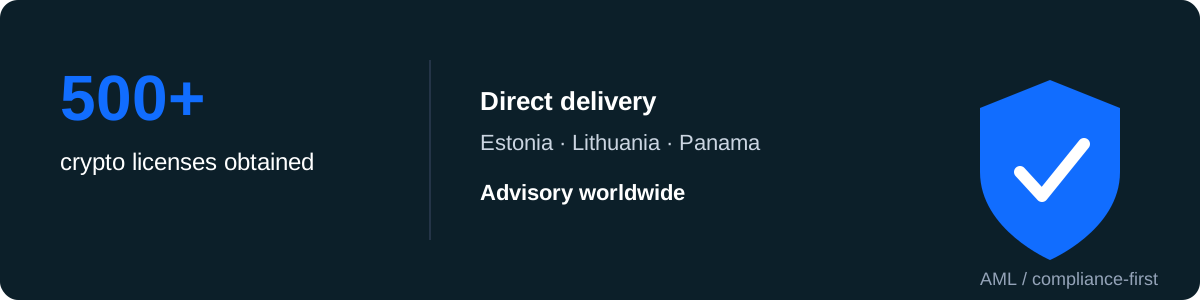
Consulting24 (X24Consulting OU) has obtained over 500 crypto licenses across multiple jurisdictions. We deliver directly in Estonia, Lithuania, and Panama. For all other jurisdictions, we advise and coordinate with local experts. Our team understands the unique challenges of crypto gambling licensing and can help you work through the process efficiently.
We offer a free initial consultation to assess your business model and recommend the best jurisdiction. Our services include company formation, license application preparation, bank account introduction, and ongoing compliance support. Contact us via WhatsApp or book a consultation to get started.
Frequently asked questions
Can I get a crypto gambling license in Thailand?
No, Thailand does not issue crypto gambling licenses. Gambling is largely illegal in Thailand, and the SEC only regulates digital asset businesses, not gambling. Operators should look to jurisdictions like Panama, Curacao, or Malta.
What is the cost of a crypto gambling license in Panama?
The company setup in Panama is a flat EUR 6,000 through Consulting24. The license fee varies from EUR 20,000 to EUR 40,000 annually, depending on the type of gambling activities. Exact pricing is confirmed during a consultation.
How long does it take to get a crypto gambling license in Panama?
The typical timeline is 3 to 6 months from company formation to license issuance. This depends on the completeness of your application and the regulator's workload.
What is the minimum capital requirement for a crypto gambling license?
In Panama, there is no statutory minimum capital for the company, but the regulator may require a bank guarantee or deposit, often between EUR 50,000 and EUR 200,000. Other jurisdictions like Malta require EUR 40,000 minimum share capital.
Is crypto gambling legal in Thailand?
No, crypto gambling is not legal in Thailand. The Gambling Act prohibits most forms of gambling. Operating a crypto gambling platform from Thailand is illegal and carries severe penalties.
Can I target Thai players with a Panama license?
Yes, you can accept players from Thailand, but you must ensure compliance with Thai law. It is advisable to consult with a Thai lawyer to understand the risks. Many operators choose to block players from restricted jurisdictions.
What are the tax benefits of a Panama crypto gambling license?
Panama has a territorial tax system, meaning income earned outside Panama is not taxed. This allows crypto gambling operators to pay zero tax on revenue from non-Panamanian players. There is also no withholding tax on dividends.
Does Consulting24 help with bank accounts for crypto gambling?
Yes, Consulting24 can introduce you to banks and payment processors that accept crypto gambling businesses. We have partnerships with financial institutions in Panama and other jurisdictions.
What is the difference between a Panama and a Curacao license?
Panama offers territorial tax and a flat company setup fee of EUR 6,000. Curacao has a 2% gaming tax and lower license fees but is undergoing regulatory changes. Panama is often preferred for tax efficiency and simplicity.
Can I switch from a Thailand setup to a Panama license?
Yes, if you are currently operating informally in Thailand, you can set up a Panama company and apply for a license. Consulting24 can help you transition smoothly and ensure legal compliance.
Related jurisdictions

Talk to a crypto-licensing expert
500+ licenses across Estonia, Lithuania, Panama and beyond. Tell us your model and we'll map the right route, honestly.
💬 Talk to an expertFree consultationGeneral guidance, not legal advice. Rules and fees evolve, and we confirm current requirements for your case.