Crypto Wallet Custody License in South Africa (2026): Cost: Crypto Wallet Custody License South Africa: Complete Guide for 2026
The South African crypto sector has matured significantly. As of 2026, the Financial Sector Conduct Authority (FSCA) requires all crypto asset service providers, including those offering wallet custody, to hold a license under the Financial Advisory and Intermediary Services (FAIS) Act. This crypto wallet custody license South Africa is essential for any business that holds or controls client crypto assets.
Whether you are a startup or an established exchange, understanding the regulatory framework, capital thresholds, and compliance obligations is critical. This guide covers everything you need to know about obtaining a crypto wallet custody license in South Africa, including costs, timelines, and practical steps.
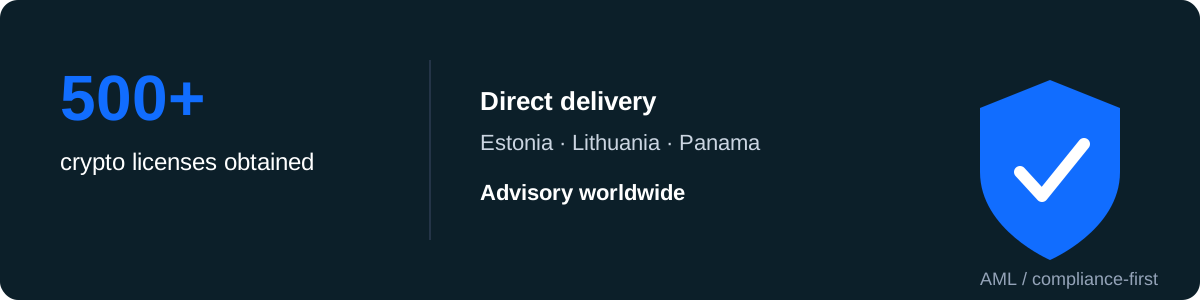
Consulting24 advises and coordinates applications for this license, helping you manage the FSCA process. For other jurisdictions like Panama or Lithuania, we manage the full delivery directly.
What Is the Crypto Wallet Custody License South Africa?
The crypto wallet custody license South Africa is a regulatory authorization issued by the FSCA under the FAIS Act. It allows a company to provide crypto asset wallet services where the provider holds or controls the client's private keys or crypto assets. This includes custodial wallets, exchange-hosted wallets, and any service where the provider has custody of digital assets.
The license is part of South Africa's broader effort to bring crypto asset service providers (CASPs) into the formal financial regulatory framework. As of 2026, all CASPs must be licensed and comply with AML/CFT obligations under the Financial Intelligence Centre Act (FICA). The FSCA has set a deadline for existing providers to apply, and new entrants must be licensed before commencing operations.
Key features of the license include mandatory registration as a financial services provider (FSP), appointment of a compliance officer, and adherence to fit and proper requirements for key individuals. The FSCA also requires that licensees maintain professional indemnity insurance or a guarantee fund to cover potential client losses. For example, if a wallet provider suffers a security breach resulting in loss of client funds, the insurance provides a layer of protection. This requirement is similar to that for traditional financial advisors.
Consulting24 advises on structuring your application to meet all FSCA expectations. For direct delivery in jurisdictions like Estonia or Lithuania, we handle the entire process.
Who Needs This License?
Any entity that offers custodial wallet services to South African residents or operates from South Africa needs this license. This includes:
- Crypto exchanges that hold client funds in wallets
- Wallet providers that store private keys on behalf of users
- Brokers or OTC desks that take custody of crypto assets
- Any business that offers crypto asset custody as a service
Non-custodial wallet providers (where the user controls the private keys) may not require this license, but they should seek legal advice. The FSCA has indicated that any service involving control over a client's crypto assets falls under the definition of a financial service. For instance, a wallet that generates keys on the user's device and never holds them is likely exempt, but if the provider offers recovery services or holds a backup, it may be considered custodial.
If you are unsure whether your business model requires a license, Consulting24 offers a preliminary assessment. We also help companies that operate in multiple jurisdictions determine where licensing is needed.
License Type and Regulator
The relevant regulator is the Financial Sector Conduct Authority (FSCA). The license is a Category I or II Financial Services Provider (FSP) license under the FAIS Act, depending on the scope of services. For wallet custody, a Category I FSP license is typically sufficient, but if you also provide advice or intermediary services, a higher category may apply.
The FSCA has issued a specific declaration that crypto assets are financial products under the FAIS Act. This means all crypto asset service providers must comply with the same requirements as traditional financial advisors, including disclosure, record-keeping, and conflict of interest management. The declaration also subjects crypto firms to the Code of Conduct for Financial Services Providers.
Consulting24 advises and coordinates applications with the FSCA. For direct delivery in other jurisdictions like Estonia or Lithuania, we handle the entire process.
Cost and Timeline
The cost of obtaining a crypto wallet custody license South Africa varies based on the complexity of your business structure and the scope of services. Below is a typical breakdown. Exact pricing is confirmed in a consultation.
| Item | Estimated Cost (ZAR) |
|---|---|
| FSCA application fee | 5,000 - 10,000 |
| Legal and compliance setup | 50,000 - 150,000 |
| FICA registration | 2,000 - 5,000 |
| Compliance officer (annual retainer) | 60,000 - 120,000 |
| Professional indemnity insurance (annual) | 30,000 - 80,000 |
| Consulting24 advisory fee | From EUR 6,000 (flat for Panama, varies for SA) |
The timeline typically ranges from 6 to 12 months, depending on the FSCA's processing times and the completeness of your application. The FSCA has been processing applications within 120 business days on average, but delays can occur if additional information is required. For example, if the FSCA requests further details on your AML policies or the fit and proper status of directors, the process may extend by several weeks.
To expedite, ensure all documents are complete and accurate. Consulting24 prepares a comprehensive application pack to minimize back-and-forth.
Capital Requirement
South Africa does not prescribe a specific minimum capital requirement for crypto wallet custody license applicants under the FAIS Act. However, the FSCA expects applicants to demonstrate sufficient financial resources to operate the business and meet solvency requirements. As a general guideline, you should have at least ZAR 1,000,000 (approximately EUR 50,000) in available capital to cover operational costs and compliance obligations.
The exact amount depends on the scale of your operations. The FSCA may request a business plan and financial projections to assess adequacy. For instance, a startup with minimal overhead may need less, while a large exchange handling significant volumes may need more. Consulting24 can help you prepare these documents as part of our advisory service.
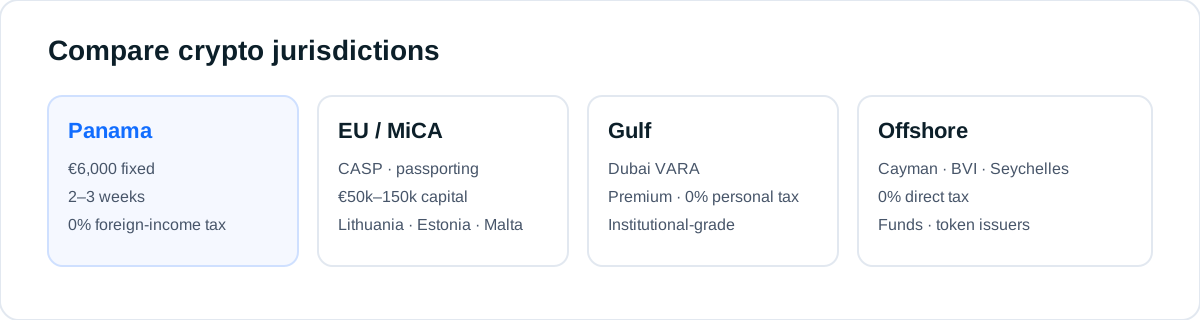
For comparison, EU member states under MiCA require capital tiers of EUR 50,000 / 125,000 / 150,000 by service class. Panama has no minimum capital requirement for its crypto license, making it attractive for smaller firms.
Tax Treatment
South Africa taxes crypto assets as ordinary revenue, subject to income tax. The South African Revenue Service (SARS) has issued guidance that crypto transactions are subject to normal tax rules. For wallet custody providers, income from fees and spreads is taxable at the corporate income tax rate of 27% (as of 2026).
Value-Added Tax (VAT) on crypto services is still under review. As of 2026, the supply of crypto assets is generally exempt from VAT, but advisory or custody fees may be subject to VAT at 15%. You should consult a tax specialist to confirm your specific obligations. For example, if you charge a monthly custody fee, that fee likely attracts VAT, while the underlying asset transfer does not.
Consulting24 can connect you with local tax advisors for detailed planning. For clients also considering Panama, note that Panama has no corporate income tax on offshore income, which can be advantageous for international operations.
Allowed Activities
With a crypto wallet custody license South Africa, you are permitted to:
- Hold and safeguard client crypto assets
- Manage private keys on behalf of clients
- Facilitate transfers between wallets
- Provide wallet-related reporting and statements
- Offer staking services if the client's assets are held in custody
You cannot provide financial advice without an additional license. If you want to advise clients on which crypto assets to buy or sell, you need a Category I FSP license with advice authorization. Trading as principal (proprietary trading) may also require separate authorization. For instance, if your business model involves market-making or using client assets for lending, you may need a different license or additional approvals.
Consulting24 can help define your service scope and ensure your license covers all intended activities. For a broader range of activities, consider exchange license options in other jurisdictions.
Step-by-Step Application Process
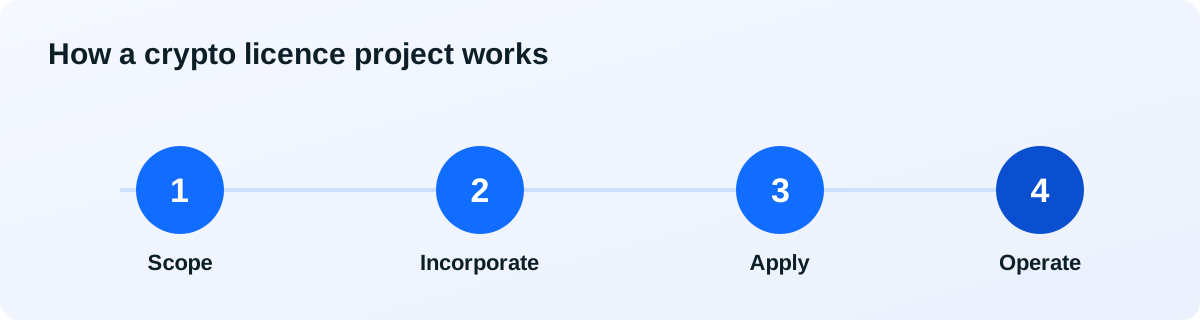
The process to obtain a crypto wallet custody license South Africa involves several stages. Consulting24 advises and coordinates each step.
- Company registration: Register a South African company (Pty Ltd) with the Companies and Intellectual Property Commission (CIPC).
- FICA registration: Register with the Financial Intelligence Centre as an accountable institution.
- Appoint a compliance officer: Engage a FSCA-approved compliance officer to oversee AML/CFT programs.
- Prepare documentation: Draft a business plan, risk management plan, AML policy, and conflict of interest policy.
- Submit application: File the FSP license application with the FSCA, including all supporting documents and the application fee.
- FSCA review: The FSCA assesses the application, may request additional information, and conducts fit and proper checks on key individuals.
- License issuance: Once approved, you receive a license certificate and are added to the FSCA's register.
The entire process typically takes 6-12 months. We recommend starting early and engaging professional assistance to avoid delays. Consulting24 has experience with FSCA applications and can help you prepare a strong submission.
Banking and Payment Partners
South African banks have been cautious with crypto businesses, but the regulatory clarity has improved access. As of 2026, several banks accept crypto-licensed companies, including Standard Bank, Nedbank, and First National Bank (FNB). However, each bank has its own due diligence process, and you may need to provide your license, AML policies, and proof of compliance.
Payment partners for fiat on-ramps include PayFast, Ozow, and Yoco. For international payments, you may need a multi-currency account with a fintech partner like Currencycloud or Airwallex. Some banks also offer dedicated crypto-friendly accounts with higher transaction limits.
Consulting24 can introduce you to banking contacts that understand the crypto sector. For clients also interested in company setup in Panama, we offer banking introductions there as well, where banks are generally more open to crypto businesses.
Benefits of a South African Crypto Wallet Custody License
Obtaining a crypto wallet custody license South Africa provides several advantages:
- Regulatory legitimacy: Licensed providers are trusted by clients and partners.
- Access to banking: Licensed entities find it easier to open bank accounts.
- Market access: You can legally serve South African residents, a large and growing crypto market.
- Compliance framework: The license ensures you meet international AML/CFT standards.
- Future-proofing: As regulation evolves, licensed providers are ahead of the curve.
South Africa is also a gateway to the broader African market, making it a strategic location for crypto custody services. For example, a licensed South African entity can expand into neighboring countries like Botswana or Namibia with relative ease.
Compliance and Ongoing Obligations
Once licensed, you must comply with ongoing requirements:
- Submit annual financial statements and compliance reports to the FSCA.
- Conduct regular AML/CFT training for staff.
- Maintain records of all transactions for at least five years.
- Report suspicious transactions to the Financial Intelligence Centre.
- Renew your FSP license annually and pay the prescribed fees.
Non-compliance can result in fines, suspension, or revocation of the license. The FSCA conducts periodic inspections to ensure adherence. Consulting24 offers ongoing compliance support to ensure you meet all obligations. This is general guidance, not legal advice.
Common Mistakes to Avoid
Many applicants make errors that delay or derail their application. Common pitfalls include:
- Submitting incomplete or poorly prepared documentation.
- Underestimating the fit and proper requirements for directors and key individuals.
- Failing to appoint a compliance officer before applying.
- Not having a clear AML policy tailored to crypto custody.
- Applying without a registered company or FICA registration.
- Ignoring the need for professional indemnity insurance.
Working with an experienced advisor like Consulting24 helps you avoid these mistakes and streamlines the process. For example, we ensure your AML policy includes specific procedures for crypto transactions, such as blockchain analysis and wallet screening.
Alternatives and Comparison: Panama and Other Jurisdictions
If South Africa's timeline or costs seem prohibitive, you might consider alternative jurisdictions. Consulting24 delivers directly in Panama (flat EUR 6,000, no minimum capital, 3-4 months) and Lithuania (EUR 2,500 application fee, EUR 125,000 capital, 3-6 months). For South Africa, we advise and coordinate.
Compared to EU jurisdictions under MiCA, South Africa offers lower capital requirements (no fixed minimum) but a longer timeline. Panama is faster and cheaper, but may not provide the same regulatory recognition in Africa. Lithuania offers EU passporting but higher capital. Each option has trade-offs.
Consulting24 helps you choose the best jurisdiction based on your business model, target market, and budget. We provide a free initial consultation to discuss your options.
Frequently asked questions
What is the crypto wallet custody license South Africa?
It is a license issued by the FSCA under the FAIS Act that allows a company to hold or control client crypto assets in custody. It is required for custodial wallet services, exchange wallets, and any service where the provider manages private keys.
Who needs to apply for this license?
Any business offering custodial wallet services to South African residents or operating from South Africa. This includes exchanges, wallet providers, brokers, and OTC desks that take custody of client crypto assets.
What is the cost of the license?
Costs vary. The FSCA application fee is ZAR 5,000-10,000, legal and compliance setup ZAR 50,000-150,000, and annual compliance officer retainer ZAR 60,000-120,000. Consulting24's advisory fee starts from EUR 6,000 for Panama; for South Africa, it is quoted per project.
How long does it take to get the license?
Typically 6-12 months. The FSCA processes applications within 120 business days on average, but delays can occur if additional information is needed. Preparation time adds 1-2 months.
Is there a minimum capital requirement?
No fixed minimum, but the FSCA expects sufficient financial resources. A guideline is ZAR 1,000,000 (approx. EUR 50,000) in available capital. The exact amount depends on your business plan and scale.
What are the tax implications?
Crypto income is taxed as ordinary revenue at the corporate rate of 27%. Custody fees may be subject to VAT at 15%, while crypto asset transfers are generally VAT-exempt. Consult a tax advisor for specifics.
Can I offer staking services with this license?
Yes, if the client's assets are held in custody and you do not provide investment advice. Staking is considered a custodial service. However, if you advise on which assets to stake, you may need additional authorization.
What banks work with crypto-licensed companies in South Africa?
Standard Bank, Nedbank, and FNB accept crypto-licensed companies, subject to due diligence. Payment partners include PayFast, Ozow, and Yoco. International payments may require fintech partners like Currencycloud.
What are the ongoing compliance obligations?
Annual financial statements and compliance reports to the FSCA, AML/CFT training, record-keeping for 5 years, suspicious transaction reporting, and annual license renewal. Non-compliance can lead to fines or revocation.
How does South Africa compare to Panama for crypto licensing?
Panama offers a faster (3-4 months) and cheaper (EUR 6,000 flat) license with no minimum capital, but it may not provide the same regulatory recognition in Africa. South Africa is better for targeting the African market, while Panama suits global operations.
Can Consulting24 help with the application?
Yes, Consulting24 advises and coordinates FSCA applications. For direct delivery in Panama, Estonia, or Lithuania, we handle the entire process. Contact us for a free consultation.
Official sources
Related jurisdictions

Talk to a crypto-licensing expert
500+ licenses across Estonia, Lithuania, Panama and beyond. Tell us your model and we'll map the right route, honestly.
💬 Talk to an expertFree consultationGeneral guidance, not legal advice. Rules and fees evolve, and we confirm current requirements for your case.