Crypto Token Issuance License in Cyprus (2026): Cost & Setup Crypto Token Issuance License: Complete 2026 Guide
Cyprus has become a notable hub for crypto token issuance, offering a regulated pathway under the Cyprus Securities and Exchange Commission (CySEC). The crypto token issuance license Cyprus is essential for projects planning to launch tokens through an Initial Coin Offering (ICO) or similar issuance within the EU framework. As of 2026, the EU's Markets in Crypto-Assets Regulation (MiCA) is fully in force, and Cyprus has aligned its national regime accordingly.
This page provides a factual overview of the Cyprus crypto token issuance license, covering the regulator, license type, capital requirements, tax treatment, and step-by-step process. Consulting24 advises and coordinates applications for this license, using our experience across multiple jurisdictions including Panama and other jurisdictions. Whether you are a startup or an established firm, understanding the Cyprus regime is critical for compliant token issuance.
What Is the Cyprus Crypto Token Issuance License?
The Cyprus crypto token issuance license is a regulatory authorization granted by CySEC that permits a legal entity to issue tokens (e.g., utility tokens, security tokens, or payment tokens) to the public, typically via an ICO or Security Token Offering (STO). Under MiCA, token issuers must publish a white paper and comply with disclosure, marketing, and ongoing reporting obligations. The license is designed to protect investors and ensure market integrity.
Cyprus offers a clear legal framework for token issuers, making it an attractive base for EU-wide offerings. The license covers the issuance process itself, not necessarily the subsequent trading of tokens on exchanges. Issuers must also register with CySEC and maintain a physical presence in Cyprus, including a registered office and local directors or compliance officers. For example, a startup issuing a utility token for a decentralized application would need this license if they plan to offer it to EU residents. The license also requires a detailed white paper that explains the token's functionality, risks, and the project's roadmap. CySEC reviews the white paper for completeness and accuracy. Additionally, the issuer must appoint a local compliance officer who oversees adherence to AML and KYC rules. The license itself is valid indefinitely but subject to annual renewal and ongoing supervision. Consulting24 can help you prepare the white paper and handle the regulatory requirements.
Who Needs This License?
This license is required for any legal entity that intends to offer tokens to the public in Cyprus or across the EU, unless an exemption applies (e.g., small offerings under EUR 1 million or offerings to qualified investors only). Typical applicants include:
- Startups conducting an ICO for a new blockchain project
- Companies issuing security tokens representing equity, debt, or real-world assets
- Established businesses tokenizing assets or creating utility tokens for a platform
- Decentralized finance (DeFi) protocols seeking regulatory compliance
If your token issuance targets EU residents, the Cyprus license can serve as a passport under MiCA, allowing you to operate across all EU member states without separate registrations. For instance, a real estate firm tokenizing property shares for EU investors would need this license. Even if you are based outside the EU, if your offering is directed at EU residents, you must comply with MiCA. Consulting24 advises on whether an exemption applies or if full licensing is required. We also help you assess the best jurisdiction for your token type, comparing Cyprus with Lithuania and other EU states.
License Type & Regulator
The Cyprus crypto token issuance license is regulated by the Cyprus Securities and Exchange Commission (CySEC). Under MiCA, token issuers are classified as either 'asset-referenced token' (ART) issuers, 'e-money token' (EMT) issuers, or 'other crypto-asset' issuers. Cyprus has implemented MiCA via national legislation, and CySEC oversees the registration and supervision of all token issuers.
For most token issuances (utility tokens, non-ART/EMT), the license is a registration with CySEC, requiring submission of a white paper, legal documentation, and proof of compliance with MiCA's capital and governance requirements. The license type is not a full investment firm license but a specific issuer registration under the Crypto-Assets Law (transposing MiCA). CySEC also supervises ongoing compliance, including periodic reporting and capital maintenance. The regulator has a dedicated crypto-assets team that handles applications and queries. Consulting24 maintains direct communication with CySEC to facilitate smooth processing. For more on license types, see our exchange license page for comparison.
Cost & Timeline
The cost of obtaining a Cyprus crypto token issuance license varies based on complexity, legal fees, and regulatory charges. Below is an indicative table based on typical 2026 figures. Exact pricing is confirmed during a consultation.
| Item | Estimated Cost (EUR) |
|---|---|
| CySEC application fee | 3,000 - 5,000 |
| Legal & compliance advisory | 10,000 - 25,000 |
| White paper drafting & review | 5,000 - 15,000 |
| Company setup (if needed) | 2,000 - 5,000 |
| Annual compliance & reporting | 5,000 - 10,000 |
| Total initial (approx.) | 20,000 - 50,000 |
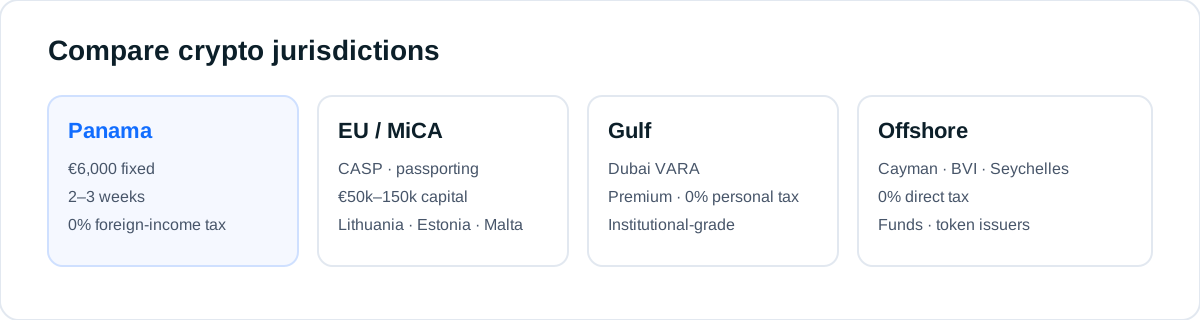
The timeline typically ranges from 3 to 6 months from application to approval, assuming all documentation is in order. CySEC aims to process applications within 3 months, but complex cases may take longer. For example, a straightforward utility token issuance with a complete white paper may be approved in 3 months, while a security token offering with complex legal structures could take 6 months. Consulting24 coordinates with local lawyers and CySEC to expedite the process. For a faster and cheaper alternative, consider Panama where the flat cost is EUR 6,000 and setup takes 2-4 weeks. However, Panama does not offer EU passporting.
Capital Requirement
Under MiCA, token issuers must maintain a minimum capital requirement based on the type and size of the issuance. For issuers of asset-referenced tokens (ARTs), the capital is EUR 350,000 or higher depending on the reserve assets. For e-money tokens (EMTs), the capital is the higher of EUR 350,000 or 2% of the average outstanding e-money. For other crypto-assets (e.g., utility tokens), the capital requirement is typically EUR 50,000 to EUR 125,000, depending on the service class. Cyprus also imposes a requirement for professional indemnity insurance or a guarantee fund for certain issuers.
Consulting24 advises clients on the exact capital needed based on their token classification and business model. For instance, a small utility token offering may only need EUR 50,000, while a large security token offering might require EUR 125,000. The capital must be held in a Cyprus bank account and cannot be used for operational expenses. CySEC may request proof of capital during the application and on an ongoing basis. For more details on capital requirements across jurisdictions, see our requirements page.
Tax Treatment
Cyprus offers a favorable tax regime for token issuers. Corporate income tax is 12.5%, one of the lowest in the EU. Capital gains from the sale of tokens may be exempt under certain conditions. VAT treatment of token issuance is generally exempt, but professional advice is essential. Additionally, Cyprus has a notional interest deduction (NID) on new equity, reducing effective tax rates further. There is no withholding tax on dividends paid to non-resident shareholders, and no capital gains tax on disposal of securities (including tokens) in many cases.
Token issuers should structure their operations to benefit from Cyprus's extensive double tax treaty network. Consulting24 coordinates with local tax advisors to optimize your tax position. For example, a company issuing utility tokens may pay zero VAT on the issuance, while income from token sales is taxed at 12.5%. Capital gains from selling tokens held as investments may be exempt if the tokens qualify as securities under Cyprus law. The NID can reduce taxable income by up to 80% of new equity capital. For a comparison of tax regimes, see our Cyprus vs Lithuania page.
Allowed Activities
With a Cyprus crypto token issuance license, you are permitted to:
- Issue tokens to the public via ICO, STO, or other offering methods
- Market and promote the token issuance within the EU (subject to MiCA marketing rules)
- Accept investments in fiat or crypto from investors
- Manage the token sale process, including KYC/AML checks
- List the token on secondary trading platforms (if the exchange is also regulated)
Activities not covered by this license include operating a crypto exchange, providing custody services, or running a trading platform. Those require separate licenses under MiCA (CASP license). For example, if you plan to also offer a trading platform for your token, you would need a CASP license in addition to the issuance license. Consulting24 can advise on whether you need multiple licenses and help you structure your operations accordingly. For more on CASP licenses, see our exchange license page.
Step-by-Step Application Process
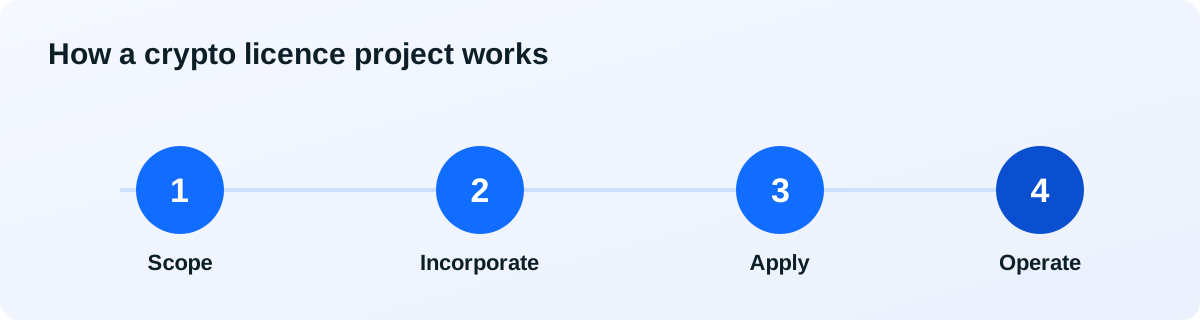
The process for obtaining a Cyprus crypto token issuance license involves several stages. Consulting24 advises and coordinates each step.
- Pre-application assessment: Determine your token classification and confirm eligibility. Prepare a business plan, white paper, and legal structure.
- Company incorporation: Set up a Cyprus company (private limited liability) with a registered office, local directors, and a compliance officer.
- Documentation preparation: Draft the white paper, risk disclosures, AML/KYC policies, and governance framework. Engage a local lawyer and auditor.
- Submit application to CySEC: File the complete application with supporting documents and pay the fee.
- CySEC review: CySEC assesses the application, may request clarifications or additional information. This stage takes 2-4 months.
- Approval and license issuance: Once approved, you receive the license and must maintain ongoing compliance, including periodic reporting and capital maintenance.
Consulting24 can handle the entire process, from company setup to regulatory liaison, ensuring a smooth application. For example, we recently assisted a DeFi protocol in obtaining a Cyprus issuance license in 4 months. We also provide ongoing compliance support. For a detailed timeline, see our application process page.
Banking & Payment Services
Opening a bank account in Cyprus for a crypto token issuance company can be challenging due to perceived risks. However, several banks in Cyprus accept crypto-related businesses, especially those with a CySEC license. Consulting24 assists clients in identifying crypto-friendly banks and preparing the necessary documentation (business plan, source of funds, AML policies).
Payment services for collecting investor funds can be provided by licensed payment institutions or e-money institutions. Cyprus-based EMI licenses are also an option. For faster setup, some issuers use third-party payment processors that comply with EU regulations. For example, a client we advised used a Cyprus EMI to accept EUR investments from EU investors, with funds held in segregated accounts. The EMI also handled KYC checks, reducing the issuer's compliance burden. Consulting24 can recommend suitable banking and payment partners. For more on banking for crypto firms, see our company setup page.
Benefits of the Cyprus License
Cyprus offers several advantages for token issuers:
- EU passporting: Under MiCA, a Cyprus license allows token issuance across all EU member states without additional registrations.
- Low corporate tax: 12.5% corporate income tax, with exemptions for capital gains and dividends.
- Skilled workforce: Access to legal, accounting, and compliance professionals familiar with crypto regulation.
- Strategic location: Cyprus is a gateway between Europe, the Middle East, and Asia.
- Established regulatory framework: CySEC has a solid reputation and clear guidelines for crypto assets.
Compared to other EU jurisdictions, Cyprus offers a balanced mix of cost, speed, and regulatory clarity. For example, Lithuania has a similar regime but with a slightly higher tax rate (15%) and a more crowded regulator. Malta has a higher capital requirement (EUR 150,000 minimum) and a longer timeline. Cyprus strikes a good balance. For a direct comparison, see our Cyprus vs Lithuania page and our Malta page.
Compliance & Ongoing Obligations
After obtaining the license, issuers must comply with ongoing requirements under MiCA and CySEC rules. These include:
- Annual renewal of the license and payment of supervisory fees
- Submission of periodic financial reports and white paper updates
- Maintaining minimum capital at all times
- Implementing strong AML/KYC procedures and reporting suspicious transactions
- Appointing a compliance officer and auditor
Failure to comply can result in fines, suspension, or revocation of the license. Consulting24 provides ongoing compliance support to ensure your token issuance remains in good standing. This is general guidance, not legal advice. For example, we help clients prepare annual reports, update white papers when material changes occur, and conduct internal audits. We also assist with CySEC inspections. For more on compliance, see our requirements page.
Common Mistakes to Avoid
Token issuers often make errors that delay or derail the application. Avoid these pitfalls:
- Inadequate white paper: The white paper must meet MiCA's content requirements, including risk warnings and technical descriptions.
- Underestimating capital needs: Ensure you have sufficient capital before applying; CySEC may request proof of funds.
- Poor AML/KYC setup: A weak compliance framework is a common reason for rejection.
- Ignoring marketing rules: Marketing communications must be fair, clear, and not misleading.
- Not engaging local advisors: Cyprus law requires local representation; working with a local law firm is essential.
Consulting24's experience across multiple jurisdictions helps clients avoid these mistakes and streamline the process. For example, we recently helped a client revise their white paper to include required risk disclosures, which had been omitted initially, saving them a rejection. We also ensure that AML policies are tailored to the specific token offering. For more tips, see our blog.
Alternatives to Cyprus: Panama and Other Jurisdictions
While Cyprus is a strong choice for EU-focused token issuers, other jurisdictions may be more suitable depending on your target market and budget. Panama offers a flat fee of EUR 6,000 for a crypto license, with no capital requirement and a 2-4 week setup time. However, Panama does not provide EU passporting and has a less established regulatory framework. It is ideal for projects targeting non-EU markets or those seeking a low-cost entry.
Other alternatives include Estonia, which has a lower cost (around EUR 3,000 application fee) but a higher tax rate (20% on distributed profits) and no EU passporting post-MiCA. Lithuania offers a similar regime to Cyprus with a 15% corporate tax and a faster timeline (2-4 months) but a more saturated market. Dubai (VARA) is a non-EU option with a strong framework but higher costs (EUR 50,000+) and no passporting. Consulting24 helps you choose the best jurisdiction based on your specific needs. For a full comparison, see our jurisdictions page.
Why Work with Consulting24?
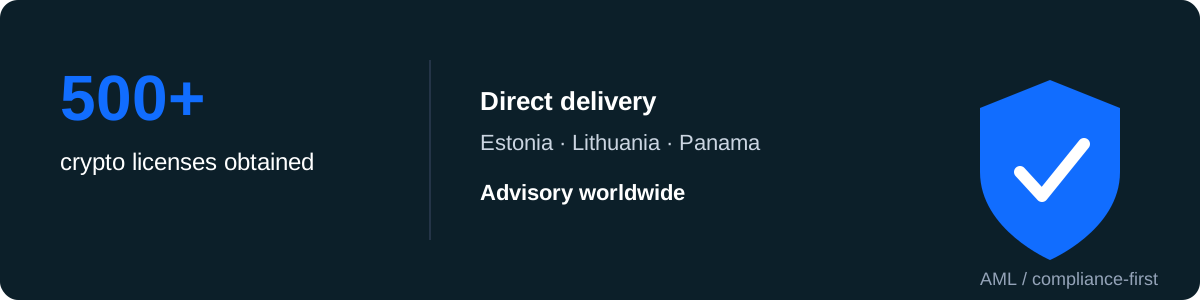
Consulting24 has obtained over 500 crypto licenses across multiple jurisdictions, including direct delivery in Estonia, Lithuania, and Panama. For Cyprus, we advise and coordinate the application process, using our network of local lawyers, compliance experts, and banking contacts. We provide end-to-end support from company setup to license approval and ongoing compliance.
Our team understands the nuances of MiCA and CySEC requirements, ensuring your application is complete and accurate. We also offer post-license services such as white paper updates, AML training, and regulatory reporting. Contact us via WhatsApp or book a consultation to discuss your project. We will help you determine if Cyprus is the right fit or if another jurisdiction like Panama better meets your needs.
Frequently asked questions
What is the minimum capital for a Cyprus crypto token issuance license?
For utility tokens and other non-ART/EMT crypto-assets, the minimum capital is typically EUR 50,000 to EUR 125,000 depending on the service class. For asset-referenced tokens (ARTs) and e-money tokens (EMTs), the requirement is EUR 350,000 or higher. Consulting24 can confirm the exact amount for your specific token type.
How long does it take to get a Cyprus crypto token issuance license?
The timeline is typically 3 to 6 months from application to approval. CySEC aims to process within 3 months, but complex cases may take longer. Pre-application preparation (company setup, white paper drafting) can add 1-2 months. Consulting24 helps streamline the process.
Can I use a Cyprus license to issue tokens across the EU?
Yes, under MiCA, a Cyprus crypto token issuance license allows you to passport your offering to all EU member states without additional registrations. This is a key advantage of Cyprus over non-EU jurisdictions like Panama.
What are the tax benefits of issuing tokens from Cyprus?
Cyprus has a 12.5% corporate tax rate, one of the lowest in the EU. Capital gains on token sales may be exempt, and there is no withholding tax on dividends. The notional interest deduction can further reduce taxable income. Consulting24 can connect you with local tax advisors.
Do I need a physical presence in Cyprus to get the license?
Yes, you must have a registered office in Cyprus and appoint local directors or a compliance officer. The company must be incorporated in Cyprus. Consulting24 can assist with company setup and local representation.
Can I issue both utility and security tokens under the same license?
It depends on the classification. Utility tokens fall under the 'other crypto-asset' category, while security tokens may be regulated as financial instruments. You may need a separate license or registration for security tokens. Consulting24 advises on the appropriate structure.
What happens if I don't comply with ongoing obligations?
Non-compliance can lead to fines, suspension, or revocation of the license. CySEC conducts periodic reviews. Consulting24 provides ongoing compliance support to help you meet all requirements.
Is the Cyprus license cheaper than other EU jurisdictions?
Cyprus is moderately priced compared to Malta or Luxembourg. Initial costs range from EUR 20,000 to EUR 50,000. Lithuania and Estonia may be slightly cheaper but have higher tax rates or longer timelines. Panama is a lower-cost alternative at EUR 6,000 flat.
Can I apply for the license if my company is already incorporated outside Cyprus?
You will need to incorporate a Cyprus subsidiary to apply for the license. The parent company can be foreign. Consulting24 handles the subsidiary setup and ensures compliance with local laws.
Does the license allow me to operate a crypto exchange?
No, the token issuance license only covers issuing tokens. Operating an exchange requires a separate CASP license under MiCA. Consulting24 can guide you on obtaining both licenses if needed.
Official sources
Related jurisdictions

Talk to a crypto-licensing expert
500+ licenses across Estonia, Lithuania, Panama and beyond. Tell us your model and we'll map the right route, honestly.
💬 Talk to an expertFree consultationGeneral guidance, not legal advice. Rules and fees evolve, and we confirm current requirements for your case.