Crypto Payment Institution License Qatar: Your 2026 Guide
The Qatar Financial Centre (QFC) has established itself as a leading hub for digital asset innovation in the Middle East. For businesses seeking to offer crypto payment services, the crypto payment institution license Qatar is the regulatory gateway. This license, issued by the QFC Regulatory Authority (QFCRA), allows firms to operate legally within the Qatar Financial Centre, providing services such as crypto-to-fiat conversion, merchant payment processing, and digital asset custody.
As of 2026, the QFCRA has refined its framework to align with international standards, including FATF recommendations. The license is designed for payment institutions that handle virtual assets, offering a clear path to compliance. Consulting24, with extensive experience across multiple jurisdictions, advises and coordinates the application process for this license, ensuring that your business meets all regulatory requirements efficiently. For a comparison with other options like Panama, see our Panama page or explore other jurisdictions.
What Is the Crypto Payment Institution License Qatar?
The crypto payment institution license Qatar is a regulatory authorization granted by the QFCRA to firms operating within the Qatar Financial Centre. It allows licensed entities to provide payment services involving virtual assets, including crypto-to-fiat exchanges, merchant acquisition, and wallet services. The license is part of Qatar's broader strategy to become a regional fintech hub, combining a strong legal framework with a business-friendly environment.
Key features include:
- Regulated by the QFCRA under the QFC's Financial Services Regulations.
- Applicable to both domestic and cross-border crypto payment activities.
- Requires a minimum capital of QAR 2 million (approximately EUR 500,000) for full authorization.
- Offers a 0% corporate tax rate on QFC-sourced income.
- 100% foreign ownership allowed.
This license is distinct from a standard payment institution license because it specifically covers virtual assets. Firms must demonstrate strong AML/CFT controls, cybersecurity measures, and a viable business plan. The QFCRA expects applicants to have a clear understanding of the risks associated with virtual assets and to implement strong risk management frameworks. Consulting24 helps firms prepare these documents to meet the regulator's standards.
Who Needs This License?
The crypto payment institution license Qatar is essential for any business that intends to provide payment services involving cryptocurrencies or other digital assets within or from the Qatar Financial Centre. Typical applicants include:
- Payment service providers offering crypto-to-fiat conversion.
- Merchant acquirers enabling crypto payments for businesses.
- Custodial wallet providers for digital assets.
- Remittance services using crypto for cross-border transfers.
- Fintech startups building crypto payment platforms.
If your business model involves handling virtual assets as part of a payment transaction, this license is likely required. Consulting24 can help you determine if your specific activities fall under the license scope, as the QFCRA provides detailed guidance on regulated activities. For example, a platform that allows users to pay for goods with Bitcoin and settles with merchants in fiat would need this license. Similarly, a service that facilitates crypto remittances to other countries would also be covered. The QFCRA's definition of payment services is broad, so it is important to get clarity early in the planning stage.
License Type & Regulator
The relevant regulator is the Qatar Financial Centre Regulatory Authority (QFCRA). The license type is a Payment Institution License with a specific endorsement for virtual asset services. The QFCRA is an independent regulator that oversees all financial services within the QFC, including banking, insurance, and capital markets. For crypto payment activities, the QFCRA has issued specific rules under the Financial Services Regulations (FSR) and the Virtual Asset Regulatory Framework.
Key regulatory features:
- Licensing is mandatory for all virtual asset payment services.
- Firms must comply with the QFC's AML/CFT rules, which are aligned with FATF standards.
- Ongoing supervision includes periodic reporting, audits, and on-site inspections.
- The QFCRA may impose conditions on licenses, such as transaction limits or capital requirements.
Consulting24 advises clients on meeting the QFCRA's expectations, from initial application to ongoing compliance. The regulator expects senior management to be fit and proper, with relevant experience in financial services or digital assets. The application process involves a thorough review of the business plan, governance structure, and risk management policies.
Cost & Timeline
The cost of obtaining a crypto payment institution license Qatar varies based on the complexity of the application and the services offered. As of 2026, the QFCRA charges application fees and annual supervision fees. Below is an indicative table based on typical scenarios. Exact figures should be confirmed during a consultation with Consulting24.
| Item | Estimated Cost (QAR) | Notes |
|---|---|---|
| Application fee | 50,000 - 100,000 | Non-refundable, paid upon submission. |
| Annual supervision fee | 30,000 - 80,000 | Based on license category and revenue. |
| Minimum capital requirement | 2,000,000 | Must be maintained at all times. |
| Professional fees (legal, compliance) | 100,000 - 300,000 | Varies with complexity. |
| Total estimated first-year cost | 2,180,000 - 2,480,000 | Excluding capital deposit. |
The timeline for approval typically ranges from 6 to 12 months, depending on the completeness of the application and the regulator's workload. Consulting24's coordinated approach can help streamline the process. For example, a well-prepared application with all required documents can be reviewed faster than one with gaps. The QFCRA may also request additional information, which can extend the timeline. It is advisable to start the process early and engage professional advisors from the outset.
Capital Requirement
The QFCRA mandates a minimum capital requirement of QAR 2 million (approximately EUR 500,000) for a crypto payment institution license. This capital must be held in liquid assets, such as cash or government bonds, and maintained throughout the license period. The capital serves as a buffer to cover operational risks and potential losses.
Additional capital may be required based on the volume of transactions or the risk profile of the business. For example, firms handling large transaction volumes may need to hold extra capital. The QFCRA uses a risk-based approach to determine capital adequacy. Consulting24 can assist in calculating the appropriate capital level based on your business plan. It is important to note that the capital must be unencumbered and available at all times. Firms should also consider the cost of maintaining this capital, as it may be tied up in low-yield assets.
Tax Treatment
One of the key advantages of operating within the Qatar Financial Centre is the favourable tax regime. Licensed entities benefit from a 0% corporate tax rate on income derived from QFC-sourced activities. There is also no withholding tax on dividends, interest, or royalties paid to non-residents. Additionally, there are no capital gains taxes, and no value-added tax (VAT) is applied to financial services.
However, firms must comply with transfer pricing rules and maintain proper accounting records. The QFC requires annual financial statements to be audited by a registered auditor. Consulting24 can connect you with tax advisors familiar with QFC regulations to ensure full compliance. It is worth noting that while the QFC offers a tax-free environment, businesses may still be subject to tax in their home country on profits repatriated. Double tax treaties may apply, and it is advisable to seek cross-border tax advice.
Allowed Activities
Under the crypto payment institution license Qatar, firms are permitted to engage in a range of activities, including:
- Conversion of virtual assets to fiat currency and vice versa.
- Merchant acquisition and payment processing for crypto transactions.
- Issuance and management of crypto payment instruments (e.g., prepaid cards).
- Digital asset custody services for payment-related purposes.
- Remittance services using virtual assets.
The QFCRA may restrict or expand these activities based on the license conditions. Activities not explicitly permitted, such as proprietary trading or token issuance, require separate authorization. For example, if a firm wants to operate a crypto exchange alongside payment services, they would need a separate license or an endorsement. Consulting24 can help define your scope of operations to align with the license. It is important to clearly describe your intended activities in the application to avoid scope creep later.
Step-by-Step Application Process
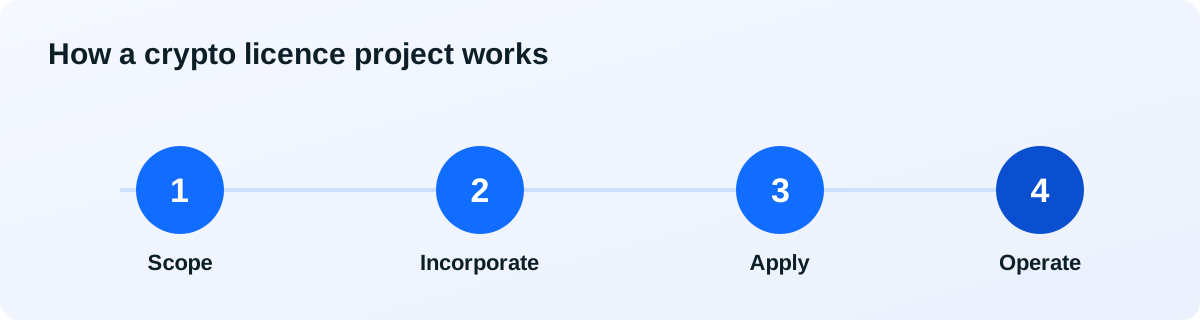
Obtaining a crypto payment institution license Qatar involves several stages. Consulting24 advises and coordinates each step to ensure a smooth process.
- Pre-application consultation: Discuss your business model with Consulting24 to determine eligibility and scope.
- Documentation preparation: Compile business plan, AML/CFT policies, financial projections, and governance structure.
- Submission: File the application with the QFCRA, including all required forms and fees.
- Regulatory review: The QFCRA assesses the application, which may take 3-6 months. They may request additional information.
- On-site inspection: The regulator may conduct an on-site visit to verify operational readiness.
- Approval and licensing: Once satisfied, the QFCRA issues the license with any conditions.
- Post-licensing compliance: Ongoing reporting, audits, and supervision.
Throughout the process, Consulting24 provides expert guidance, from drafting policies to liaising with the regulator. For example, we help prepare the AML/CFT manual that meets the QFCRA's requirements, which is a critical document. We also assist with the fit and proper assessment of key personnel. The timeline can be shortened if the application is complete and the business model is straightforward.
Banking & Payment Partners
Access to banking services is critical for any crypto payment institution. In Qatar, several banks within the QFC offer accounts to licensed firms, including QNB, Commercial Bank, and Doha Bank. However, due to the perceived risks of crypto, banks may conduct enhanced due diligence.
Consulting24 can introduce you to banking partners that are comfortable with virtual asset businesses. Additionally, licensed firms can partner with payment processors for fiat settlement. It is advisable to establish banking relationships early in the application process to demonstrate operational capability. For example, having a letter of intent from a bank can strengthen your application. Some banks may require a minimum deposit or charge higher fees for crypto-related accounts. Consulting24 can help negotiate terms and identify the best fit for your business.
Benefits of the Qatar License
Choosing the crypto payment institution license Qatar offers several strategic advantages:
- 0% corporate tax: Maximise profitability with no tax on QFC-sourced income.
- 100% foreign ownership: No need for a local partner.
- Strong regulatory framework: Enhances credibility with partners and customers.
- Strategic location: Access to Middle Eastern and Asian markets.
- No capital gains tax: Ideal for long-term holdings.
Compared to other jurisdictions, Qatar offers a unique combination of tax benefits and regulatory clarity. For a comparison with other options like Panama, see our Panama page or explore other jurisdictions. The license also allows for easy expansion into other GCC countries, as Qatar has strong trade links. The QFC's legal system is based on English common law, which provides familiarity for international investors.
Compliance & Trust
Maintaining compliance is an ongoing obligation. The QFCRA requires licensed firms to implement strong AML/CFT controls, conduct regular audits, and submit periodic reports. Failure to comply can result in fines, suspension, or revocation of the license.
Consulting24 helps firms establish compliance frameworks that meet QFCRA standards. This includes drafting policies, appointing a compliance officer, and training staff. Note that this is general guidance, not legal advice. We recommend engaging local legal counsel for specific compliance matters. For example, the QFCRA expects firms to have a risk-based approach to AML, including customer due diligence, transaction monitoring, and suspicious activity reporting. Regular internal audits are also required. Consulting24 can provide templates and checklists to help you stay on track.
Common Mistakes to Avoid
Applicants often make errors that delay or derail the licensing process. Common pitfalls include:
- Incomplete documentation: Missing business plans or inadequate AML policies.
- Underestimating capital: Failing to maintain the minimum capital requirement.
- Overlooking banking: Not securing a bank account before applying.
- Ignoring conditions: Not adhering to license conditions post-approval.
- Poor governance: Lack of experienced directors or compliance officers.
Consulting24's coordinated approach helps avoid these mistakes. For example, we review all documents before submission to ensure completeness. We also advise on the selection of directors and compliance officers with relevant experience. Another common mistake is not budgeting for ongoing compliance costs, such as annual audit fees and compliance officer salaries. We help clients create a realistic budget that covers both initial and ongoing expenses.
Alternatives and Comparisons
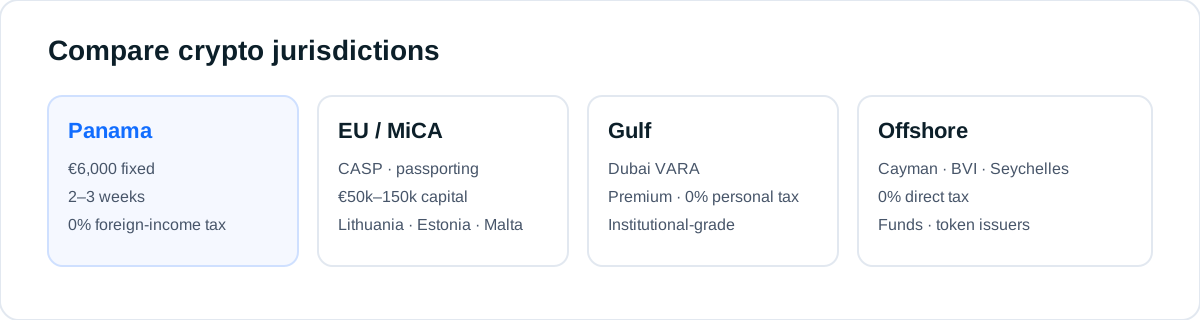
While the Qatar license offers significant advantages, it may not be the best fit for every business. Alternatives include Panama, Lithuania, and the UAE. Panama offers a flat fee of EUR 6,000 for a crypto license, with no minimum capital and no tax on offshore income. However, Panama's regulatory framework is less established than Qatar's, and banking access can be challenging. Lithuania, under MiCA, requires a minimum capital of EUR 125,000 for CASP licenses, with a 15% corporate tax rate. The UAE, particularly Dubai, has a more complex rules with multiple free zones, but offers a 0% tax rate and strong banking relationships.
For a detailed comparison, see our comparison with Lithuania and our Panama page. Consulting24 can help you evaluate which jurisdiction aligns best with your business model, budget, and growth plans. We provide impartial advice and coordinate applications in the jurisdictions we serve directly, such as Estonia and Lithuania, while advising on others like Qatar.
Why Work with Consulting24?
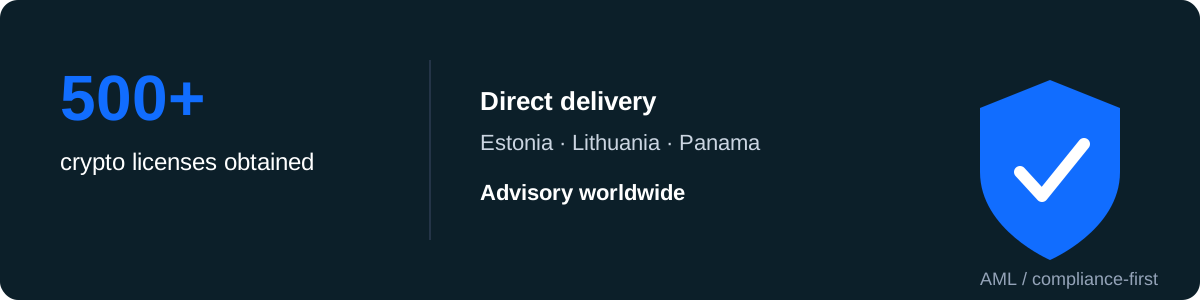
Consulting24 has obtained over 500 crypto licenses across multiple jurisdictions. For the Qatar crypto payment institution license, we advise and coordinate the application process, using our network of local legal and compliance experts. We do not file the application ourselves, but we ensure that all requirements are met and that the process runs smoothly.
Our services include:
- Initial eligibility assessment and jurisdiction comparison.
- Preparation of business plan, AML/CFT policies, and other documentation.
- Liaison with QFCRA-appointed agents and legal counsel.
- Ongoing compliance support after licensing.
We also offer assistance with company setup, including registration with the QFC. Contact us today to discuss your project. We can be reached via WhatsApp for a free initial consultation.
Frequently asked questions
What is the minimum capital for a crypto payment institution license in Qatar?
The minimum capital requirement is QAR 2 million (approximately EUR 500,000). This must be held in liquid assets and maintained throughout the license period. Additional capital may be required based on transaction volume or risk profile.
How long does it take to get the license?
The typical timeline is 6 to 12 months from application to approval. The duration depends on the completeness of the application and the regulator's workload. Consulting24 can help expedite the process by ensuring all documents are in order.
What activities are allowed under this license?
Permitted activities include crypto-to-fiat conversion, merchant acquisition, custodial wallet services, and remittance services using virtual assets. Proprietary trading or token issuance requires separate authorization.
Is there a corporate tax on profits?
Licensed entities benefit from a 0% corporate tax rate on income derived from QFC-sourced activities. There is also no withholding tax on dividends, interest, or royalties paid to non-residents.
Can I have 100% foreign ownership?
Yes, the QFC allows 100% foreign ownership of licensed entities. There is no requirement for a local partner.
Do I need a physical office in Qatar?
Yes, the QFC requires licensed firms to have a physical presence within the Qatar Financial Centre. This can be a serviced office or a dedicated space. Consulting24 can help with office setup.
What are the ongoing compliance requirements?
Ongoing obligations include AML/CFT compliance, regular audits, periodic reporting to the QFCRA, and maintaining adequate capital. A compliance officer must be appointed. Consulting24 provides ongoing compliance support.
Can I use the license to serve customers outside Qatar?
Yes, the license allows for cross-border payment services. However, you must comply with the laws of the jurisdictions where your customers are located. Consulting24 can advise on cross-border regulatory considerations.
How does the Qatar license compare to Panama?
Panama offers a flat fee of EUR 6,000 with no minimum capital, but its regulatory framework is less established. Qatar has a higher capital requirement but provides a stronger regulatory environment and 0% tax. For more details, see our Panama page.
What happens if I fail to maintain compliance?
Non-compliance can result in fines, suspension, or revocation of the license. The QFCRA takes enforcement actions seriously. Consulting24 helps firms establish strong compliance frameworks to avoid these risks.
Official sources
Primary sources
This guide reflects 2026 rules. Verify current requirements with the official regulator:
Related jurisdictions

Talk to a crypto-licensing expert
500+ licenses across Estonia, Lithuania, Panama and beyond. Tell us your model and we'll map the right route, honestly.
💬 Talk to an expertFree consultationGeneral guidance, not legal advice. Rules and fees evolve, and we confirm current requirements for your case.