Crypto Stablecoin License in Cayman Islands (2026): Cost & Setup Islands Crypto Stablecoin License: The Complete 2026 Guide
The Cayman Islands has established itself as a leading jurisdiction for stablecoin issuers and crypto asset businesses seeking a well-regulated environment. In 2026, the Cayman Islands Monetary Authority (CIMA) oversees the licensing of virtual asset service providers (VASPs) under the Virtual Asset (Service Provider) Act, 2020 (VASP Act). This page provides a comprehensive overview of the crypto stablecoin license in the Cayman Islands, including who needs it, costs, timelines, and how Consulting24 can help you manage the process.
Whether you are launching a stablecoin pegged to a fiat currency or a crypto-backed asset, the Cayman Islands offers a clear legal framework, zero direct taxes, and strong investor protection. Consulting24 advises and coordinates applications for the Cayman Islands crypto license, using our expertise in over 500 licensing projects worldwide. For a simpler alternative, see our Panama license page.
What is the Cayman Islands Crypto Stablecoin License?
The Cayman Islands crypto stablecoin license is a regulatory authorization issued by CIMA under the VASP Act. It allows entities to conduct virtual asset activities, including issuing stablecoins, operating exchanges, and providing custodial services. The regime is aligned with the FATF recommendations and is recognized for its strong AML/CFT requirements.
Stablecoin issuers must comply with specific capital requirements, governance standards, and reporting obligations. The license is essential for any business that wishes to issue or facilitate stablecoin transactions within or from the Cayman Islands. Consulting24 advises clients on structuring their entities to meet CIMA's expectations. As of 2026, the Cayman Islands remains a top choice for stablecoin projects due to its tax-neutral status and strong legal framework. For a comparison with EU regimes under MiCA, see our jurisdictions hub.
Who Needs a Cayman Islands Crypto License?
Any person or entity that provides virtual asset services in or from the Cayman Islands must obtain a license from CIMA. This includes:
- Stablecoin issuers (fiat-collateralized, crypto-collateralized, or algorithmic)
- Virtual asset exchanges (centralized and decentralized)
- Custodial wallet providers
- Virtual asset payment processors
- Brokers and dealers in virtual assets
If your business involves issuing a stablecoin or facilitating its transfer, you likely fall under the VASP Act. Consulting24 can help you determine your specific licensing obligations. For example, a project issuing a USD-pegged stablecoin to retail investors would need a Class A license, while a private placement to accredited investors might qualify for Class B. Always confirm your specific obligations with a legal advisor.
License Type and Regulator
The regulator is the Cayman Islands Monetary Authority (CIMA). Under the VASP Act, there are two main license categories:
- Class A (Full) License: For entities that provide virtual asset services to the public, including stablecoin issuance and exchange operations.
- Class B (Restricted) License: For entities that provide services only to a limited group of persons (e.g., institutional investors) or for a limited period.
Stablecoin issuers typically require a Class A license. The licensing process involves a thorough assessment of the applicant's business model, AML policies, and financial soundness. CIMA also requires that at least one director be a resident of the Cayman Islands, which can be arranged through professional service providers. Consulting24 helps you choose the right license class and prepare the application.
Cost and Timeline
The cost of obtaining a Cayman Islands crypto stablecoin license depends on several factors, including the license class and complexity of the application. Below is an indicative cost table:
| Item | Estimated Cost (USD) |
|---|---|
| Application fee (Class A) | $5,000 - $10,000 |
| Annual license fee (Class A) | $10,000 - $20,000 |
| Legal and advisory fees | $20,000 - $50,000 |
| Company incorporation (exempted company) | $2,000 - $5,000 |
| Total setup (including incorporation) | $35,000 - $85,000 |
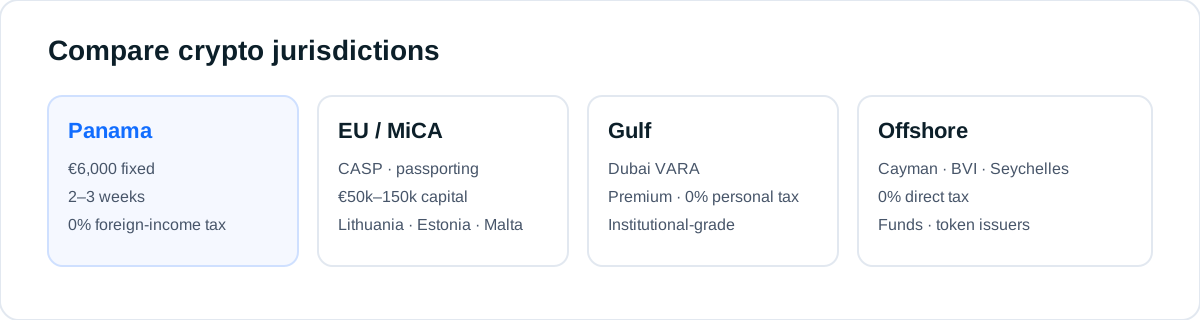
Timeline: The application process typically takes 4 to 8 months from submission to approval, depending on the completeness of the application and CIMA's workload. Pre-application consultation with CIMA can reduce delays. Consulting24 provides a detailed cost breakdown during your initial consultation. For a faster and cheaper option, consider Panama at EUR 6,000 flat.
Capital Requirement
The VASP Act requires licensees to maintain a minimum capital base. For stablecoin issuers, the capital requirement is typically Cayman Islands Dollars (KYD) 100,000 (approx. USD 120,000). However, CIMA may impose higher capital requirements based on the risk profile and volume of transactions. For example, a stablecoin with a large market cap may require additional capital to cover operational risks. Consulting24 advises clients on structuring their capital to meet regulatory expectations. The capital must be maintained in liquid assets, such as cash or government bonds. For comparison, under MiCA in the EU, capital requirements start at EUR 50,000 for certain services, but stablecoin issuers may face higher tiers up to EUR 150,000.
Tax Treatment
The Cayman Islands imposes no direct taxes on corporate profits, capital gains, or income. There are no withholding taxes on dividends or interest paid to non-residents. Stablecoin issuers operating from the Cayman Islands benefit from a tax-neutral environment. The only taxes are indirect, such as stamp duties on certain documents (minimal). This makes the jurisdiction highly attractive for crypto businesses seeking tax efficiency. For comparison, Panama also offers tax neutrality but with a simpler licensing process at a flat EUR 6,000. However, Panama's regulatory framework is less comprehensive for stablecoin issuance.
Allowed Activities Under the License
A Class A license permits the following activities:
- Issuing stablecoins (including fiat-backed, crypto-backed, and algorithmic)
- Operating a virtual asset exchange (order book, AMM, or OTC)
- Providing custodial wallet services
- Transferring virtual assets on behalf of clients
- Virtual asset payment services
- Brokerage and dealing in virtual assets
Stablecoin issuers must also comply with reserve asset requirements and redemption obligations. For instance, a fiat-backed stablecoin must hold equivalent fiat reserves in a regulated bank. Consulting24 helps clients define their business scope to align with CIMA's expectations. Ensure your business plan details how you will manage reserves and handle redemptions.
Step-by-Step Application Process
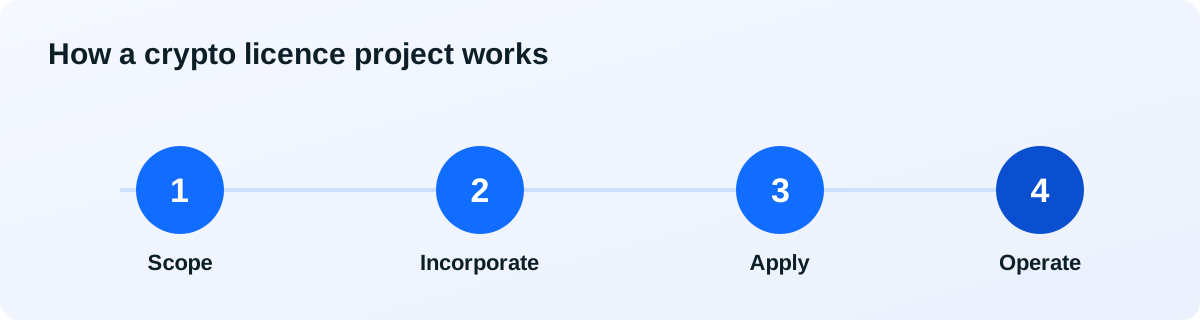
The application process for a Cayman Islands crypto stablecoin license involves several stages:
- Pre-application consultation: Engaging with CIMA to discuss the business model and licensing requirements.
- Company incorporation: Establishing a Cayman Islands exempted company or limited liability company.
- Document preparation: Drafting a business plan, AML/CFT policies, risk assessment, and governance framework.
- Submission: Filing the application with CIMA, including all supporting documents and fees.
- Review and due diligence: CIMA conducts a thorough review, including background checks on directors and shareholders.
- Approval: If satisfied, CIMA grants the license subject to conditions.
- Post-licensing compliance: Ongoing reporting, audits, and regulatory filings.
Consulting24 advises and coordinates each step, ensuring a smooth process. For a detailed guide, see our application process page. We also recommend reviewing our requirements page for a checklist of documents.
Banking and Payment Solutions
Stablecoin issuers in the Cayman Islands require banking relationships for fiat reserve accounts and operational expenses. The jurisdiction has a well-developed banking sector with several international banks, though some may have restrictive policies on crypto-related businesses. Consulting24 can help you identify banks that accept VASP clients. Additionally, payment processors and e-money institutions can provide alternative solutions for fiat on/off ramps. For example, a stablecoin issuer might use a local bank for reserves and a payment processor for user redemptions. We also advise on integrating with global payment networks to ensure liquidity. Be prepared for enhanced due diligence from banks, as many require a clear business plan and proof of regulatory compliance.
Benefits of the Cayman Islands for Stablecoin Issuers
The Cayman Islands offers several advantages for stablecoin projects:
- Tax neutrality (no corporate tax, no capital gains tax)
- Established legal framework under English common law
- Clear regulatory guidance from CIMA
- Strong reputation as a financial center
- Access to professional services (legal, accounting, banking)
- Political and economic stability
Compared to other jurisdictions like Panama (EUR 6,000 flat fee for a license), the Cayman Islands is more expensive but offers a more comprehensive regulatory framework for stablecoin issuers. For a comparison with other jurisdictions, see our jurisdictions hub. The Cayman Islands is particularly suited for projects that require a high level of regulatory certainty and investor confidence.
Compliance and Trust
Compliance is critical for maintaining a Cayman Islands crypto license. Licensees must adhere to ongoing AML/CFT obligations, submit annual audited financial statements, and report suspicious transactions. CIMA conducts periodic reviews and may impose sanctions for non-compliance. Consulting24 provides ongoing compliance support to ensure your business remains in good standing. General guidance, not legal advice. We recommend engaging a local compliance officer and conducting regular internal audits. Key compliance areas include transaction monitoring, customer due diligence, and record-keeping. Failure to comply can result in fines or license revocation.
Common Mistakes to Avoid
Applicants often make the following errors:
- Underestimating the capital requirement (CIMA may demand more than the minimum)
- Inadequate AML policies (must be tailored to the business model)
- Incomplete documentation (missing details on reserve management for stablecoins)
- Choosing the wrong license class (Class B may not permit public issuance)
- Not engaging with CIMA early in the process
Consulting24 helps you avoid these pitfalls with expert guidance. For instance, we ensure your business plan includes a detailed reserve management policy to satisfy CIMA's requirements. Another common mistake is failing to appoint a local director or compliance officer in a timely manner. We coordinate with local service providers to meet these requirements.
Alternatives and Comparisons
While the Cayman Islands is a strong choice, other jurisdictions offer different advantages. Panama provides a crypto license at a flat EUR 6,000, with no capital requirement and fast setup (2-3 months). However, Panama's regulatory framework is less comprehensive for stablecoin issuance. Lithuania and Estonia offer EU-regulated licenses under MiCA, with capital requirements starting at EUR 50,000. The Cayman Islands is ideal for projects that prioritize tax efficiency and a strong regulatory environment. For a full comparison, visit our jurisdictions page. Each jurisdiction has its own trade-offs; we help you choose the right one. For example, if you need to serve EU customers, a MiCA-compliant license in Lithuania might be more appropriate.
Why Choose Consulting24 for Your Cayman Islands License?
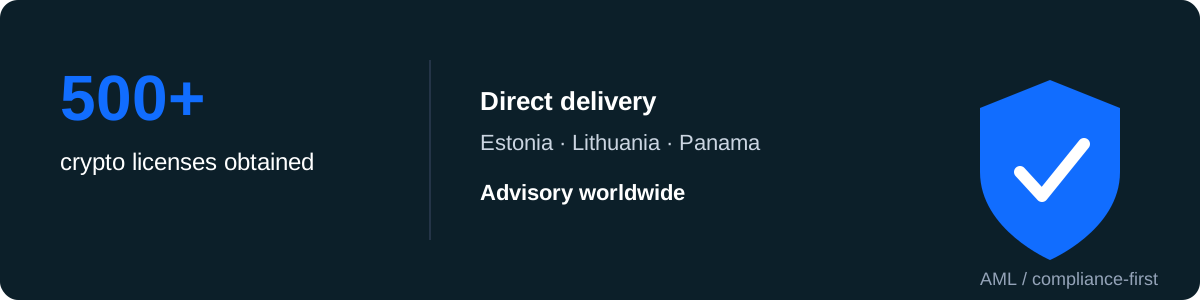
Consulting24 has extensive experience in crypto licensing across multiple jurisdictions, including the Cayman Islands. We advise and coordinate the entire application process, from company incorporation to post-licensing compliance. Our team has successfully handled over 500 licensing projects worldwide, giving us deep insights into regulatory expectations. We do not guarantee approval, but we maximize your chances by preparing a thorough and compliant application. For jurisdictions where we do not deliver directly, such as the Cayman Islands, we provide advisory and coordination services. Contact us for a consultation to discuss your project.
Frequently asked questions
What is the minimum capital requirement for a Cayman Islands stablecoin license?
The minimum capital requirement is KYD 100,000 (approx. USD 120,000). However, CIMA may require higher capital based on the risk profile and transaction volume of the stablecoin issuer. The capital must be held in liquid assets.
How long does it take to get a Cayman Islands crypto license?
The application process typically takes 4 to 8 months from submission to approval. Pre-application consultation with CIMA can help reduce delays. The timeline depends on the completeness of your application and CIMA's current workload.
What are the tax benefits of the Cayman Islands for stablecoin issuers?
The Cayman Islands imposes no direct taxes on corporate profits, capital gains, or income. There are no withholding taxes on dividends or interest paid to non-residents. Only minimal stamp duties apply, making it a tax-neutral jurisdiction.
Can I issue an algorithmic stablecoin under the Cayman Islands license?
Yes, the VASP Act does not prohibit algorithmic stablecoins. However, you must demonstrate to CIMA that your reserve management and redemption mechanisms are strong and compliant with AML/CFT requirements.
What is the difference between Class A and Class B licenses?
Class A (Full) license allows providing virtual asset services to the public, including stablecoin issuance. Class B (Restricted) license is for services limited to a specific group (e.g., institutional investors) or for a limited period. Stablecoin issuers typically need Class A.
Do I need a local director in the Cayman Islands?
Yes, CIMA requires that at least one director be a resident of the Cayman Islands. This can be arranged through professional service providers. Consulting24 can help you find a suitable director.
What are the ongoing compliance obligations after obtaining the license?
Licensees must submit annual audited financial statements, conduct AML/CFT reporting, file suspicious transaction reports, and undergo periodic regulatory reviews. Ongoing compliance support is recommended.
Can I use the Cayman Islands license to serve customers in the EU?
The Cayman Islands license does not automatically authorize services in the EU. You would need to comply with local regulations in each EU member state. Consider a MiCA-compliant license in Lithuania or Estonia for EU customers.
How much does the entire licensing process cost?
Total setup costs typically range from USD 35,000 to 85,000, including application fees, legal and advisory fees, and company incorporation. Annual license fees are additional. Contact Consulting24 for a detailed quote.
What banking options are available for stablecoin issuers in the Cayman Islands?
Several international banks operate in the Cayman Islands, but many have restrictive policies on crypto businesses. Consulting24 can help identify banks that accept VASP clients. Alternative payment processors and e-money institutions are also available.
Is the Cayman Islands license recognized globally?
The Cayman Islands is a FATF-compliant jurisdiction, and its license is respected internationally. However, recognition depends on the regulations of other countries. The license demonstrates strong AML/CFT compliance.
What happens if I fail to comply with CIMA regulations?
Non-compliance can result in fines, suspension, or revocation of the license. CIMA conducts periodic reviews and may impose sanctions. It is crucial to maintain ongoing compliance with the help of a local compliance officer.
Primary sources
This guide reflects 2026 rules. Verify current requirements with the official regulator:
Related jurisdictions

Talk to a crypto-licensing expert
500+ licenses across Estonia, Lithuania, Panama and beyond. Tell us your model and we'll map the right route, honestly.
💬 Talk to an expertFree consultationGeneral guidance, not legal advice. Rules and fees evolve, and we confirm current requirements for your case.