UAE Crypto Company Costs Broken Down: 2026 Guide for Founders

If you are a crypto founder evaluating where to base your venture, the UAE often appears as a top contender. But understanding the full picture of UAE crypto company costs requires more than just a glance at license fees. This guide breaks down every cost component you need to budget for, from regulatory fees and capital requirements to ongoing compliance and banking costs. We compare these with the flat €6,000 Panama option and other jurisdictions to help you make an informed decision.
Consulting24 has secured over 500 crypto licenses worldwide, delivering directly in Estonia, Lithuania, and Panama, and advising on all other jurisdictions including the UAE. Our experts provide clear, honest guidance so you can choose the right route for your business. Whether you are setting up a trading platform, a wallet service, or a DeFi project, this breakdown will help you plan your budget effectively.
The UAE has become a global hub for crypto innovation, but its regulatory regime is fragmented across emirates and free zones. Costs vary dramatically depending on whether you choose Dubai's VARA, Abu Dhabi's ADGM, or a mainland SCA license. This guide covers each scenario with concrete figures, so you can compare apples to apples with other jurisdictions like Panama, Lithuania, or Estonia.
What Are UAE Crypto Company Costs?
UAE crypto company costs encompass all expenses required to establish and operate a crypto asset service provider (CASP) in the United Arab Emirates. These include regulatory license fees, corporate setup costs, office space requirements, capital deposits, legal and compliance consulting, and ongoing annual fees. The UAE has multiple free zones and mainland options, each with its own cost structure. The primary regulators are the Securities and Commodities Authority (SCA) at the federal level, the Virtual Assets Regulatory Authority (VARA) in Dubai, and the Abu Dhabi Global Market (ADGM). Costs vary significantly depending on the emirate, the type of license, and the services offered.
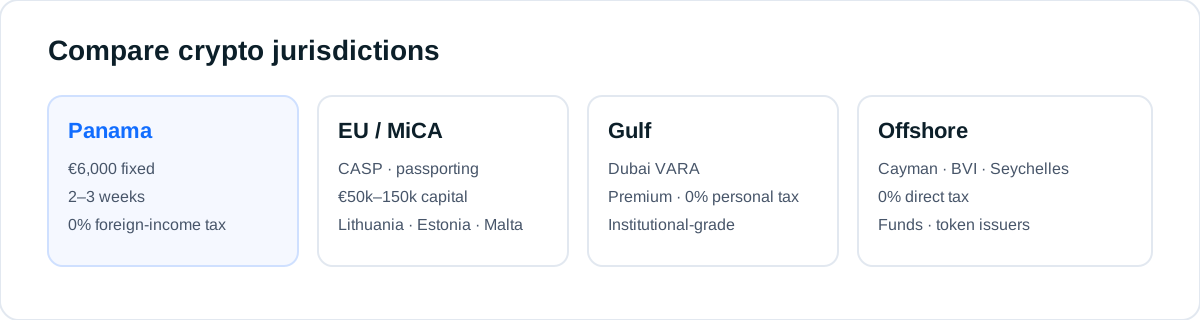
For a comprehensive comparison, you can explore other jurisdictions we cover, such as Lithuania and Estonia, which offer EU-regulated frameworks under MiCA. In contrast, Panama offers a flat €6,000 setup with no capital requirement, making it a starkly different proposition.
To illustrate the range, a VARA Category 1 license (full exchange) can cost upwards of €150,000 in first-year expenses, while a smaller ADGM firm might start at €50,000. These figures include regulatory fees, corporate setup, legal costs, and office space. Ongoing annual costs add another €20,000 to €60,000. Understanding these numbers is critical before committing to the UAE route.
Who Needs a UAE Crypto License?
Any business that provides virtual asset services in or from the UAE needs a license. This includes cryptocurrency exchanges, custodial wallet providers, OTC desks, token issuers, and DeFi platforms that offer regulated activities. The UAE has become a hub for crypto innovation, attracting startups and established firms alike. However, the costs can be prohibitive for early-stage projects. If your budget is limited, you might consider Panama at a flat €6,000, which offers a straightforward licensing process without the high overhead of the UAE.
Consulting24 helps you assess whether the UAE is the right fit based on your business model, target market, and funding stage. We advise on alternative routes if the UAE costs are not justifiable. For example, a pre-revenue startup with a small team may find Panama or Lithuania more suitable, while a well-funded exchange targeting the Middle East might justify the UAE investment.
Typical clients who choose the UAE include: large trading platforms needing regional credibility, token issuers targeting wealthy investors, and custodians serving institutional clients. If your business falls into these categories, the UAE's regulatory clarity and tax benefits may outweigh the high entry cost.
License Type and Regulator
The UAE has multiple regulators for crypto activities. The main ones are:
- Virtual Assets Regulatory Authority (VARA) - Dubai's dedicated crypto regulator, covering the mainland and free zones except ADGM. VARA issues licenses in categories: Category 1 (full exchange), Category 2 (broker-dealer), Category 3 (custodian), Category 4 (payment services), and Category 5 (advisory).
- Abu Dhabi Global Market (ADGM) - An international financial centre with its own framework for virtual asset activities. ADGM offers a Financial Services Permission (FSP) for crypto activities, with sub-categories for operating a multilateral trading facility (MTF), custodianship, and more.
- Securities and Commodities Authority (SCA) - The federal regulator overseeing virtual asset activities outside Dubai and ADGM. SCA's framework is less developed but is harmonising with VARA standards.
License types include Category 1 (full exchange), Category 2 (broker-dealer), Category 3 (custodian), and others. Each has different capital and operational requirements. The UAE does not yet have a unified framework like the EU's MiCA, but it is moving towards harmonisation. For a comparison with EU frameworks, see our Panama vs Lithuania page (similar dynamics apply).
Cost and Timeline: Detailed Breakdown
The total cost for a UAE crypto license ranges from approximately €50,000 to €150,000 or more, depending on the regulator and license type. Below is a typical cost breakdown for a VARA Category 1 license in Dubai (2026 estimates):
| Cost Component | Amount (EUR) |
|---|---|
| Regulatory application fee | €10,000 - €20,000 |
| License issuance fee | €20,000 - €40,000 |
| Corporate setup (free zone, e.g., DMCC) | €5,000 - €15,000 |
| Office space (physical or virtual, annual) | €5,000 - €20,000 |
| Legal and compliance consulting | €10,000 - €30,000 |
| Capital deposit (non-refundable, held as liquid capital) | €50,000 - €150,000 (depending on license category) |
| Annual renewal fees (including audit) | €10,000 - €30,000 |
| Total first-year cost | €100,000 - €300,000 |
Timeline: 4 to 12 months, depending on the complexity and regulator. VARA applications typically take 6-9 months, while ADGM can be faster at 4-6 months. In contrast, Panama costs a flat €6,000 and can be completed in 2-3 months. For a detailed comparison, see our cost page. Note that the capital deposit is often a regulatory requirement that must be maintained; it is not a fee but an opportunity cost.
Additional costs not shown: travel for in-person meetings (if required), translation of documents, and potential fees for modifying the application. Always budget a 20% contingency.
Capital Requirements
Capital requirements in the UAE vary by regulator and license category. For VARA, minimum capital typically starts at €50,000 for a Category 3 (custodian) and goes up to €150,000 for a Category 1 (full exchange). ADGM requires a minimum of €50,000 for a small firm, but larger operations may need €500,000 or more. These funds must be held in a UAE bank account and are often required to be maintained as liquid capital. The capital is not a fee but a regulatory buffer; it remains on your balance sheet but cannot be used for operational expenses without approval.
In contrast, Panama has no minimum capital requirement, making it more accessible for startups. For more on capital, visit our requirements page. Under MiCA in the EU, capital tiers are €50,000, €125,000, and €150,000 depending on services, which is similar to the UAE's range but with a clearer structure. Consulting24 can help you calculate the exact capital you need based on your planned activities.
Tax Treatment
The UAE offers a favourable tax environment: 0% corporate income tax for most free zone companies, no capital gains tax, and no withholding tax on dividends. However, a 9% corporate tax was introduced for mainland companies with profits above €100,000, but free zones remain exempt if they meet certain conditions (e.g., substance requirements). VAT is 5% on most services. There is no personal income tax. This makes the UAE attractive for crypto businesses. However, the high setup costs may offset the tax benefits for smaller firms.
Panama also offers territorial taxation (no tax on foreign-source income) and no capital gains tax, with a flat €6,000 setup cost. For a detailed comparison of tax regimes, see our comparison page. Note that tax treaties may affect withholding taxes on cross-border payments; the UAE has an extensive treaty network, while Panama has fewer treaties.
Allowed Activities
Under a UAE crypto license, you can conduct a range of activities, including:
- Operating a crypto exchange (order book, OTC)
- Providing custodial wallet services
- Broker-dealer services for virtual assets
- Token issuance and listing (subject to additional approval)
- Virtual asset management and advisory
- Payment services using virtual assets
Each activity class may require a separate license or endorsement. The UAE does not yet have a comprehensive framework for DeFi or NFTs, but VARA is developing guidelines. For a full list of allowed activities in other jurisdictions, see our exchange license page. In Panama, the license covers a broad range of crypto activities without sub-categorisation, offering more flexibility at a lower cost.
Step-by-Step Application Process
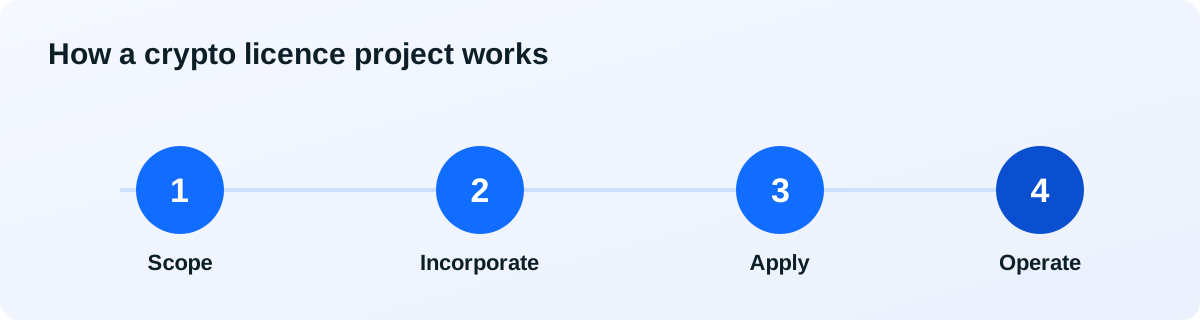
Obtaining a UAE crypto license involves several stages:
- Pre-application - Prepare a detailed business plan, compliance policies (AML/KYC), risk assessment, and corporate structure. Appoint a MLRO and board members with relevant experience.
- Corporate setup - Register a company in a free zone (e.g., DMCC, ADGM) or mainland. This includes submitting shareholder and director details, and obtaining a trade license.
- Regulatory application - Submit to VARA, ADGM, or SCA with all required documents, including audited financials (if applicable) and proof of capital.
- Review and interview - Regulator reviews the application, may request additional information or changes, and interviews key personnel (e.g., CEO, MLRO).
- Capital deposit - Deposit the required capital in a UAE bank account and provide a certificate from the bank. This step can take weeks due to banking delays.
- License issuance - Once approved, pay the license fee and receive the license. You may need to sign an undertaking.
- Ongoing compliance - Annual audits, AML reporting, regulatory filings, and renewal every 1-3 years.
Consulting24 advises on each step and can coordinate with local partners. For a detailed guide, see our application process page. The timeline can stretch if the regulator requests clarifications; expect at least 6 months.
Banking and Payments
Opening a bank account for a UAE crypto company can be challenging due to compliance concerns. Many traditional banks (e.g., Emirates NBD, ADCB) are cautious about crypto-related businesses and may require extensive documentation, including the license, business plan, source of funds, and proof of AML policies. Some UAE banks and digital banks (e.g., Zand, Al Maryah Community Bank) are more open to crypto firms, but they may impose transaction limits or higher fees.
Alternatively, you can use payment processors like Checkout.com or crypto-friendly banks in other jurisdictions. Panama offers easier banking with no restrictions on crypto businesses; many international banks accept Panama-incorporated companies. For more on banking, visit our company setup page. Consulting24 can introduce you to banking partners that have worked with crypto clients before.
A common workaround is to open a multi-currency account with a fintech like Revolut or Wise, but these may not accept high-risk crypto businesses. Always check the bank's crypto policy before applying.
Benefits of a UAE Crypto License
The UAE offers several advantages: zero corporate tax (in free zones), a strong regulatory framework, access to a growing crypto ecosystem, and a strategic location between East and West. The government actively supports blockchain innovation through initiatives like the Dubai Blockchain Strategy. A UAE license also enhances credibility with investors and partners, especially in the Middle East and Asia.
However, the high costs and lengthy timeline are drawbacks. For founders with limited budgets, Panama provides a cost-effective alternative with a flat €6,000 fee and no capital requirement. Compare the two on our comparison page (similar to Panama vs Lithuania). The UAE is best for well-funded projects that need a strong regional presence and are willing to invest in compliance infrastructure.
Compliance and Trust
UAE regulators enforce strict AML/CFT compliance. You must appoint a MLRO, implement KYC procedures, conduct ongoing monitoring, and submit regular reports to the regulator. The UAE is on the FATF grey list (as of 2026), which may affect international banking relationships and add to compliance costs. This status requires enhanced due diligence from counterparties.
Consulting24 provides guidance on building a compliant framework, including drafting AML policies, conducting risk assessments, and training staff. This is general guidance, not legal advice. Always consult a qualified lawyer for your specific situation. Compliance costs can add €10,000-€20,000 annually for external audits and legal support. In contrast, Panama's compliance requirements are lighter, with no mandatory MLRO appointment for most license types.
Common Mistakes to Avoid
Founders often underestimate the total cost and timeline. Common mistakes include:
- Choosing the wrong free zone or regulator for their activities (e.g., applying to ADGM when VARA is more appropriate).
- Not budgeting for legal and compliance consulting fees, which can be 20-30% of total costs.
- Underestimating the difficulty of opening a bank account; many founders assume it will be straightforward.
- Failing to prepare a strong AML policy upfront, leading to application delays or rejection.
- Ignoring ongoing annual costs like audit and renewal fees, which can be €10,000-€30,000 per year.
- Not accounting for the capital deposit as an opportunity cost (funds are locked up).
To avoid these, work with an experienced advisor like Consulting24 who can help you plan accurately. We have seen many applications fail due to incomplete documentation or unrealistic timelines.
Alternatives and Comparisons
If the UAE costs are too high, consider these alternatives:
- Panama - Flat €6,000, no minimum capital, territorial tax, fast setup (2-3 months). Ideal for startups and small to medium businesses. See our Panama page.
- Lithuania - EU MiCA-compliant, capital from €50,000, total cost around €15,000-€25,000. Good for EU market access. See our Lithuania page.
- Estonia - EU MiCA-compliant, capital from €50,000, total cost around €10,000-€20,000. Digital-friendly environment. See our Estonia page.
- Dubai (VARA) - As detailed above, high cost but strong regional presence.
For a full comparison, see our Panama vs Lithuania page and other jurisdictions. Consulting24 can help you evaluate which jurisdiction aligns with your business goals and budget.
How Consulting24 Can Help
Consulting24 delivers crypto licenses directly in Estonia, Lithuania, and Panama. For the UAE, we advise and coordinate with local partners to ensure a smooth process. We have helped over 500 clients obtain licenses worldwide. Our team provides transparent cost breakdowns, compliance support, and ongoing guidance. Contact us via WhatsApp or book a consultation to discuss your project. We will help you choose the most cost-effective jurisdiction and avoid common pitfalls.
Whether you decide on the UAE, Panama, or another jurisdiction, our expertise ensures you get the best outcome. We do not guarantee approval, but we maximise your chances by preparing a strong application. Start with a free consultation to assess your options.
Frequently asked questions
What is the total cost for a UAE crypto license in 2026?
The total first-year cost ranges from €100,000 to €300,000, depending on the regulator (VARA, ADGM, SCA) and license category. This includes regulatory fees, corporate setup, office space, legal consulting, and capital deposit. Ongoing annual costs are €10,000-€30,000. For a precise quote, contact Consulting24.
How long does it take to get a UAE crypto license?
The timeline is 4 to 12 months. VARA applications typically take 6-9 months, ADGM 4-6 months, and SCA up to 12 months. Delays often occur due to incomplete documentation or banking issues. Consulting24 can help streamline the process.
Is there a minimum capital requirement for a UAE crypto license?
Yes, minimum capital starts at €50,000 for a custodian license and goes up to €150,000 for a full exchange. ADGM may require more for larger firms. The capital must be held in a UAE bank account and cannot be used for operations without approval.
What are the tax benefits of a UAE crypto license?
Free zone companies enjoy 0% corporate tax, no capital gains tax, and no withholding tax. Mainland companies pay 9% tax on profits above €100,000. VAT is 5%. There is no personal income tax. Panama offers similar tax benefits at a lower setup cost.
Can I use a virtual office for my UAE crypto company?
Yes, many free zones allow virtual offices, but VARA may require a physical presence for certain license categories. ADGM often requires a physical office. Virtual office costs range from €5,000 to €10,000 per year.
What activities are allowed under a UAE crypto license?
Allowed activities include exchange, custody, broker-dealer, token issuance, asset management, and payment services. DeFi and NFTs are not yet fully covered. Each activity may need a separate endorsement. Panama's license covers a broader range without sub-categorisation.
Is it difficult to open a bank account for a UAE crypto company?
Yes, it can be challenging due to bank compliance. Some UAE banks (e.g., Zand) are crypto-friendly, but most require extensive documentation. Alternatives include digital banks or using a Panama company for easier banking. Consulting24 can introduce you to suitable banks.
What happens if my UAE crypto license application is rejected?
Rejection can occur due to incomplete documentation, weak AML policies, or unsuitable business model. You may reapply after addressing the issues. Consulting24 helps prepare a strong application to minimise rejection risk. Fees are typically non-refundable.
How does Panama compare to the UAE for crypto licensing?
Panama costs a flat €6,000 with no capital requirement and a 2-3 month timeline. The UAE costs €100,000+ and takes 6-12 months. Panama offers territorial tax and easier banking, while the UAE provides stronger regional credibility and a clearer regulatory framework.
What ongoing compliance is required for a UAE crypto license?
You must conduct annual audits, submit AML reports, renew the license every 1-3 years, and maintain a MLRO. Compliance costs €10,000-€30,000 per year. Consulting24 provides ongoing support to meet these obligations.
Can Consulting24 help with a UAE crypto license application?
Yes, Consulting24 advises and coordinates with local partners for UAE applications. We deliver directly in Estonia, Lithuania, and Panama. For the UAE, we provide guidance, document preparation, and compliance support. Contact us for a consultation.
Official sources
- Dubai Virtual Assets Regulatory Authority (VARA)
- Abu Dhabi Global Market (ADGM) Financial Services Regulatory Authority
- Securities and Commodities Authority (SCA) UAE
Related jurisdictions

Talk to a crypto-licensing expert
500+ licenses across Estonia, Lithuania, Panama and beyond. Tell us your model and we'll map the right route, honestly.
💬 Talk to an expertFree consultationGeneral guidance, not legal advice. Rules and fees evolve, and we confirm current requirements for your case.