Transaction Monitoring and Travel Rule Obligations for Crypto Companies in 2026

Transaction monitoring and travel rule compliance are critical obligations for any crypto company operating in 2026. With the full implementation of MiCA in the EU and similar regimes globally, crypto asset service providers (CASPs) must implement strong systems to detect suspicious activity and share originator and beneficiary information for transfers. This guide explains what your crypto company needs to know, covering regulatory requirements, practical steps, and common pitfalls.
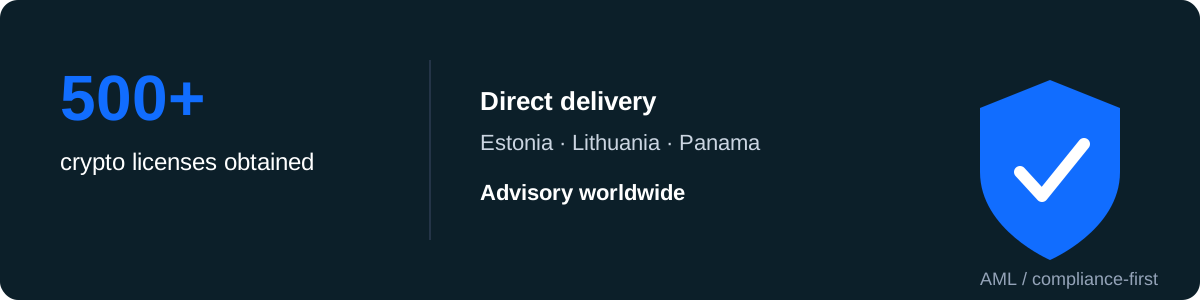
At Consulting24, we have helped over 500 crypto firms obtain licenses in Panama, Estonia, Lithuania, and other jurisdictions. Our team advises on transaction monitoring and travel rule compliance as part of the licensing process. Whether you are setting up a new exchange or scaling an existing platform, understanding these obligations is essential to avoid fines, reputational damage, or license revocation.
In this guide, we break down the key components of transaction monitoring and travel rule, including who needs to comply, the costs involved, and how to implement a compliant system. We also compare jurisdictions like Panama, Lithuania, and Estonia to help you choose the best route for your business.
Overview: What Are Transaction Monitoring and Travel Rule Obligations?
Transaction monitoring refers to the continuous surveillance of crypto transactions to identify suspicious patterns, such as money laundering, terrorist financing, or fraud. The travel rule, derived from FATF Recommendation 16, requires CASPs to collect and share specific information about the originator and beneficiary of a transfer, including names, wallet addresses, and transaction amounts. In 2026, both obligations are enforced across most regulated jurisdictions, including all EU member states under MiCA.
Key requirements include:
- Real-time monitoring of all transactions above a threshold (often EUR 1,000 or equivalent).
- Automated screening against sanctions lists and politically exposed persons (PEPs).
- Secure transmission of travel rule data between CASPs using standardized formats like IVMS101.
- Record keeping for at least five years, with data accessible to regulators on request.
Failure to comply can result in penalties of up to 5% of annual turnover or EUR 5 million, whichever is higher, under MiCA. In Panama, fines can reach USD 1 million for serious violations. For example, in 2024, a major European exchange was fined EUR 3 million for inadequate transaction monitoring, highlighting the real risks.
Transaction monitoring systems typically use machine learning and rule-based algorithms to flag unusual activity. Travel rule solutions like Notabene or Sygna facilitate secure data sharing between CASPs. Both systems must be integrated into your platform's workflow, which requires careful planning and testing.
Who Needs to Comply?
Any crypto asset service provider (CASP) that facilitates transfers of virtual assets must comply. This includes:
- Centralized exchanges (CEXs) and decentralized exchanges (DEXs) with a central operator.
- Wallet providers (custodial and non-custodial if they control private keys).
- OTC desks and payment processors handling crypto.
- Brokers and dealers in crypto assets.
- Kiosk operators and ATM providers.
In the EU, MiCA applies to all CASPs licensed in any member state. Outside the EU, jurisdictions like Panama, the UK, and Singapore have similar requirements. If your company operates in multiple jurisdictions, you must comply with the strictest rules applicable. For instance, a Panama-licensed company serving EU clients must also meet MiCA travel rule standards for those transactions.
Even non-custodial services may be affected if they control any aspect of the transfer process. Consulting24 recommends a thorough legal review to determine your obligations. We have seen cases where DAOs and DeFi protocols were caught off guard by travel rule requirements, leading to enforcement actions.
License Type and Regulator
Transaction monitoring and travel rule obligations are embedded in the licensing frameworks of most crypto-friendly jurisdictions. In the EU, MiCA grants a single passport for CASPs, and the regulator is typically the national competent authority (e.g., BaFin in Germany, AMF in France, Bank of Lithuania in Lithuania). In Panama, the regulator is the Superintendencia de Bancos de Panamá (SBP) for crypto activities under the 2024 law. Consulting24 delivers licenses directly in Panama, Estonia, and Lithuania, and advises on compliance in other jurisdictions.
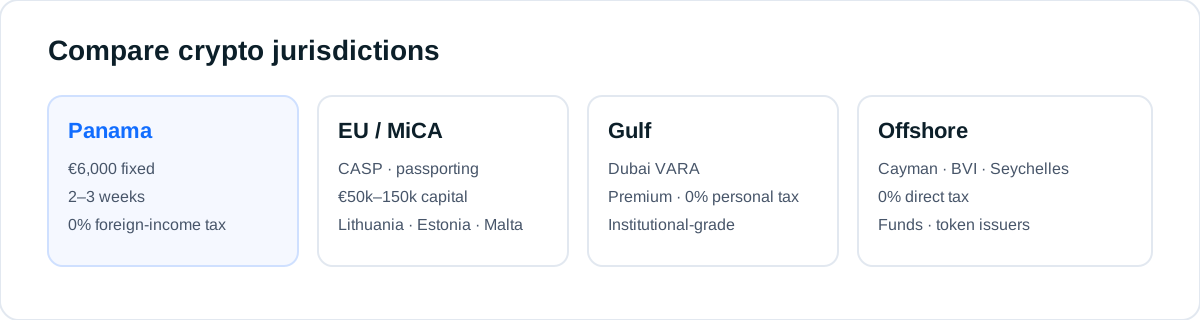
For a CASP license under MiCA, the minimum capital requirement is EUR 50,000 for simple services (e.g., custody) and up to EUR 150,000 for advanced services (e.g., exchange and trading). Panama requires a minimum capital of USD 10,000, but the total cost of setup is a flat EUR 6,000 with Consulting24. The license type in Panama is a "license for virtual asset service providers" (VASP). In Lithuania, it is a "crypto exchange operator" or "crypto wallet operator" license under MiCA.
Regulators expect CASPs to have a designated compliance officer responsible for transaction monitoring and travel rule. This officer must be based in the jurisdiction or have a local representative. Consulting24 can help you find and hire qualified compliance personnel.
Cost and Timeline for Compliance Implementation
| Component | Estimated Cost (EUR) | Timeline |
|---|---|---|
| Transaction monitoring software (annual license) | 5,000 - 50,000 | 1-3 months to integrate |
| Travel rule solution (e.g., Notabene, Sygna) | 10,000 - 30,000 setup + 2,000-10,000/month | 2-4 months |
| AML/CFT policy drafting | 3,000 - 10,000 | 2-4 weeks |
| Compliance officer hiring (annual salary) | 40,000 - 100,000 | Ongoing |
| Regulatory filing and license application (Consulting24 fee) | 6,000 (Panama flat fee) | 2-4 months for license |
| External audit of compliance systems | 5,000 - 20,000 | 1-2 months |
Note: Exact pricing depends on transaction volume, asset types, and jurisdiction. Consulting24 provides a detailed quote after a free consultation. For example, a small exchange with 10,000 monthly transactions might spend EUR 15,000 per year on monitoring software, while a large platform with 1 million transactions could pay EUR 100,000 or more.
The timeline for full compliance implementation is typically 4-8 months from start to operational readiness. This includes policy drafting, software integration, testing, and regulatory approval. Consulting24 streamlines this process by providing pre-approved templates and vendor recommendations.
Capital Requirement
Capital requirements vary by jurisdiction. Under MiCA, the minimum capital is EUR 50,000 for basic services, EUR 125,000 for exchange services, and EUR 150,000 for advanced services including custody and trading. Panama requires a minimum paid-up capital of USD 10,000 (approximately EUR 9,200) for a crypto license. However, the total cost to set up a Panama crypto company with Consulting24 is a flat EUR 6,000, which includes company registration, license application, and compliance documentation. For other jurisdictions, capital requirements can be higher; for example, Dubai VARA requires AED 800,000 (approx. EUR 200,000) for a full license.
It is important to note that capital must be maintained throughout the license period. Some regulators require proof of capital through audited financial statements. Consulting24 advises clients on structuring their capital efficiently, including using share capital or retained earnings. In Panama, the capital can be used for operational expenses, but it must remain in the company's bank account.
For comparison, Lithuania requires EUR 125,000 minimum capital for a full exchange license under MiCA, while Estonia requires EUR 50,000 for a basic license. These amounts are higher than Panama's USD 10,000, making Panama an attractive option for startups and small to medium enterprises.
Tax Treatment
Tax treatment of transaction monitoring and travel rule costs is generally deductible as business expenses. In Panama, crypto companies are subject to a territorial tax system: only income sourced in Panama is taxed (standard corporate rate 25%). For EU jurisdictions, corporate tax rates range from 9% (Hungary) to 30% (Malta). Consulting24 recommends structuring your entity in a tax-efficient jurisdiction like Panama, where no tax is levied on foreign-sourced income. However, you should consult a tax advisor for your specific situation.
Expenses such as software licenses, compliance officer salaries, and legal fees are typically deductible. In Panama, VAT (ITBMS) at 7% applies to most services, but software imports may be exempt. Consulting24 can refer you to local tax experts who understand crypto. For example, a Panama company with EUR 100,000 in compliance costs could reduce its taxable income by that amount if the income is sourced in Panama, but foreign income is tax-free anyway.
In the EU, tax authorities are increasingly scrutinizing crypto companies. Transfer pricing rules may apply if your Panama entity provides services to an EU affiliate. Proper documentation is essential to avoid double taxation.
Allowed Activities Under a Crypto License
A standard crypto license in Panama or under MiCA allows the following activities related to transaction monitoring and travel rule compliance:
- Exchange between crypto and fiat currencies.
- Exchange between different crypto assets.
- Custody and administration of crypto assets.
- Transfer services (sending and receiving crypto).
- Participation in ICOs and STOs.
- Operation of crypto ATMs (with additional licensing).
All these activities must be supported by transaction monitoring and travel rule systems. Some jurisdictions, like Lithuania, have specific requirements for transaction monitoring software certification. Consulting24 ensures your license covers the activities you need. For example, if you plan to offer a crypto debit card, you may need a payment services license in addition to the crypto license.
Panama's license is relatively broad, allowing most CASP activities. However, derivatives and margin trading may require a separate securities license. Consulting24 can advise on the scope of your license and any necessary add-ons.
Step-by-Step Process to Implement Compliance
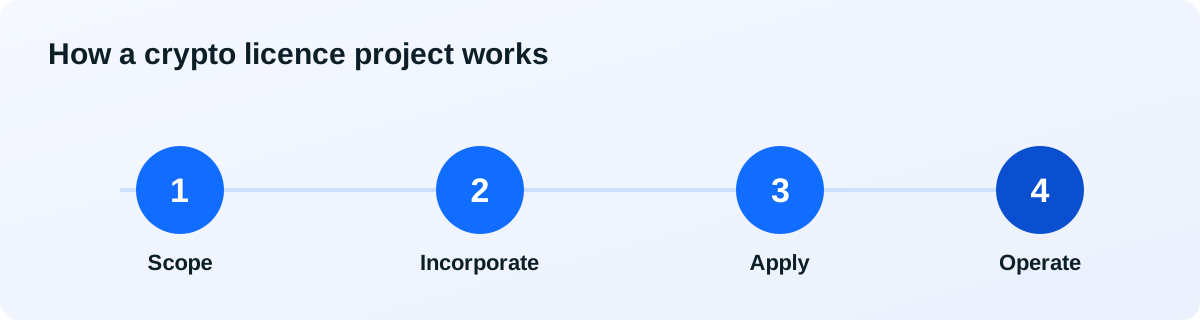
- Assess your jurisdiction: Determine where your company is licensed or plans to be. Consulting24 helps you choose the best jurisdiction. For Panama, we handle the entire process.
- Draft AML/CFT policies: Include transaction monitoring procedures and travel rule protocols. These must be tailored to your business model, such as whether you serve retail or institutional clients.
- Select technology: Choose a transaction monitoring tool (e.g., Chainalysis, Elliptic) and a travel rule solution (e.g., Notabene, Sygna). Ensure they integrate with your platform's API and support the cryptocurrencies you handle.
- Implement screening: Set up sanctions and PEP screening for all transactions above threshold. Configure rules for different risk levels.
- Train staff: Conduct training on suspicious activity reporting and travel rule data handling. Document all training sessions.
- Test and audit: Run internal tests using test transactions and engage an external auditor to verify compliance. Address any gaps found.
- Submit to regulator: File compliance documentation with your licensing authority. Consulting24 assists with submissions, including proof of software integration.
- Ongoing monitoring: Continuously monitor transactions and update travel rule data sharing protocols. Perform periodic reviews of your compliance program.
Consulting24 provides a project manager to oversee each step, ensuring deadlines are met. We also offer post-license support for regulatory changes.
Banking and Payments Integration
Transaction monitoring and travel rule compliance also affect banking relationships. Most banks require proof of strong AML systems before opening accounts for crypto companies. Consulting24 has established relationships with banks in Panama, Estonia, and Lithuania that accept crypto clients. For Panama, we can facilitate a corporate bank account with a local bank that understands crypto. Additionally, payment processors like Stripe or PayPal may require travel rule compliance for crypto transactions. Ensure your compliance framework satisfies both banking and payment partner requirements.
For example, a Panama-licensed exchange using a local bank must share transaction monitoring reports quarterly. Some banks require real-time access to the monitoring system. Consulting24 helps negotiate these terms. In Lithuania, banks often request a copy of the travel rule solution contract before opening an account.
Payment integration for fiat on-ramps and off-ramps also requires compliance. If you use a third-party payment gateway, ensure they are also compliant with travel rule. Consulting24 can recommend payment partners that are crypto-friendly and compliant.
Benefits of Proper Compliance
Implementing transaction monitoring and travel rule compliance offers several benefits:
- Regulatory approval: Faster license approval and renewal. Regulators prioritize applicants with strong compliance systems.
- Banking access: Easier to open and maintain bank accounts. Banks are more willing to work with compliant firms.
- Investor confidence: Attracts institutional investors who require compliance. Many funds mandate travel rule compliance before investing.
- Reduced risk: Avoids fines and reputational damage from illicit transactions. A single compliance failure can cost millions.
- Market access: Enables cross-border transfers with compliant partners. Travel rule compliance is essential for interoperability with other CASPs.
With Consulting24's flat-fee Panama package, you get a cost-effective entry point to a compliant crypto business. Our clients report faster bank account approvals and smoother regulatory interactions after implementing our recommended systems.
Compliance and Trust: Building a Reputable Crypto Company
Compliance is not just a legal requirement; it is a competitive advantage. In 2026, regulators are increasingly scrutinizing crypto firms. A strong transaction monitoring and travel rule program demonstrates your commitment to fighting financial crime. This builds trust with customers, partners, and regulators. Consulting24 advises on best practices, including regular independent audits and transparent reporting. Remember, this is general guidance, not legal advice. Always consult a qualified lawyer for your specific situation.
For example, a well-known exchange in Lithuania published its travel rule compliance statistics quarterly, which helped it secure a partnership with a major European bank. Similarly, a Panama-based wallet provider gained market share by advertising its compliance with FATF standards. Consulting24 can help you craft a compliance narrative that differentiates your brand.
We also recommend joining industry bodies like the Crypto Council for Innovation or local blockchain associations to stay updated on best practices.
Common Mistakes in Transaction Monitoring and Travel Rule Compliance
- Insufficient threshold setting: Setting too high a threshold for monitoring can miss suspicious activity. Most regulators require monitoring of all transactions above EUR 1,000. Some jurisdictions require monitoring of all transactions regardless of amount.
- Ignoring decentralized finance (DeFi): If your platform interacts with DeFi protocols, you may still be responsible for travel rule compliance. For instance, a DEX aggregator must share travel rule data for trades executed through its interface.
- Poor data security: Travel rule data includes personal information; inadequate security can lead to data breaches and fines under GDPR. Use encryption and access controls.
- Failure to update sanctions lists: Sanctions lists change frequently; automated updates are essential. A company using outdated lists was fined EUR 500,000 in 2025.
- Not testing travel rule data transmission: Ensure your system can send and receive travel rule data in the required format (e.g., IVMS101). Many failures occur during integration testing.
- Overlooking non-custodial wallets: If your service interacts with non-custodial wallets, you must still collect travel rule data from the user. This is often overlooked.
Consulting24 helps you avoid these pitfalls during the licensing process. We conduct a compliance gap analysis before application.
Alternatives and Comparison: Panama vs. Lithuania vs. Estonia
When choosing a jurisdiction for your crypto license, consider the transaction monitoring and travel rule requirements:
| Jurisdiction | Capital Requirement | Travel Rule Enforcement | Cost (Consulting24) | License Timeline |
|---|---|---|---|---|
| Panama | USD 10,000 | Moderate (FATF compliant) | EUR 6,000 flat | 2-4 months |
| Lithuania | EUR 125,000 (MiCA) | Strict (MiCA) | From EUR 15,000 | 3-6 months |
| Estonia | EUR 50,000 (MiCA) | Strict (MiCA) | From EUR 12,000 | 2-5 months |
Panama offers the lowest cost and capital requirement, making it ideal for startups. Lithuania and Estonia provide EU passporting under MiCA, which may be beneficial if you target European clients. Consulting24 delivers licenses directly in all three jurisdictions. For other jurisdictions like Dubai or Switzerland, we advise and coordinate with local partners.
If you need EU market access, Lithuania's strict enforcement may actually be an advantage for building trust with partners. However, Panama's territorial tax system can save significant tax on foreign income. Consulting24 can help you weigh these factors based on your business model.
How Consulting24 Helps with Transaction Monitoring and Travel Rule Compliance
Consulting24 provides end-to-end support for transaction monitoring and travel rule compliance as part of our licensing services. Our team of AML experts and compliance officers will:
- Review your business model and recommend the best jurisdiction and license type.
- Draft AML/CFT policies that meet local and international standards, including specific transaction monitoring and travel rule procedures.
- Recommend and help integrate transaction monitoring and travel rule software solutions, negotiating pricing with vendors.
- Assist with hiring a qualified compliance officer or acting as an outsourced compliance function.
- Prepare and submit all regulatory filings, including proof of compliance systems.
- Provide ongoing support for regulatory changes and audits.
Our flat-fee Panama package includes all of the above for just EUR 6,000. For Lithuania and Estonia, we offer tailored packages starting from EUR 12,000. Contact us today for a free consultation to discuss your compliance needs.
Frequently asked questions
What is the travel rule for crypto?
The travel rule requires crypto asset service providers (CASPs) to collect and share information about the originator and beneficiary of a transfer, including names, wallet addresses, and transaction amounts. It is based on FATF Recommendation 16 and is enforced in most regulated jurisdictions, including the EU under MiCA and Panama under its 2024 law.
Do I need transaction monitoring for a small crypto exchange?
Yes, all CASPs must implement transaction monitoring regardless of size. Even small exchanges are required to detect suspicious activity. The cost of monitoring software scales with volume, so smaller firms can choose affordable solutions starting at EUR 5,000 per year. Failure to monitor can lead to fines and license revocation.
What is the minimum capital for a crypto license in Panama?
Panama requires a minimum paid-up capital of USD 10,000 (approximately EUR 9,200) for a crypto license. However, the total cost to set up a Panama crypto company with Consulting24 is a flat EUR 6,000, which includes company registration, license application, and compliance documentation.
How long does it take to implement transaction monitoring and travel rule compliance?
Typically 4-8 months from start to operational readiness. This includes policy drafting, software integration, testing, and regulatory approval. Consulting24 can streamline this process by providing pre-approved templates and vendor recommendations, reducing the timeline to as little as 3 months for Panama.
What happens if I don't comply with the travel rule?
Non-compliance can result in significant penalties. Under MiCA, fines can reach up to 5% of annual turnover or EUR 5 million, whichever is higher. In Panama, fines can be up to USD 1 million. Additionally, your license may be suspended or revoked, and you may face reputational damage that affects banking relationships.
Can I use the same transaction monitoring software for multiple jurisdictions?
Yes, most transaction monitoring and travel rule solutions are designed to work across jurisdictions. However, you must configure them to meet local regulatory requirements, such as specific thresholds or sanctions lists. Consulting24 can help you select a solution that supports multi-jurisdictional compliance.
Does Panama require travel rule compliance?
Yes, Panama's 2024 crypto law requires compliance with FATF standards, including the travel rule. The Superintendencia de Bancos de Panamá enforces these requirements. Consulting24 ensures your Panama license application includes a travel rule solution that meets local expectations.
What is IVMS101?
IVMS101 is the global standard for travel rule data formatting. It specifies the structure and fields for originator and beneficiary information. Most travel rule solutions support IVMS101, and regulators expect CASPs to use it for data transmission. Consulting24 can help you integrate IVMS101-compliant systems.
Can Consulting24 help with compliance after the license is obtained?
Yes, we offer ongoing compliance support, including policy updates, regulatory monitoring, and audit preparation. Our post-license services ensure you remain compliant as regulations evolve. Contact us for a customized maintenance package.
Is transaction monitoring required for all cryptocurrencies?
Yes, monitoring should cover all cryptocurrencies your platform supports, including stablecoins and privacy coins. Some jurisdictions may have additional requirements for high-risk assets. Consulting24 recommends a risk-based approach to prioritize monitoring for assets with higher money laundering risks.
Official sources
Related jurisdictions

Talk to a crypto-licensing expert
500+ licenses across Estonia, Lithuania, Panama and beyond. Tell us your model and we'll map the right route, honestly.
💬 Talk to an expertFree consultationGeneral guidance, not legal advice. Rules and fees evolve, and we confirm current requirements for your case.