Portugal vs Panama for a Crypto Company: Which Should You Choose?

Choosing the right jurisdiction for your crypto company is a critical decision that affects your regulatory burden, tax exposure, and operational flexibility. In 2026, two popular options are Portugal and Panama. Portugal offers a clear EU regulatory framework under MiCA, while Panama provides a cost-effective, business-friendly environment with no capital gains tax on crypto. This guide compares Portugal vs Panama for a crypto company, covering license types, costs, tax treatment, and practical steps. Whether you are a startup or an established exchange, we help you evaluate which jurisdiction aligns with your goals.
Consulting24 has obtained 500+ crypto licenses and delivers directly in Estonia, Lithuania, and Panama. For Portugal, we advise and coordinate with local experts. Our team provides honest, up-to-date information so you can make an informed choice. Read on to see how Portugal and Panama stack up in 2026.
Overview: Portugal vs Panama for Crypto Companies
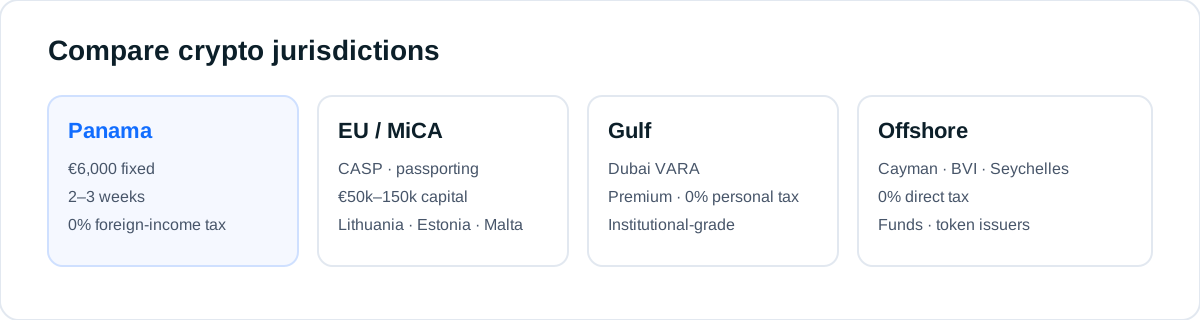
Portugal and Panama represent two distinct approaches to crypto regulation. Portugal, as an EU member, fully applies the Markets in Crypto-Assets (MiCA) regulation since 2025. Crypto asset service providers (CASPs) must obtain a license from the Bank of Portugal (Banco de Portugal) and comply with strict capital requirements, AML rules, and ongoing reporting. Panama, on the other hand, has no specific crypto law but offers a flexible licensing regime through its Securities Commission (SMV) for crypto-related activities. Panama does not tax capital gains on crypto, and company setup costs are low. The choice between Portugal vs Panama for a crypto company depends on your target market, budget, and need for regulatory clarity.
For example, a crypto exchange targeting EU customers will benefit from Portugal's regulated environment and passporting rights. A blockchain startup building a DeFi protocol may prefer Panama's lighter touch. Consulting24 helps you weigh these factors. We have seen many founders choose Panama for its speed and cost, then later add an EU license for credibility. Our jurisdictions page offers more comparisons.
Who Needs a Crypto License in Portugal vs Panama?
Any business providing crypto services in Portugal must be licensed under MiCA. This includes exchanges, wallet providers, custody services, and trading platforms. If you plan to serve EU customers, a Portuguese license is mandatory. Panama does not require a specific crypto license, but companies engaging in activities that involve securities or financial intermediation may need a license from the SMV. For most crypto businesses, a standard Panama corporation (Sociedad Anónima) is sufficient. Service providers like exchanges and OTC desks often operate without a dedicated crypto license, but legal advice is recommended. Consulting24 helps you determine which path fits your business model.
Consider a crypto payment processor: if it serves Portuguese merchants, it needs a Portuguese license. If it serves global clients from Panama, no license is needed, but it must still comply with AML laws. We have helped many clients set up in Panama for operational flexibility while maintaining compliance. For EU-focused firms, we coordinate Portuguese licensing with local partners.
License Type & Regulator
Portugal: The regulator is the Bank of Portugal (Banco de Portugal). Under MiCA, CASPs must register and obtain a license. The license covers services such as custody, exchange, and transfer of crypto assets. Portugal does not have a separate crypto license; it uses the EU passporting system. The application process includes a detailed business plan, AML policies, and fit and proper checks on directors.
Panama: There is no dedicated crypto regulator. However, the Superintendencia del Mercado de Valores (SMV) oversees securities-related crypto activities. Most crypto companies simply register a standard corporation with the Public Registry (Registro Público). Consulting24 delivers Panama company setup directly, including corporate bank account opening and compliance support. For firms needing a regulated status, we can advise on obtaining an SMV license if applicable.
In Portugal, the license is specific to the services offered. For example, a custody provider needs a different authorization than an exchange. Panama's flexibility means you can start with a simple corporation and later add licenses if needed. This is a key difference in Portugal vs Panama for a crypto company.
Cost & Timeline
| Item | Portugal | Panama |
|---|---|---|
| Company setup cost | EUR 2,000-5,000 | EUR 6,000 (flat fee) |
| License application fee | EUR 1,500-3,000 | Not applicable |
| Legal & compliance costs | EUR 10,000-20,000 | EUR 2,000-5,000 |
| Timeline to operate | 3-6 months | 2-4 weeks |
| Ongoing annual costs | EUR 5,000-15,000 | EUR 1,500-3,000 |
Panama is significantly cheaper and faster. Portugal's costs reflect MiCA compliance, including AML officer, audits, and legal fees. For exact pricing, consult with Consulting24. The table above shows typical ranges; actual costs vary based on complexity. For example, a simple exchange in Portugal may cost EUR 15,000 in total, while a full trading platform could exceed EUR 30,000. In Panama, the flat fee covers everything except bank account opening fees. We provide a detailed quote during consultation.
Capital Requirement
Portugal: Under MiCA, capital requirements are tiered by service class. For custody and exchange services, the minimum is EUR 125,000. For more complex services like trading platforms, it can be EUR 150,000. These funds must be held in liquid assets. For example, a company offering both custody and exchange must meet the higher threshold. Portugal also requires capital to be maintained throughout the license period.
Panama: There is no minimum capital requirement for a standard corporation. However, for SMV-regulated activities, capital may be required depending on the license type. For most crypto businesses, no capital is needed. This makes Panama attractive for startups with limited funds. A Panama corporation can be formed with a nominal capital of USD 10,000, but no proof of funds is required. This is a major advantage in Portugal vs Panama for a crypto company with tight budgets.
Tax Treatment
Portugal: Corporate tax is 21% (plus municipal surcharges). Capital gains from crypto held for less than one year are taxed as income. Long-term holdings may be exempt. VAT is not applied to crypto transactions. Portugal has a territorial tax system for certain foreign income. For example, a Portuguese company earning income from non-Portuguese clients may be taxed only on Portuguese-source income if certain conditions are met. However, this is complex and requires professional advice.
Panama: No capital gains tax on crypto. Corporate income tax is 25% on Panama-source income only. Offshore income is tax-free. No VAT on crypto services. Panama offers a highly favorable tax environment for crypto companies that do not serve local customers. For instance, a trading firm based in Panama but serving global clients pays no tax on its trading profits. This is a key reason many choose Panama over Portugal.
Allowed Activities
Portugal: Licensed CASPs can offer custody, exchange, transfer, and trading of crypto assets. Staking and lending are allowed if compliant with MiCA. Activities must be limited to services listed in the license. For example, a license for exchange does not automatically allow custody. Each service requires separate authorization. Portugal also prohibits certain activities like algorithmic stablecoins unless authorized.
Panama: No restrictions on crypto activities as long as they do not violate AML laws. Companies can trade, exchange, custody, mine, and develop blockchain technology. Panama is more permissive, but lacks legal certainty for regulated financial services. For example, a Panama company can operate a crypto exchange without a license, but it may face challenges with banking and international partners who prefer regulated entities. Consulting24 advises clients on balancing flexibility with credibility.
Step-by-Step Process
Portugal:
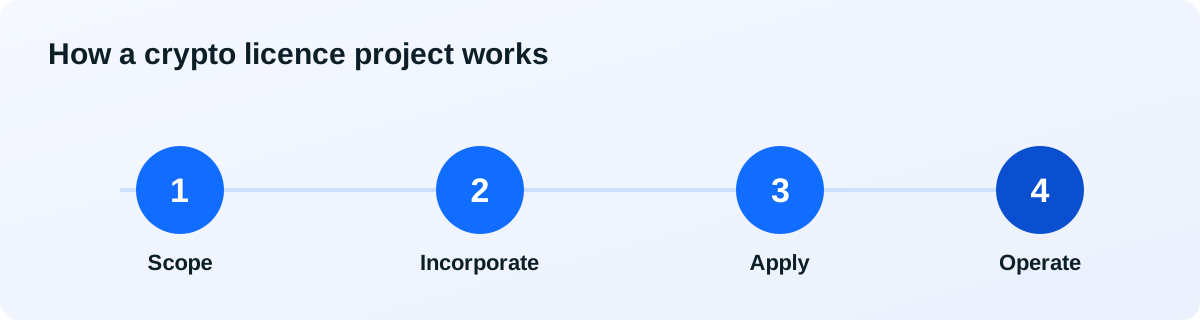
- Incorporate a company (e.g., Lda or SA).
- Prepare AML policies and appoint a compliance officer.
- Submit license application to Bank of Portugal with business plan and capital proof.
- Pass fit and proper checks on directors.
- Obtain license and register with tax authorities.
Panama:
- Choose company name and register with Public Registry.
- Appoint directors and resident agent (provided by Consulting24).
- Open a corporate bank account (we assist with Panama banks and international options).
- Register for tax ID (RUC) if needed.
- Begin operations immediately; no license required for most activities.
Consulting24 handles both processes. For Portugal, we coordinate with local lawyers. For Panama, we deliver directly. The Portugal process takes 3-6 months due to regulatory review. Panama can be completed in 2-4 weeks. We provide a dedicated project manager for each client.
Banking & Payments
Portugal: Banks are generally open to crypto companies with a license. However, some may still be cautious. Portugal has a well-developed banking system with SEPA payments. Crypto-friendly banks include Banco BPI and others. For example, a licensed exchange can open a corporate account at Banco BPI with proper documentation. Portugal also has a growing fintech scene with payment processors like Unicâmbio.
Panama: Banking is more challenging due to AML concerns. However, Panama has many international banks that accept crypto-related businesses. Consulting24 helps open accounts at banks like Banco General or Multibank. Panama also offers a growing fintech ecosystem with crypto-friendly payment processors. For instance, a Panama company can use a payment gateway like Kushki or PayRetailers for crypto conversions. We have established relationships with several banks to facilitate account opening.
Benefits of Each Jurisdiction
Portugal: EU passporting, regulatory clarity, access to the European market, and a stable legal system. Portugal is ideal for companies targeting EU customers. For example, a Portuguese license allows you to serve clients in all 27 EU member states without additional licensing. This is a powerful advantage for scaling.
Panama: Low cost, fast setup, no capital gains tax, no license requirement for most activities, and privacy. Panama is ideal for startups, trading firms, and projects that want to minimize regulatory burden. For instance, a DeFi project can launch from Panama without regulatory delays. Panama also offers strong asset protection and no exchange controls.
Consulting24 can help you choose based on your specific needs. We also offer licenses in Estonia and Lithuania, which may be alternatives to Portugal.
Compliance & Trust
Both jurisdictions require AML compliance. Portugal enforces MiCA's strict AML rules, including customer due diligence and transaction monitoring. Panama has AML laws but enforcement is lighter. For companies seeking trust and credibility, a Portuguese license signals regulatory approval. Panama is more suitable for projects that prioritize speed and low cost. General guidance, not legal advice. Always consult with a professional.
For example, a Portuguese licensed exchange can partner with EU banks more easily than a Panama company. However, a Panama company can still implement strong AML policies voluntarily to build trust. We recommend all clients adopt best practices regardless of jurisdiction. Our compliance team can help design AML programs for both Portugal and Panama.
Common Mistakes
- Assuming Panama's lack of regulation means no compliance needed - AML rules still apply. For example, a Panama exchange must still verify customers and report suspicious transactions.
- Underestimating Portugal's capital requirements and ongoing costs. A startup may struggle to maintain EUR 125,000 in capital.
- Choosing Portugal without a clear EU market strategy. If your customers are outside the EU, the license may not add value.
- Choosing Panama without a solid banking relationship. Many banks reject crypto companies from Panama.
- Not seeking professional advice on tax implications in both jurisdictions. For instance, a Portuguese company may be taxed on worldwide income if not properly structured.
Avoid these pitfalls by working with Consulting24. We guide you through the entire process.
Alternatives and Comparisons
Besides Portugal vs Panama, consider other jurisdictions. Estonia offers a mature e-residency and crypto license program, but costs are rising. Lithuania is another EU option with a straightforward process. For non-EU, Dubai (VARA) is popular but expensive. El Salvador offers a unique Bitcoin-friendly regime. Consulting24 advises on all these jurisdictions and can help you compare.
For example, if you need EU passporting but find Portugal too costly, Lithuania may be a better fit with lower capital requirements (EUR 125,000 also, but faster processing). If you want a tax-free environment similar to Panama but with more regulatory clarity, consider the Cayman Islands. Our team can provide a tailored comparison.
Why Choose Consulting24?
Consulting24 has delivered 500+ crypto licenses worldwide. We handle Panama company setup directly for a flat EUR 6,000, including corporate bank account opening. For Portugal, we coordinate with vetted local partners. Our team provides honest, no-nonsense advice. We do not promise approvals, but we guide you through the process efficiently. Contact us on WhatsApp to discuss your project.
Our clients appreciate our transparency and speed. We have helped startups, exchanges, and funds choose between Portugal vs Panama for a crypto company. Whether you need a full license or a simple corporation, we have the expertise. Reach out today for a free consultation.
Frequently asked questions
Is Portugal or Panama better for a crypto startup?
Panama is generally better for startups due to lower costs, no minimum capital, and faster setup. Portugal is better if you need EU market access and regulatory credibility. For example, a startup with limited funds can launch in Panama for EUR 6,000 and later expand to Portugal when ready.
Does Panama require a crypto license?
No, Panama does not have a specific crypto license. Most crypto businesses operate as standard corporations. However, if activities involve securities, an SMV license may be needed. Consulting24 can advise on your specific case.
What is the tax on crypto in Portugal?
Corporate tax is 21%. Capital gains on crypto held less than one year are taxed as income. Long-term holdings may be exempt. No VAT on crypto transactions. For example, a short-term trade profit is added to corporate income and taxed at 21%.
What is the tax on crypto in Panama?
No capital gains tax on crypto. Corporate tax is 25% on Panama-source income only. Offshore income is tax-free. No VAT on crypto services. For example, a Panama company trading crypto for global clients pays no tax on those profits.
How long does it take to set up a company in Panama?
Company setup takes 2-4 weeks. Consulting24 delivers Panama company setup for a flat EUR 6,000, including bank account opening assistance. The process includes name reservation, registration, and resident agent appointment.
Can I serve EU customers from Panama?
If you serve EU customers, you may need to comply with MiCA. Panama alone does not provide EU passporting. You might need a license in an EU jurisdiction like Portugal or Lithuania. Consulting24 can help structure a dual-jurisdiction setup.
What is the minimum capital for a crypto license in Portugal?
Under MiCA, capital requirements start at EUR 125,000 for custody and exchange services. For trading platforms, it is EUR 150,000. These funds must be held in liquid assets like cash or government bonds.
Does Portugal have a fast-track for crypto licenses?
No, Portugal does not have a fast-track. The process takes 3-6 months. However, the Bank of Portugal aims to process applications within 3 months after submission of complete documentation.
Can I open a bank account in Panama for my crypto company?
Yes, but it can be challenging. Consulting24 has relationships with Panama banks like Banco General and Multibank that accept crypto companies. We assist with the application and documentation.
What are the ongoing costs for a Panama company?
Annual costs include resident agent fees (EUR 300-500), registered office (EUR 200-400), and tax filing (EUR 500-1,000). Total is typically EUR 1,500-3,000 per year.
Is Portugal's tax regime favorable for long-term crypto holdings?
Yes, if crypto assets are held for more than one year, capital gains may be exempt from corporate tax. However, this depends on the specific activity and requires professional advice.
Can I use a Panama company to hold crypto assets?
Yes, Panama corporations can hold crypto assets. There are no restrictions. However, for custody services to third parties, you may need a license in certain jurisdictions.
Related jurisdictions

Talk to a crypto-licensing expert
500+ licenses across Estonia, Lithuania, Panama and beyond. Tell us your model and we'll map the right route, honestly.
💬 Talk to an expertFree consultationGeneral guidance, not legal advice. Rules and fees evolve, and we confirm current requirements for your case.