Do You Need a Crypto Licence for an OTC Desk?

If you are setting up or running an over-the-counter (OTC) crypto trading desk, one of the first questions you face is whether you need a crypto licence. The answer depends on where you operate, who your counterparties are, and how you structure your business. In 2026, with MiCA fully in force across the EU and many other jurisdictions tightening their rules, the regulatory environment has become clearer but also more demanding.
This guide explains the licensing requirements for OTC desks in key jurisdictions, with a focus on Panama as a cost-effective and straightforward option. We cover who needs a licence, what activities are regulated, and how to choose the right path for your business. Whether you are a startup or an established firm, understanding these rules is critical to avoid penalties and build trust with institutional clients.
What Is a Crypto OTC Desk and Why Does Licensing Matter?
An OTC desk facilitates large-volume crypto trades directly between buyers and sellers, outside of public exchanges. These desks handle significant liquidity and often serve institutional investors, high-net-worth individuals, and other businesses. Licensing matters because most jurisdictions classify OTC trading as a regulated activity, especially when you hold client funds or execute trades on behalf of others.
Without a licence, you risk fines, shutdowns, and reputational damage. In the EU, MiCA requires any firm providing crypto asset services - including OTC trading - to obtain a CASP licence. Similar rules apply in the UK, UAE, and Singapore. Panama, however, offers a streamlined licensing regime for OTC desks that is both cost-effective and compliant with international standards.
For example, an OTC desk that processes 100 trades per month with an average size of EUR 50,000 would be handling EUR 5 million monthly. Regulators view such volumes as significant and expect proper oversight. Licensing provides a framework for AML compliance, client asset protection, and operational transparency.
Who Needs a Crypto Licence for an OTC Desk?
You generally need a licence if your OTC desk:
- Holds client crypto or fiat funds at any point during a trade.
- Acts as a principal or agent in executing trades for third parties.
- Markets or solicits business from clients in a regulated jurisdiction.
- Provides custody or wallet services alongside trading.
If you only facilitate peer-to-peer trades without handling funds or executing orders, you may fall outside the licensing scope in some jurisdictions. However, most regulators take a broad view. For example, in Lithuania, even an OTC desk that merely matches buyers and sellers may require a licence if it charges fees or holds client assets. Always consult with experts like Consulting24 to assess your specific model.
Consider a scenario where your desk operates from Panama but serves EU clients. Under MiCA, if you actively solicit EU clients, you may need a CASP licence in an EU member state. Panama's licence covers local operations, but cross-border activity requires additional analysis.
License Type and Regulator for OTC Desks
In most jurisdictions, OTC desks fall under the same licensing category as crypto exchanges or broker-dealers. Under MiCA, the licence is called a Crypto Asset Service Provider (CASP). The relevant regulator is the national competent authority in each EU member state - for example, the Bank of Lithuania or the Estonian Financial Supervision Authority (FSA).
In Panama, the regulator is the Superintendencia de Bancos de Panamá (SBP) for financial activities, but crypto-specific licensing is handled through the Securities Commission (CNV) for certain instruments. For OTC desks, Panama offers a dedicated crypto licence that is relatively straightforward to obtain. Consulting24 can guide you through the process.
Other jurisdictions have different structures. In the UK, the FCA oversees crypto asset firms under the Money Laundering Regulations. In Dubai, VARA regulates virtual asset service providers. Each has its own licence type and scope.
Cost and Timeline for an OTC Desk Licence
| Jurisdiction | Estimated Cost (EUR) | Timeline | Notes |
|---|---|---|---|
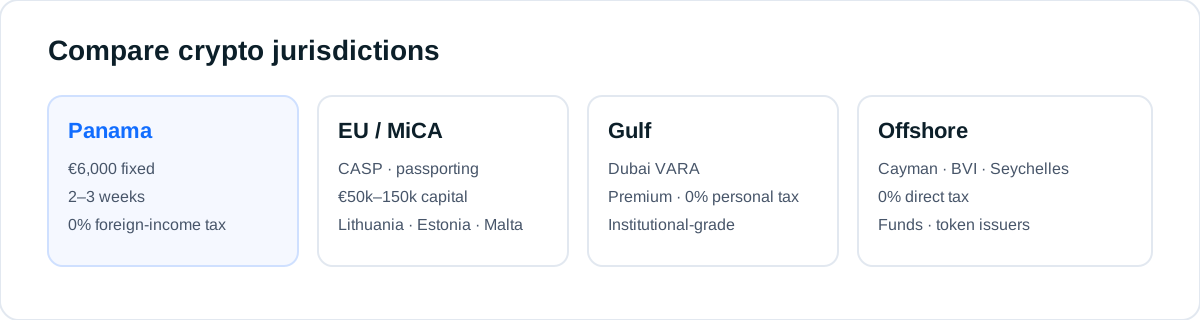
| Panama | 6,000 (flat fee) | 2-3 months | Includes company setup and licence |
| Estonia | 10,000 - 15,000 | 3-6 months | Plus capital deposit |
| Lithuania | 12,000 - 18,000 | 4-6 months | Plus capital deposit |
| Cyprus | 20,000 - 30,000 | 6-9 months | Higher compliance costs |
Costs vary widely based on complexity, legal fees, and capital requirements. Panama offers the most competitive flat fee of EUR 6,000, making it an attractive option for OTC desks. Exact pricing for other jurisdictions is confirmed during a consultation. Timelines assume a well-prepared application with all documents in order.
For example, a typical Panama application includes company incorporation (EUR 1,500), licence fee (EUR 3,000), and legal/consulting fees (EUR 1,500). Total EUR 6,000. In Lithuania, the same process might cost EUR 5,000 for company setup, EUR 7,000 for licence application, and EUR 3,000 for legal support.
Capital Requirements for OTC Desks
Capital requirements depend on the services you offer and the jurisdiction. Under MiCA, the minimum capital tiers are:
- EUR 50,000 for custody and transfer services.
- EUR 125,000 for order execution and trading (typical for OTC desks).
- EUR 150,000 for full exchange services including matching engine.
In Panama, the capital requirement is lower - typically around EUR 10,000 - but may vary based on business volume. Estonia and Lithuania require EUR 125,000 for OTC desks under MiCA. Always verify with a local advisor, as capital must be held in liquid form and may need to be maintained as a permanent reserve.
Capital can be held as cash in a bank account or as a surety bond. Some jurisdictions allow a combination. For example, in Lithuania, you can deposit EUR 125,000 in a local bank and use it as working capital, but you must maintain that balance throughout the licence period.
Tax Treatment of OTC Desk Operations
Tax treatment varies significantly by jurisdiction. Panama offers territorial taxation - only income sourced within Panama is taxed, and offshore income is exempt. This makes it highly attractive for OTC desks serving international clients. The corporate tax rate is 25% on local income, but many OTC desks can structure to minimise local tax liability.
In Estonia, corporate income tax is 0% on retained profits - only distributed profits are taxed at 20%. Lithuania applies a standard 15% corporate tax, with potential exemptions for small companies. Under MiCA, no specific crypto tax regime exists, but general corporate tax rules apply. Consulting24 can connect you with tax advisors to optimise your structure.
For example, an OTC desk in Panama earning EUR 500,000 from non-Panamanian clients would pay 0% tax on that income. In Lithuania, the same profit would be taxed at 15%, resulting in EUR 75,000 tax. Over five years, the difference is substantial.
Allowed Activities Under an OTC Desk Licence
A typical OTC desk licence allows you to:
- Execute trades in crypto assets as principal or agent.
- Provide price quotes and liquidity to clients.
- Settle trades and transfer assets between wallets.
- Offer custody of client assets during settlement.
Some licences also permit ancillary services like advisory, portfolio management, or staking. However, activities like operating a public exchange or issuing tokens may require separate authorisation. Always check the scope of the licence in your chosen jurisdiction. Panama’s licence is flexible and covers most OTC activities.
For instance, if your OTC desk also wants to offer margin trading, you may need additional approvals. In Lithuania, margin trading is considered a separate service under MiCA and requires higher capital.
Step-by-Step Process to Obtain an OTC Desk Licence
- Business structuring: Choose your jurisdiction and legal entity type (e.g., LLC in Panama, UAB in Lithuania).
- Document preparation: Prepare business plan, AML/KYC policies, risk assessment, and financial projections.
- Capital deposit: Deposit the required minimum capital in a local bank account or as a surety bond.
- Application submission: File the licence application with the regulator, including all supporting documents.
- Regulatory review: The regulator assesses your application, which may include interviews or requests for additional information.
- Approval and licensing: Once approved, you receive the licence and can commence operations.
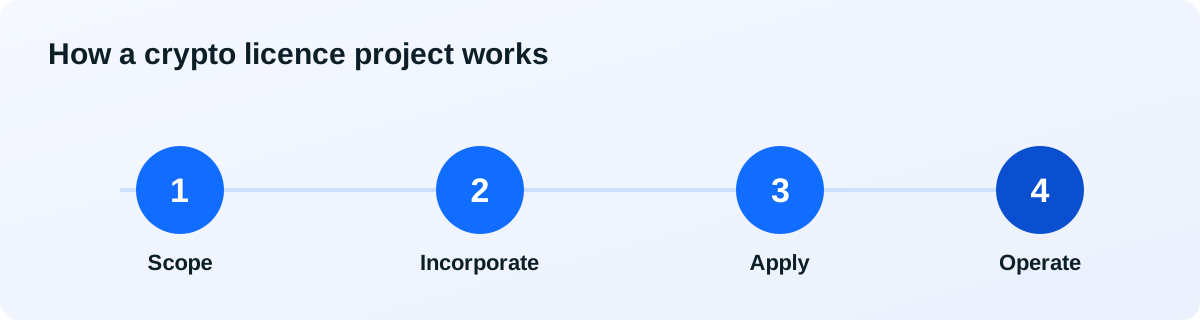
Consulting24 handles the entire process for Panama, Estonia, and Lithuania, from company setup to licence approval. For other jurisdictions, we advise and coordinate with local partners.
A typical timeline for Panama: week 1-2 company incorporation, week 3-4 document preparation, week 5-8 regulatory review, week 9-12 approval. Total 3 months if no delays.
Banking and Payment Solutions for OTC Desks
Access to banking is a common challenge for crypto businesses. Many traditional banks are hesitant to serve OTC desks due to perceived risks. In Panama, several banks accept crypto-licensed companies, especially if you have a clear compliance framework. In Estonia and Lithuania, banks are more open but require strong AML procedures.
Payment solutions include fiat on-ramps through licensed payment processors, virtual IBANs, and crypto-friendly neobanks. Consulting24 can introduce you to banking partners that have experience with crypto OTC desks. We also advise on setting up multi-currency accounts to facilitate international settlements.
For example, a Panama-licensed OTC desk can open accounts at Banco General or Credicorp Bank, provided they present their licence and AML policies. For EU operations, banks like LHV in Estonia or Swedbank in Lithuania are options, but they require a local presence and compliance history.
Benefits of Licensing Your OTC Desk
- Legal certainty: Operate with confidence that you comply with local and international laws.
- Client trust: Institutional clients require regulated counterparties.
- Access to banking: Licensed firms find it easier to open bank accounts.
- Partnerships: Many exchanges and liquidity providers only work with licensed entities.
- Competitive advantage: Stand out in a crowded market.
Panama offers additional benefits: low setup cost, territorial tax, and a stable legal environment. For EU-based OTC desks, an Estonian or Lithuanian licence provides passporting rights under MiCA.
For example, a licensed OTC desk can partner with Binance or Coinbase for liquidity, as these exchanges require counterparties to be regulated. Without a licence, such partnerships are impossible.
Compliance and Trust: AML, KYC, and Ongoing Obligations
All licensed OTC desks must implement strong AML/KYC procedures. This includes verifying client identities, monitoring transactions, and reporting suspicious activity to the financial intelligence unit. Ongoing obligations include annual audits, regulatory reporting, and maintaining adequate capital.
In Panama, the regulator requires a compliance officer and an AML programme. Estonia and Lithuania have similar requirements under MiCA. Failure to comply can result in fines or licence revocation. Consulting24 provides compliance support to help you meet these obligations. Note: this is general guidance, not legal advice. Always consult a qualified lawyer.
For instance, a Panama OTC desk must file suspicious transaction reports (STRs) with the Financial Analysis Unit (UAF) within 15 days of detection. Annual audits must be conducted by a certified public accountant and submitted to the regulator.
Common Mistakes When Applying for an OTC Desk Licence
- Inadequate business plan: Regulators want to see realistic projections and a clear operational model.
- Poor AML documentation: Generic policies are rejected; they must be tailored to your business.
- Underestimating capital: Failing to maintain minimum capital can delay approval.
- Ignoring tax implications: Tax structuring should be part of your licensing strategy.
- Choosing the wrong jurisdiction: Some jurisdictions are more expensive or slower than others.
Working with experienced consultants like Consulting24 helps you avoid these pitfalls. We have helped over 500 clients obtain licences and can streamline your application.
A common error is submitting a business plan that does not address the specific risks of OTC trading, such as market manipulation or insider trading. Regulators expect a detailed risk assessment and mitigation plan.
Alternatives and Comparisons: Panama vs. Estonia vs. Lithuania
Panama is the most cost-effective option at EUR 6,000 flat, with a fast timeline and territorial tax. Estonia offers a strong reputation for e-residency and digital business, but costs are higher and the process slower. Lithuania has a mature regulatory framework under MiCA, but capital requirements are EUR 125,000 for OTC desks.
Other alternatives include Dubai (VARA licence), El Salvador (Bitcoin Law), and Czech Republic (trade licence). However, these may have higher costs or different regulatory scopes. Consulting24 does not provide licences in Dubai or El Salvador directly; we offer comparison guidance and can help you choose the best jurisdiction for your needs.
For example, Dubai's VARA licence costs around EUR 50,000 and requires a physical office. El Salvador's Bitcoin Law licence is cheaper but less recognised internationally. Panama strikes a balance between cost, speed, and credibility.
Why Choose Consulting24 for Your OTC Desk Licence?
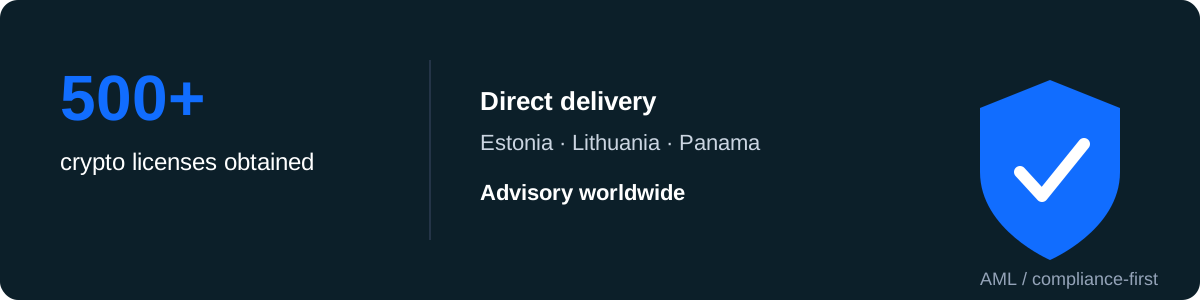
Consulting24 is a leading crypto-licensing firm with over 500 licences obtained. We deliver directly in Panama, Estonia, and Lithuania, and advise on other jurisdictions. Our team of legal and compliance experts ensures your application is complete and compliant, reducing the risk of rejection.
We provide end-to-end support: company setup, document preparation, regulatory filing, and ongoing compliance. Our flat fee for Panama is EUR 6,000, with no hidden costs. Contact us via WhatsApp or book a consultation to discuss your OTC desk licensing needs.
Our clients include OTC desks handling volumes from EUR 1 million to EUR 100 million monthly. We tailor our services to your specific business model and target markets.
Frequently asked questions
Does my OTC desk need a crypto licence if I only trade with institutional clients?
Yes, in most jurisdictions. Institutional clients do not exempt you from licensing if you hold funds or execute trades. Regulators focus on the activity, not the client type. For example, under MiCA, any firm providing order execution services must be licensed, regardless of client classification.
Can I operate an OTC desk without a licence in Panama?
No. Panama requires a licence for OTC desks that handle client funds or execute trades on behalf of others. The licence costs EUR 6,000 and takes 2-3 months. Operating without one can result in fines and legal action.
What is the minimum capital for an OTC desk under MiCA?
Under MiCA, the minimum capital for order execution and trading (typical for OTC desks) is EUR 125,000. For custody-only services, it is EUR 50,000. For full exchange services, EUR 150,000. These amounts must be maintained as liquid capital.
How long does it take to get an OTC desk licence in Lithuania?
The process typically takes 4-6 months from application to approval. This includes company setup, document preparation, and regulatory review. Delays can occur if documents are incomplete or if the regulator requests additional information.
What are the tax benefits of licensing an OTC desk in Panama?
Panama uses territorial taxation: only income sourced within Panama is taxed. Offshore income, such as trading with international clients, is tax-exempt. The corporate tax rate on local income is 25%. This structure can significantly reduce your global tax burden.
Can I passport my OTC desk licence across the EU under MiCA?
Yes. If you obtain a CASP licence in one EU member state (e.g., Lithuania or Estonia), you can passport it to other EU countries without needing additional licences. This allows you to serve clients across the EU from a single licensed entity.
What AML documents do I need for an OTC desk licence application?
You need a written AML policy, a risk assessment, customer due diligence procedures, transaction monitoring protocols, and a suspicious transaction reporting framework. These must be tailored to your business model, not generic templates.
Is it possible to get an OTC desk licence if I have a prior criminal record?
It depends on the jurisdiction. Most regulators require beneficial owners and directors to be of good repute. A criminal record may disqualify you, especially for financial crimes. Some jurisdictions allow appeals or have rehabilitation periods.
What happens if I operate an OTC desk without a licence in Estonia?
Operating without a licence in Estonia is illegal and can result in fines, seizure of assets, and criminal charges. The Estonian FSA actively monitors unlicensed activity and cooperates with other EU regulators.
Can Consulting24 help me obtain an OTC desk licence in Dubai?
Consulting24 does not provide licences in Dubai directly. We offer comparison guidance and can help you choose the best jurisdiction for your needs. For Dubai, you would need to engage a local consultant. We focus on Panama, Estonia, and Lithuania.
What ongoing compliance obligations do I have after obtaining an OTC desk licence?
Ongoing obligations include annual AML audits, regulatory reporting, maintaining minimum capital, and updating policies as regulations change. You must also file suspicious transaction reports and cooperate with regulator inspections.
How do I choose between Panama and Lithuania for my OTC desk?
Choose Panama if you prioritise low cost (EUR 6,000), fast timeline (2-3 months), and territorial tax. Choose Lithuania if you need EU passporting rights under MiCA and are willing to invest EUR 125,000 in capital and higher ongoing costs.
Official sources
Related jurisdictions

Talk to a crypto-licensing expert
500+ licenses across Estonia, Lithuania, Panama and beyond. Tell us your model and we'll map the right route, honestly.
💬 Talk to an expertFree consultationGeneral guidance, not legal advice. Rules and fees evolve, and we confirm current requirements for your case.