Cyprus Crypto License Requirements Checklist for 2026

Cyprus has emerged as a leading European hub for crypto asset service providers (CASPs) under the full MiCA framework. The Cyprus Securities and Exchange Commission (CySEC) regulates crypto activities with clear capital requirements, a structured licensing process, and a competitive tax regime. This page provides a definitive checklist of Cyprus crypto license requirements for 2026, covering everything from minimum capital to ongoing compliance.
Whether you are a startup exchange, a custody provider, or a DeFi project transitioning to a regulated entity, understanding the Cyprus crypto license requirements is essential. Consulting24 has extensive experience advising and coordinating applications in Cyprus, helping founders handle the regulatory process. For direct licensing, we deliver in Estonia, Lithuania, and Panama, and we provide expert coordination for Cyprus.
What Is the Cyprus Crypto License?
The Cyprus crypto license, officially a CASP authorisation under the Markets in Crypto Assets Regulation (MiCA), allows firms to offer crypto services such as exchange, custody, and brokerage across the European Economic Area (EEA). CySEC is the competent authority responsible for licensing and supervision. The regime is fully operational as of 2026, replacing the previous national VASP registration with a harmonised EU framework.
Key features include passporting rights to other EU member states, a clear capital requirement based on service type, and a 6-12 month licensing timeline. Cyprus offers a 12.5% corporate tax rate, one of the lowest in the EU, making it attractive for crypto businesses. The licence covers all major crypto activities under MiCA, and CySEC has a reputation for thorough but fair oversight. For a direct comparison with other EU regimes, see our jurisdictions page.
Who Needs a Cyprus Crypto License?
Any entity providing crypto asset services in or from Cyprus must obtain a CASP licence. This includes:
- Crypto exchanges (centralised and decentralised if offering custody or order matching)
- Custodial wallet providers
- Brokers and dealers in crypto assets
- Platforms facilitating crypto-to-fiat conversions
- ATMs and payment processors dealing with crypto
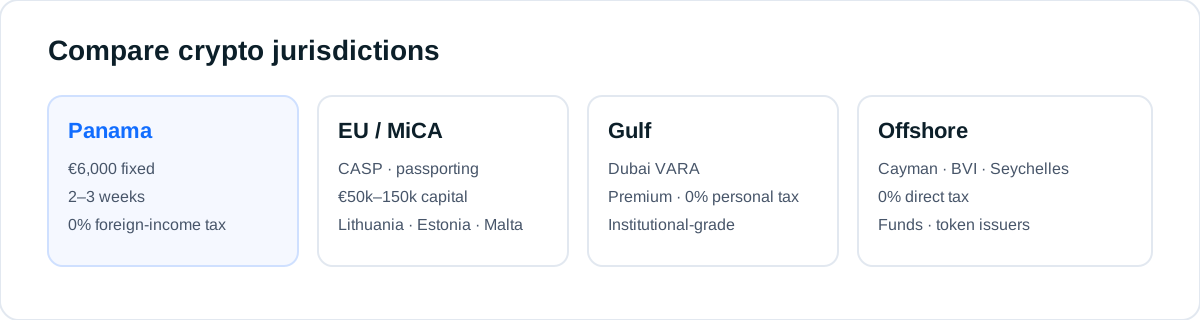
If your business targets EU clients or operates from Cyprus, you need this licence. Exemptions are limited to fully decentralised protocols with no intermediary, but most commercial models require authorisation. Even if you are a non-EU firm, you must establish a Cyprus entity and obtain the licence to serve EU clients. For a faster and cheaper alternative, consider Panama at a flat EUR 6,000.
License Type and Regulator
The Cyprus crypto license is a single CASP authorisation under MiCA, issued by the Cyprus Securities and Exchange Commission (CySEC). Unlike some jurisdictions that have multiple licence tiers, CySEC grants one licence that covers all permitted activities, subject to the capital requirement for the highest-risk service offered. The regulator is known for its strong but fair approach, with a focus on investor protection and anti-money laundering (AML) compliance.
CySEC is also a member of the European Securities and Markets Authority (ESMA), ensuring alignment with EU-wide standards. For comparison, Estonia and Lithuania offer similar MiCA-compliant licences, but Cyprus stands out for its tax efficiency and established financial ecosystem. CySEC requires fit and proper assessments for all key personnel, including directors and shareholders with significant influence.
Cost and Timeline
The cost of obtaining a Cyprus crypto license varies depending on the complexity of your business model and the services you offer. Below is an indicative breakdown. Exact pricing is confirmed in a consultation with Consulting24.
| Item | Estimated Cost (EUR) |
|---|---|
| Application fee to CySEC | 10,000 - 20,000 |
| Legal and compliance setup | 30,000 - 60,000 |
| AML/KYC policy development | 5,000 - 15,000 |
| Audit and financial statements | 5,000 - 10,000 |
| Ongoing annual compliance | 15,000 - 30,000 |
| Total estimated (first year) | 65,000 - 135,000 |
The licensing timeline typically ranges from 6 to 12 months, depending on the completeness of your application and CySEC's workload. Delays often occur if documentation is incomplete or if the regulator requests additional information. For a faster route, consider Lithuania with a 3-4 month timeline, or Panama at a flat EUR 6,000 with a 2-3 month process.
Capital Requirement
Under MiCA, the minimum capital requirement for a CASP in Cyprus depends on the type of services provided. The tiers are:
- EUR 50,000 for services such as reception and transmission of orders, execution of orders on behalf of clients, and providing advice.
- EUR 125,000 for services including custody and administration of crypto assets on behalf of clients, and operation of a trading platform.
- EUR 150,000 for services that involve placing crypto assets without a firm commitment, or operating a multilateral trading facility.
These capital amounts must be held as own funds and cannot be used for operational expenses. CySEC may require additional capital based on your risk profile, for example if you hold client assets or have a high volume of transactions. For comparison, Poland and Czech Republic have similar MiCA-aligned requirements, but Cyprus offers a more favourable tax environment. If you offer multiple services, the highest capital tier applies.
Tax Treatment
Cyprus offers one of the most attractive corporate tax regimes in the EU for crypto businesses. The standard corporate income tax rate is 12.5%, one of the lowest in Europe. Additionally:
- Capital gains from the sale of crypto assets held as investments are generally exempt from tax if they are not trading profits.
- No withholding tax on dividends paid to non-resident shareholders.
- No capital gains tax on disposal of shares (subject to conditions).
- VAT treatment: Crypto-to-fiat exchanges are exempt from VAT; crypto-to-crypto transactions are also exempt under current guidance.
It is essential to obtain a tax ruling from the Cyprus Tax Department to confirm your specific treatment. Consulting24 can coordinate with local tax advisors as part of your licensing journey. For a jurisdiction with no corporate tax at all, see Panama.
Allowed Activities
A Cyprus CASP licence permits the following activities under MiCA:
- Reception and transmission of orders for crypto assets
- Execution of orders on behalf of clients
- Placing of crypto assets
- Providing advice on crypto assets
- Portfolio management of crypto assets
- Custody and administration of crypto assets on behalf of clients
- Operation of a crypto asset trading platform
- Exchange of crypto assets for fiat currency or other crypto assets
You may also offer staking services if they fall under custody or portfolio management. CySEC may impose additional conditions for complex activities, such as margin trading or derivatives. For a broader comparison of jurisdictions, see our jurisdictions page. The licence does not cover services related to asset-referenced tokens or e-money tokens, which require separate authorisation under MiCA.
Step-by-Step Application Process
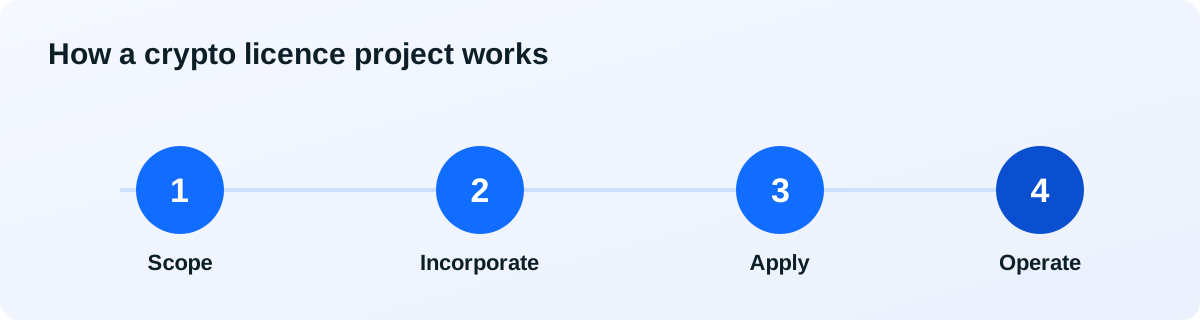
The application process for a Cyprus crypto license involves several stages. Consulting24 advises and coordinates each step:
- Pre-application assessment: We review your business model, identify the applicable capital tier, and prepare a gap analysis. This includes a fit and proper check on all key personnel.
- Legal entity setup: Incorporate a Cyprus company (usually a private limited liability company) with a registered office and local directors. The company must have substance in Cyprus, including a physical office and local management.
- Documentation preparation: Draft the AML/KYC policy, business plan, risk management framework, and organisational chart. Appoint a compliance officer and a money laundering reporting officer (MLRO). All documents must be in English or Greek.
- Application submission: File the application with CySEC, including all supporting documents and the application fee. CySEC will acknowledge receipt and begin its review.
- CySEC review: The regulator assesses your application, may request additional information, and conducts interviews with key personnel. This stage can take 3-6 months.
- Approval and licensing: Once satisfied, CySEC grants the licence. You must maintain ongoing compliance, including regular reporting and audits. The licence is valid indefinitely but subject to annual renewal fees.
The entire process typically takes 6-12 months. For a faster alternative, consider Lithuania (3-4 months) or Panama (2-3 months, flat EUR 6,000).
Banking and Payment Services
Opening a bank account for a crypto business in Cyprus can be challenging due to perceived risk. However, Cyprus has a growing number of crypto-friendly banks and payment processors. Options include:
- Traditional banks: Bank of Cyprus, Hellenic Bank (with strict compliance requirements, including proof of AML policies and source of funds).
- EMI accounts: Electronic money institutions like Revolut, Monese, or specialised crypto-friendly EMIs such as SatchelPay or CoinPayments.
- Payment processors: Services that facilitate fiat on/off ramps for crypto exchanges, e.g., Simplex, MoonPay, or XanPool.
Consulting24 can help you prepare the necessary documentation to present to banks, including your AML policy, source of funds, and business plan. We also coordinate with local partners who have established relationships with financial institutions. It is advisable to open a bank account before applying for the licence, as CySEC may require proof of banking arrangements.
Benefits of a Cyprus Crypto License
Cyprus offers several advantages for crypto founders:
- EU passporting: Once licensed, you can serve clients across all EU/EEA member states without additional licensing.
- Low corporate tax: 12.5% corporate tax rate, with potential exemptions on capital gains.
- Established financial centre: Access to a mature banking and legal ecosystem, with English widely spoken.
- Regulatory clarity: MiCA provides a clear, harmonised framework, reducing uncertainty.
- Skilled workforce: Cyprus has a pool of experienced compliance and finance professionals.
However, the cost and timeline are higher than in some other jurisdictions. For a budget-friendly option, Panama offers a flat EUR 6,000 fee with no capital requirement, though without EU passporting. For a faster EU route, Lithuania offers a 3-4 month timeline.
Compliance and Ongoing Obligations
After obtaining the licence, you must comply with ongoing requirements:
- Annual AML audit by an external auditor, with results reported to CySEC.
- Regular reporting to CySEC: quarterly transaction reports, annual financial statements, and compliance reports.
- Maintenance of own funds at the required capital level at all times.
- Transaction monitoring and suspicious activity reporting to the Cyprus Financial Intelligence Unit.
- Staff training on AML/CFT at least annually, with records kept.
- CySEC inspections and on-site visits, typically every 1-2 years.
Failure to comply can result in fines, suspension, or revocation of the licence. Consulting24 provides ongoing compliance support to ensure you meet your obligations. This is general guidance, not legal advice. For a jurisdiction with lighter ongoing requirements, consider Panama.
Common Mistakes in the Application
Founders often make the following errors when applying for a Cyprus crypto license:
- Incomplete documentation: Missing or outdated AML policies, business plans, or organisational charts. CySEC requires detailed and current documents.
- Underestimating capital: Not holding sufficient own funds for the intended service tier, leading to rejection or delays.
- Poor fit and proper assessment: Directors or shareholders with adverse backgrounds (e.g., previous regulatory sanctions) can derail the application.
- Ignoring local substance: CySEC expects a real presence in Cyprus, including a registered office, local directors, and staff. A virtual office is not sufficient.
- Inadequate risk management: Failing to demonstrate strong risk management frameworks, especially for AML/CFT and cybersecurity.
To avoid these pitfalls, work with an experienced advisor like Consulting24. We conduct a thorough pre-assessment to identify and address issues before submission.
Alternatives and Comparison
Cyprus is one of several EU jurisdictions offering MiCA-compliant CASP licences. Below is a comparison with two popular alternatives:
| Jurisdiction | Cost (First Year) | Timeline | Capital Requirement | Corporate Tax |
|---|---|---|---|---|
| Cyprus | EUR 65,000-135,000 | 6-12 months | EUR 50,000-150,000 | 12.5% |
| Lithuania | EUR 30,000-60,000 | 3-4 months | EUR 50,000-150,000 | 15% |
| Panama | EUR 6,000 flat | 2-3 months | None | 0% (territorial) |
Panama offers the lowest cost and fastest timeline, but does not provide EU passporting. Lithuania is faster and cheaper than Cyprus but has a higher corporate tax rate. Your choice depends on your target market, budget, and timeline. Consulting24 can help you decide: we deliver directly in Lithuania and Panama, and advise on Cyprus.
Frequently asked questions
What is the minimum capital for a Cyprus crypto license?
Under MiCA, the minimum capital is EUR 50,000 for basic services (e.g., order execution), EUR 125,000 for custody or trading platforms, and EUR 150,000 for placing services. The highest tier applicable to your services must be maintained as own funds.
How long does it take to get a Cyprus crypto license?
The typical timeline is 6 to 12 months from application submission to approval. Delays can occur if documentation is incomplete or if CySEC requests additional information. Pre-application preparation can reduce the timeline.
What is the corporate tax rate for crypto businesses in Cyprus?
The standard corporate tax rate is 12.5%, one of the lowest in the EU. Capital gains from crypto investments may be exempt, and no withholding tax on dividends to non-residents applies. A tax ruling is recommended.
Can I passport my Cyprus license to other EU countries?
Yes, a Cyprus CASP licence under MiCA allows passporting to all EU/EEA member states, meaning you can serve clients across the region without additional licensing.
What are the ongoing compliance requirements?
Ongoing obligations include annual AML audits, quarterly and annual reporting to CySEC, maintenance of own funds, transaction monitoring, staff training, and readiness for CySEC inspections. Non-compliance can lead to fines or licence revocation.
Is a physical office required in Cyprus?
Yes, CySEC requires a registered office and local substance, including a physical address, local directors, and staff. A virtual office is not sufficient. This is part of the fit and proper assessment.
What activities are allowed under a Cyprus CASP licence?
Allowed activities include exchange (fiat-to-crypto and crypto-to-crypto), custody, order execution, portfolio management, advice, and operation of a trading platform. Staking may be included under custody or portfolio management.
How does Cyprus compare to Panama for crypto licensing?
Panama offers a flat EUR 6,000 fee, no capital requirement, and a 2-3 month timeline, but no EU passporting. Cyprus costs more (EUR 65,000-135,000) and takes longer (6-12 months) but provides access to the EU market and a 12.5% tax rate.
Can Consulting24 help with my Cyprus crypto license application?
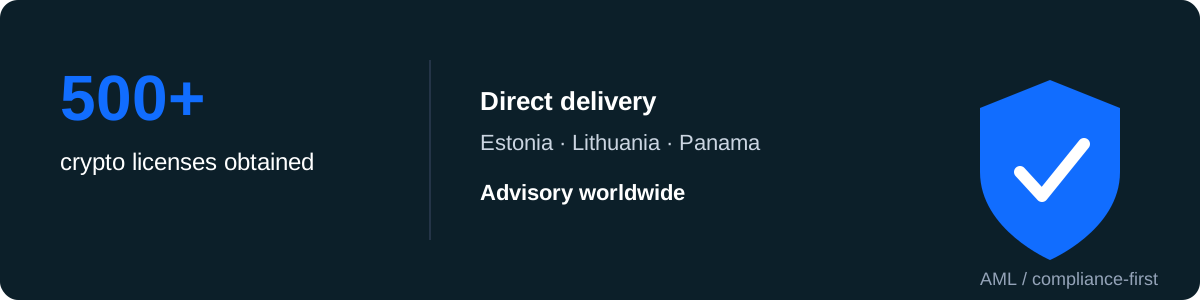
Consulting24 advises and coordinates Cyprus license applications, using our experience with over 500 licenses. We handle pre-assessment, documentation, and liaison with CySEC. For direct delivery, we serve Estonia, Lithuania, and Panama.
What are common reasons for rejection of a Cyprus crypto license application?
Common reasons include incomplete documentation, insufficient capital, poor fit and proper background of key personnel, lack of local substance, and inadequate AML/CFT frameworks. A thorough pre-assessment can mitigate these risks.
Official sources
Related jurisdictions

Talk to a crypto-licensing expert
500+ licenses across Estonia, Lithuania, Panama and beyond. Tell us your model and we'll map the right route, honestly.
💬 Talk to an expertFree consultationGeneral guidance, not legal advice. Rules and fees evolve, and we confirm current requirements for your case.