Crypto Banking and Payment Rails in Romania: What to Expect in 2026

Romania is emerging as a notable hub for crypto innovation, particularly in the area of crypto banking and payment rails. With the full implementation of the EU's Markets in Crypto-Assets (MiCA) regulation in 2026, the country offers a regulated environment for crypto service providers. However, the path to integrating crypto banking and payment services in Romania comes with specific requirements, costs, and timelines that founders must understand.
This guide provides an accurate, up-to-date overview of what to expect when setting up crypto banking and payment rails in Romania in 2026. We compare the local environment with alternatives like Panama, which offers a flat-fee licensing model, and other jurisdictions we serve. Whether you are a startup or an established firm, this article will help you make an informed decision.
We cover the regulatory framework, costs, capital requirements, tax treatment, step-by-step process, banking challenges, and common pitfalls. By the end, you will have a clear picture of whether Romania fits your business or if a jurisdiction like Panama is a better choice.
What Are Crypto Banking and Payment Rails?
Crypto banking and payment rails refer to the infrastructure that enables the transfer, storage, and conversion of cryptocurrencies into fiat currency. This includes services like crypto-to-fiat on-ramps, merchant payment processing, virtual IBANs, and custodial wallets. In Romania, these services are regulated under MiCA, which classifies them as crypto-asset services requiring a license.
Founders looking to offer such services must manage the regulatory framework set by the Romanian Financial Supervisory Authority (ASF) and the National Bank of Romania (BNR). The key is to understand the specific license categories and operational requirements. For example, a crypto exchange offering fiat on-ramps needs both a CASP license and potentially a payment institution license from the BNR. In contrast, Panama offers a single license covering a broad range of activities without such dual regulation.
Payment rails also include integrations with traditional banking systems like SEPA and SWIFT. Romanian licensed entities can access these through partner banks, but the process is often complex. Many founders find it easier to set up in Panama, where banking relationships are more straightforward.
Who Needs Crypto Banking and Payment Services in Romania?
This section is relevant for:
- Crypto exchanges wanting to offer fiat on-ramps and off-ramps
- Payment processors enabling merchants to accept crypto
- Neobanks integrating crypto wallets
- Remittance companies using crypto for cross-border transfers
- Any business that handles crypto-to-fiat conversions as part of its service
If your business model involves holding customer funds or facilitating payments, you will likely need a crypto license in Romania. For instance, a startup building a crypto debit card must comply with both ASF and BNR regulations. This dual oversight can increase costs and time. In comparison, Panama has a single regulator for crypto and no additional payment license requirement for most activities, reducing complexity.
We have helped many founders assess whether Romania is the right fit. For those targeting the EU market, the CASP passporting benefit is strong. But for global or Latin American focus, Panama may be more practical.
License Type and Regulator
In Romania, the primary regulator for crypto-asset service providers is the Financial Supervisory Authority (ASF). Under MiCA, the license is known as a Crypto-Asset Service Provider (CASP) authorization. This covers services such as custody, exchange, and payment services involving crypto-assets.
The National Bank of Romania (BNR) also plays a role when fiat currency is involved, particularly for payment services. However, for pure crypto services, the ASF is the main authority. The CASP license is recognized across the EU under the MiCA passporting regime. This means a Romanian license allows you to serve clients in all 27 EU member states without additional local licenses.
It is important to note that the ASF has specific requirements for AML/KYC policies, risk management, and corporate governance. These are aligned with EU directives but enforced locally. Consulting24 can help you prepare the documentation to meet ASF standards. For a simpler regulatory environment, consider Panama, where the regulator is the Superintendency of Banks and the process is more streamlined.
Cost and Timeline for a Romanian Crypto License
| Item | Estimated Cost (EUR) | Timeline |
|---|---|---|
| Application fee | 2,000 - 5,000 | N/A |
| Legal and compliance setup | 15,000 - 30,000 | 2-3 months |
| Minimum capital requirement | 50,000 - 150,000 (depending on services) | N/A |
| Banking setup and due diligence | 5,000 - 10,000 | 1-2 months |
| Total estimated cost (excluding capital) | 20,000 - 50,000 | 6-12 months |
Exact pricing depends on the complexity of your business model. For comparison, Panama offers a flat fee of EUR 6,000 for a crypto license, with a faster timeline of 2-3 months. Consulting24 can provide a detailed breakdown during a consultation. The timeline in Romania can extend if the ASF requests additional information or if banking setup delays occur. We recommend starting the process with a thorough pre-assessment to avoid surprises.
Capital Requirement
Under MiCA, capital requirements are tiered based on the type of crypto-asset services offered:
- EUR 50,000 for custody and transfer services
- EUR 125,000 for exchange services (crypto-to-fiat or crypto-to-crypto)
- EUR 150,000 for trading platforms and full-service providers
These amounts must be maintained as own funds and cannot be used for operational expenses. For example, if you plan to offer both custody and exchange services, the higher threshold of EUR 125,000 applies. In contrast, Panama has no minimum capital requirement for its crypto license, making it a more accessible option for startups and smaller firms. This capital must be deposited in a Romanian bank account and proven to the ASF during the application. Consulting24 can assist with the capital deposit process and provide guidance on meeting the requirements.
Tax Treatment of Crypto Banking and Payments in Romania
Romania taxes crypto profits as income from other sources at a rate of 10% for individuals. For companies, corporate income tax is 16% on profits. VAT is not applicable on crypto-to-fiat exchanges, but payment services may be subject to VAT. Additionally, there is a specific tax on gambling and some financial transactions that could apply depending on the activity.
It is important to note that tax treatment can vary based on the specific activity. For instance, mining income is treated differently than trading income. Consulting with a local tax advisor is recommended. For a more tax-friendly environment, many founders consider Panama, which has no capital gains tax on crypto and a territorial tax system that only taxes income sourced within Panama. This can result in significant savings for global operations.
We advise all clients to structure their tax affairs carefully. Panama's tax regime is one of the main reasons it is a preferred jurisdiction for crypto businesses.
Allowed Activities Under a Romanian Crypto License
A CASP license in Romania allows the following activities:
- Custody and administration of crypto-assets on behalf of clients
- Operation of a trading platform for crypto-assets
- Exchange of crypto-assets for fiat currency
- Exchange of crypto-assets for other crypto-assets
- Execution of orders on behalf of clients
- Placement of crypto-assets
- Receiving and transmitting orders for crypto-assets
- Providing advice on crypto-assets
Payment services involving fiat currency may require a separate payment institution license from the BNR. For example, if you want to issue virtual IBANs or process fiat payments, you need both licenses. This dual licensing increases costs and regulatory burden. In Panama, a single crypto license covers most activities, including fiat on-ramps, without needing a separate payment license. This simplicity is a major advantage for many founders.
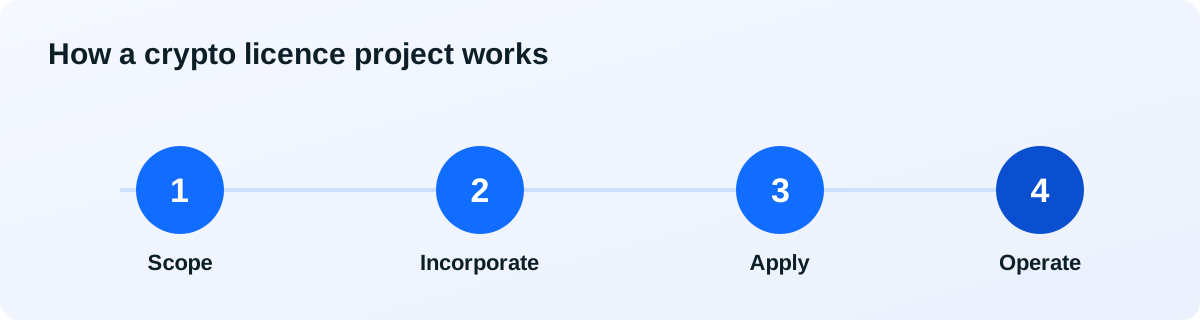
Step-by-Step Process to Obtain a Romanian Crypto License
- Pre-assessment: Evaluate your business model and determine the required license type. Consulting24 offers a free initial consultation to assess eligibility.
- Company incorporation: Register a legal entity in Romania (e.g., SRL). This typically takes 2-4 weeks.
- Documentation: Prepare a business plan, AML/KYC policies, risk management framework, and internal controls. This is the most time-consuming step, often taking 1-2 months.
- Capital deposit: Ensure the minimum capital is held in a Romanian bank account. We can help you open a corporate account.
- Application submission: Submit the application to the ASF with all supporting documents. The ASF reviews within 3-6 months.
- Review and approval: The ASF may request additional information. Respond promptly to avoid delays.
- Operational setup: Once approved, set up banking and payment rails, and begin operations. This includes integrating with payment providers and finalizing your tech stack.
Consulting24 can assist with the entire process, from company setup to license application. For a faster and simpler route, consider Panama, where we deliver directly with a timeline of 2-3 months.
Banking and Payment Partner Considerations
Securing a banking partner in Romania can be challenging for crypto businesses. Many traditional banks are cautious due to regulatory uncertainty. However, some banks are open to working with licensed entities. Key considerations:
- Choose a bank with a clear crypto policy. Banks like Banca Transilvania and BRD have shown openness, but each case is assessed individually.
- Prepare for enhanced due diligence and KYC. Expect to provide detailed business plans, source of funds, and compliance documentation.
- Consider using payment service providers (PSPs) that specialize in crypto, such as Coinbase Commerce or BitPay, for merchant services.
- Virtual IBAN providers can offer alternative payment rails. Providers like Railsbank or TransferWise (now Wise) may be options, but they also have crypto policies.
In Panama, banking is more accessible, with several banks accepting crypto-related businesses. We have established relationships with banks in Panama that understand the crypto industry. This can save months of effort.
Benefits of a Romanian Crypto License
- EU passporting: Once licensed, you can operate across all EU member states without additional licenses. This is a major advantage for targeting the European market.
- Regulatory clarity: MiCA provides a clear legal framework, reducing uncertainty for businesses and investors.
- Access to the European market: Serve customers in the entire EU, which has a population of over 450 million.
- Established financial infrastructure: Romania has a growing fintech ecosystem, with a skilled workforce and competitive costs.
However, the cost and time involved may not suit all businesses. For those seeking a lighter regulatory burden, Panama offers a compelling alternative with lower costs and faster setup. We help clients weigh these trade-offs based on their specific goals.
Compliance and Trust: What You Need to Know
Compliance is critical for maintaining your license. Key requirements include:
- AML/CFT policies aligned with EU directives. This includes customer due diligence, transaction monitoring, and suspicious activity reporting.
- Regular reporting to the ASF, including financial statements, transaction volumes, and compliance audits.
- Audits by external auditors. You must appoint an independent auditor to review your operations annually.
- Data protection under GDPR. Ensure your systems comply with EU data privacy laws.
- Consumer protection measures, such as clear terms of service, complaint handling, and segregation of client funds.
This is general guidance, not legal advice. Always consult with a qualified legal professional. Consulting24 can help you build a strong compliance framework, from policy drafting to implementation. For a simpler compliance environment, Panama has less onerous requirements, though it still expects strong AML practices.
Common Mistakes to Avoid
- Underestimating capital requirements: Ensure you have sufficient funds before applying. The capital must be liquid and held in a Romanian bank account.
- Poor AML documentation: Incomplete policies can lead to rejection. Use templates tailored to Romanian regulations.
- Ignoring tax obligations: Plan for corporate and personal taxes. Romania has a 16% corporate tax and 10% individual tax on crypto gains.
- Choosing the wrong bank: Not all banks support crypto; research beforehand. Start banking discussions early.
- Rushing the process: The timeline is typically 6-12 months; plan accordingly. Expect delays if documentation is incomplete.
- Overlooking BNR requirements: If your service involves fiat payments, you may need a separate payment license. This is often missed.
Learning from these mistakes can save time and money. For a simpler process, consider Panama, where we handle everything efficiently and avoid these pitfalls.
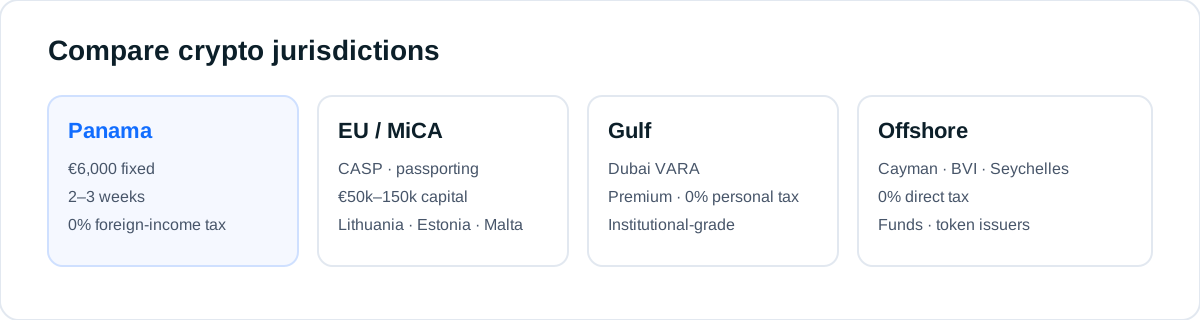
Alternatives to Romania: Comparison with Panama and Other Jurisdictions
Panama
Panama offers a crypto license at a flat fee of EUR 6,000, with no minimum capital requirement and a faster timeline of 2-3 months. It is ideal for businesses targeting Latin America and global markets. However, it does not provide EU passporting. For many founders, the cost and speed advantages outweigh the lack of EU access.
Lithuania
Lithuania is another EU option with a simpler process than Romania, but MiCA capital requirements apply. The timeline is around 4-6 months. Consulting24 delivers directly in Lithuania. See our comparison page for a detailed analysis.
Estonia
Estonia has a mature crypto licensing regime, but recent changes have increased costs and compliance requirements. The timeline is 3-6 months. We offer direct delivery in Estonia as well. Learn more on our Estonia page.
Each jurisdiction has trade-offs. Consulting24 helps you choose the best fit based on your target market, budget, and timeline. We provide honest advice, even if it means recommending a jurisdiction we do not serve directly.
How Consulting24 Can Help
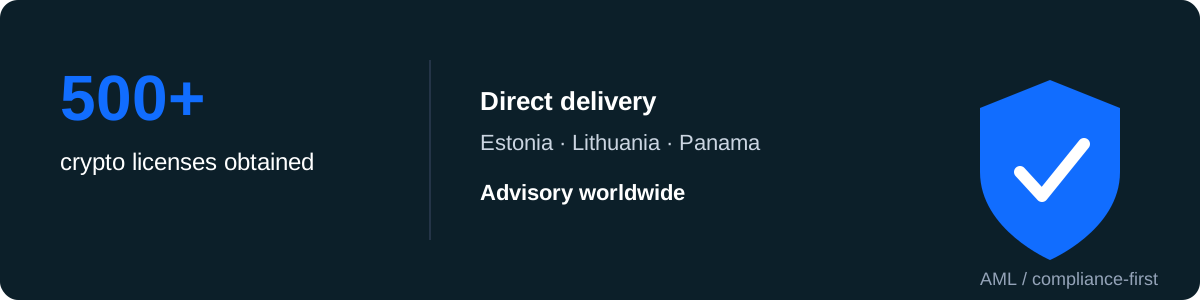
Consulting24 has obtained over 500 crypto licenses worldwide. We deliver directly in Estonia, Lithuania, and Panama, and advise and coordinate for other jurisdictions including Romania. Our services include company setup, license application, compliance documentation, and banking introductions.
We do not guarantee approval, but our track record speaks for itself. Contact us via WhatsApp or book a consultation to discuss your project. We will provide a clear assessment of your options and a step-by-step plan. Whether you choose Romania or another jurisdiction, we are here to guide you.
Frequently asked questions
What is the primary regulator for crypto in Romania?
The Financial Supervisory Authority (ASF) is the main regulator for crypto-asset service providers. The National Bank of Romania (BNR) oversees payment services involving fiat currency. For most crypto activities, you will deal primarily with the ASF.
How much does a Romanian crypto license cost?
Total costs range from EUR 20,000 to EUR 50,000, excluding the minimum capital requirement of EUR 50,000 to 150,000. Exact figures depend on your business model and the complexity of your application.
What is the timeline for obtaining a license in Romania?
The process typically takes 6 to 12 months from company incorporation to license approval, depending on the completeness of your application and the ASF's review speed.
Can I use a Romanian crypto license to operate across the EU?
Yes, under MiCA, a CASP license from Romania allows you to passport your services to other EU member states without additional licensing. This is a key benefit for EU-focused businesses.
What are the capital requirements for a crypto license in Romania?
Minimum capital ranges from EUR 50,000 for custody services to EUR 150,000 for trading platforms. These amounts must be maintained as own funds and deposited in a Romanian bank account.
Is it difficult to open a bank account for a crypto business in Romania?
Yes, it can be challenging. Many traditional banks are cautious. You need a licensed entity and strong compliance documentation. Some banks like Banca Transilvania are more open. Consulting24 can help with introductions.
What taxes apply to crypto businesses in Romania?
Corporate income tax is 16% on profits. Individual crypto gains are taxed at 10%. VAT may apply to payment services. Panama offers a more tax-friendly regime with no capital gains tax.
What activities are allowed under a Romanian CASP license?
Allowed activities include custody, exchange (crypto-to-fiat and crypto-to-crypto), trading platform operation, order execution, and advisory services. Payment services involving fiat may need a separate license.
Can Consulting24 help with a Romanian crypto license?
Yes, we advise and coordinate for Romania. We deliver directly in Estonia, Lithuania, and Panama. For Romania, we provide guidance, documentation support, and banking introductions.
What are the main alternatives to Romania for crypto licensing?
Panama offers a flat fee of EUR 6,000 with no minimum capital and a 2-3 month timeline. Lithuania and Estonia are EU alternatives with faster processes but similar MiCA capital requirements.
What are common mistakes when applying for a Romanian crypto license?
Common mistakes include underestimating capital, poor AML documentation, ignoring tax obligations, choosing the wrong bank, and rushing the process. Proper planning can avoid these issues.
Does Romania require a physical office for a crypto license?
Yes, you need a registered office in Romania. This can be a virtual office for licensing purposes, but you must have a physical address for correspondence and regulatory inspections.
Official sources
Related jurisdictions

Talk to a crypto-licensing expert
500+ licenses across Estonia, Lithuania, Panama and beyond. Tell us your model and we'll map the right route, honestly.
💬 Talk to an expertFree consultationGeneral guidance, not legal advice. Rules and fees evolve, and we confirm current requirements for your case.