Crypto Banking and Payment Rails in Cyprus: What to Expect in 2026

Cyprus has become a notable hub for crypto businesses, especially those seeking reliable crypto banking and payment rails. As of 2026, the EU's MiCA regulation is fully in force, meaning Cyprus now offers a comprehensive Crypto Asset Service Provider (CASP) license. This framework provides clarity for crypto founders looking to integrate fiat on-ramps, payment processing, and banking services within a regulated environment.
For founders exploring Panama or other jurisdictions, Cyprus presents a compelling alternative with its EU passporting rights. However, the process involves specific capital requirements, tax considerations, and compliance obligations. This guide covers what to expect from crypto banking and payment rails in Cyprus, including costs, timelines, and practical steps to set up your operations.
What Are Crypto Banking and Payment Rails in Cyprus?
Crypto banking and payment rails refer to the infrastructure that allows crypto businesses to hold fiat currency, process payments, and convert between crypto and fiat. In Cyprus, this is enabled through the CASP license, which authorizes services like custody, exchange, and payment processing. The Cyprus Securities and Exchange Commission (CySEC) regulates these activities under MiCA, ensuring compliance with anti-money laundering (AML) and counter-terrorist financing (CTF) rules.
Key components include:
- Fiat bank accounts for crypto companies (often with local or EU banks)
- Payment processing for crypto-to-fiat transactions
- Integration with SEPA and SWIFT for cross-border transfers
- Stablecoin issuance and management (if licensed)
Cyprus offers a stable regulatory environment, but banking access remains a challenge. Many crypto firms partner with specialized payment service providers or neobanks to obtain fiat rails.
Who Needs a Crypto Banking and Payment License in Cyprus?
Any business that provides crypto-to-fiat exchange, custody of client assets, or payment processing for crypto transactions must obtain a CASP license in Cyprus. This includes:
- Cryptocurrency exchanges (centralized and decentralized)
- Payment processors that handle crypto transactions
- Wallet providers offering custodial services
- Stablecoin issuers
- Brokers and dealers in crypto assets
If your business only offers non-custodial software or advisory services, you may not need a license. However, any involvement with client funds or fiat conversion requires authorization. Consulting24 helps founders determine if their business model falls under the CASP scope.
License Type and Regulator in Cyprus
The relevant license is the Crypto Asset Service Provider (CASP) license, issued by the Cyprus Securities and Exchange Commission (CySEC). CySEC is the primary financial regulator, known for its rigorous but clear standards. The CASP license aligns with MiCA, which categorizes services into classes with different capital requirements.
CySEC also oversees compliance with AML/CTF laws, requiring firms to implement strong internal controls, appoint a compliance officer, and conduct regular audits. The regulator maintains a public register of licensed CASPs, enhancing transparency for clients and partners.
Cost and Timeline for a Cyprus Crypto License
The total cost for obtaining a CASP license in Cyprus varies based on service scope and complexity. Below is a summary of typical fees and timelines. Note that exact figures are confirmed during a consultation, as they depend on your specific business model.
| Item | Estimated Cost (EUR) | Timeline |
|---|---|---|
| Application fee (CySEC) | 10,000 - 30,000 | Paid upfront |
| Legal and consultancy fees | 20,000 - 50,000 | Throughout process |
| Minimum capital requirement | 50,000 - 150,000 (depending on service class) | Must be held from start |
| Annual supervisory fees | 5,000 - 15,000 | Yearly |
| Total setup cost (excl. capital) | 30,000 - 80,000 | 4-8 months |
Timelines typically range from 4 to 8 months, but can extend if additional documentation is required. Consulting24 advises on cost optimization and timeline management.
Capital Requirement for Cyprus Crypto License
Under MiCA, capital requirements are tiered by service class. For Cyprus CASP licenses, the minimum capital is as follows:
- EUR 50,000 for basic services like custody and exchange (Class 1)
- EUR 125,000 for services including payment processing (Class 2)
- EUR 150,000 for full-service providers including proprietary trading (Class 3)
These funds must be held in a bank account and cannot be used for operational expenses. They serve as a buffer for client protection. Consulting24 can help structure your capital allocation to meet these requirements efficiently.
Tax Treatment for Crypto Businesses in Cyprus
Cyprus offers a favorable tax regime for crypto companies. The corporate income tax rate is 12.5%, one of the lowest in the EU. Capital gains from crypto trading are generally tax-exempt if the company is not a financial institution. However, income from crypto mining, staking, or payment processing is taxable as ordinary income.
VAT treatment: Crypto-to-fiat transactions are exempt from VAT, while crypto-to-crypto trades may be subject to VAT depending on the nature of the asset. Cyprus also has a participation exemption for dividends and capital gains from subsidiaries, which can benefit holding structures. It is essential to get tailored tax advice, as individual circumstances vary.
Allowed Activities Under a Cyprus CASP License
A Cyprus CASP license permits a wide range of activities, including:
- Exchange between crypto and fiat currency
- Exchange between one or more forms of crypto assets
- Custody and administration of crypto assets on behalf of clients
- Execution of orders for crypto assets
- Placement of crypto assets (underwriting)
- Reception and transmission of orders for crypto assets
- Providing advice on crypto assets
- Portfolio management of crypto assets
Stablecoin issuance is also allowed but requires additional compliance with e-money regulations. The license does not cover derivatives or securities, which fall under MiFID II. Consulting24 can map your services to the correct license scope.
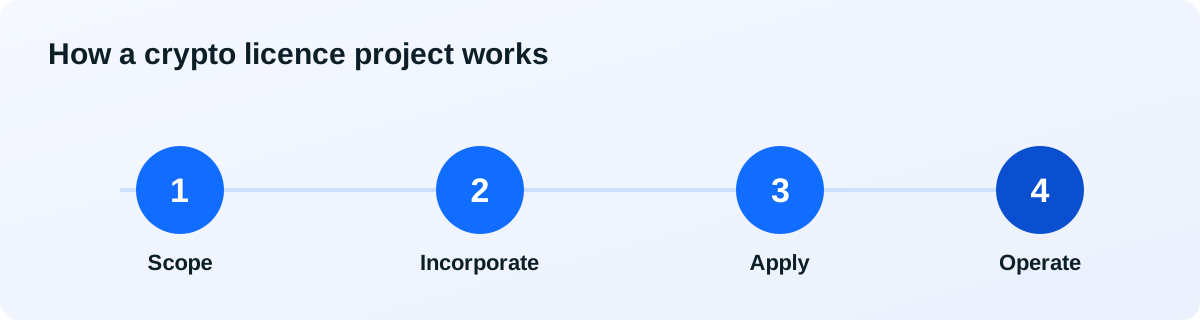
Step-by-Step Process to Obtain a Cyprus Crypto License
The application process involves several stages:
- Pre-application consultation: Assess your business model and determine the appropriate service class.
- Company incorporation: Register a Cyprus company with a local registered office and director.
- Document preparation: Draft business plan, AML policies, risk assessment, and compliance manual.
- Capital deposit: Open a bank account and deposit the required minimum capital.
- Submit application: File with CySEC, including all supporting documents and fees.
- Review and interview: CySEC reviews the application, may request clarifications, and conducts interviews with key personnel.
- License issuance: Upon approval, the license is granted, and the company is added to the public register.
Post-licensing, ongoing compliance includes regular reporting, audits, and AML training. Consulting24 manages the entire process, from incorporation to license approval.
Banking and Payment Rails in Cyprus
Access to banking is a critical challenge for crypto firms in Cyprus. Traditional banks are often cautious, but several options exist:
- Local banks: Bank of Cyprus, Hellenic Bank, and Eurobank offer accounts to licensed CASPs, subject to due diligence.
- EU neobanks: Revolut, N26, and others provide business accounts for crypto companies, though they may restrict certain activities.
- Payment processors: Specialized providers like BCB Group, Coinbase Commerce, or Wyre integrate with SEPA and SWIFT for fiat rails.
For payment rails, Cyprus supports SEPA instant transfers, making euro settlements fast. Many firms also use stablecoins for internal transfers to reduce friction. Consulting24 can introduce you to banking partners that accept crypto clients.
Benefits of a Cyprus Crypto License
The Cyprus CASP license offers several advantages:
- EU passporting: Once licensed, you can operate across all EU member states without additional licenses, under MiCA.
- Low corporate tax: 12.5% rate, with exemptions for capital gains and dividends.
- Regulatory clarity: CySEC provides clear guidelines and a supportive environment for crypto innovation.
- Skilled workforce: Access to a pool of multilingual professionals with expertise in finance and tech.
- Time zone: Convenient for both European and Asian markets.
Compared to other EU jurisdictions, Cyprus offers a faster licensing process (4-8 months) and lower capital requirements for basic services. However, the cost is higher than in Panama, where a flat fee of EUR 6,000 covers company setup and license.
Compliance and Trust in Cyprus
CySEC imposes strict compliance obligations to maintain market integrity. Key requirements include:
- AML/CTF policies: Customer due diligence, transaction monitoring, and suspicious activity reporting.
- Governance: Appointment of a compliance officer, a money laundering reporting officer (MLRO), and a board with at least two independent directors.
- Audit: Annual financial audits by an approved auditor.
- Reporting: Quarterly and annual reports to CySEC on transactions, client assets, and financial health.
These measures build trust with clients and partners. However, compliance is an ongoing cost; budget for annual supervisory fees and professional services. Consulting24 provides ongoing compliance support to ensure your firm remains in good standing.
General guidance, not legal advice. Always consult with a qualified lawyer for your specific situation.
Common Mistakes When Applying for a Cyprus Crypto License
Founders often make the following errors:
- Insufficient capital: Underestimating the capital requirement for the chosen service class.
- Poor documentation: Submitting incomplete or generic AML policies.
- Ignoring banking: Not securing a bank account before applying, causing delays.
- Overlooking ongoing costs: Forgetting annual fees, audit costs, and compliance salaries.
- Misclassifying services: Applying for the wrong license class, leading to rejection or additional fees.
To avoid these, work with an experienced advisor like Consulting24, who has handled over 500 licenses across jurisdictions.
Alternatives to Cyprus: Panama and Other Jurisdictions
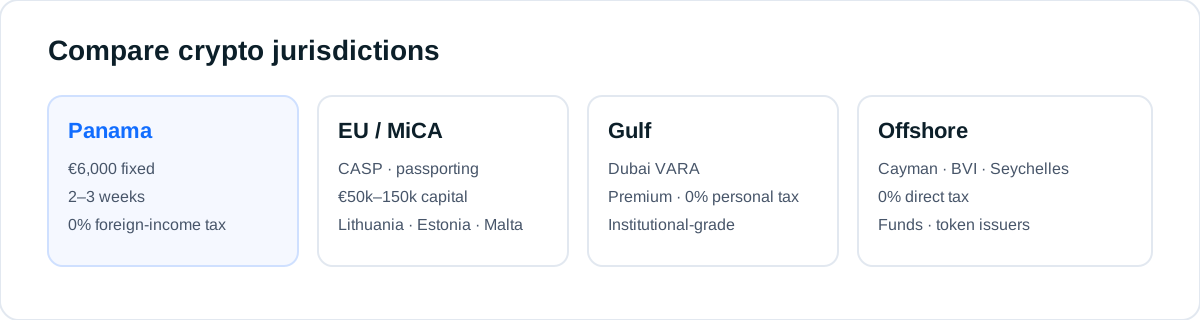
Cyprus is not the only option. For founders seeking a lower-cost entry, Panama offers a flat fee of EUR 6,000 for company setup and a crypto license. Panama has no minimum capital requirement, no corporate tax on offshore income, and a faster setup (2-4 weeks). However, Panama lacks EU passporting and may be less recognized by banks and partners.
Other alternatives include:
- Lithuania: EU member with a CASP license under MiCA, capital from EUR 125,000, setup cost around EUR 10,000-20,000, timeline 3-6 months.
- Estonia: EU member, CASP license, capital from EUR 100,000, setup cost EUR 15,000-25,000, timeline 3-5 months.
- Dubai (VARA): Non-EU, lower capital requirements (USD 50,000), but no passporting. Setup cost around USD 20,000-30,000.
Each jurisdiction has trade-offs. Consulting24 helps you compare and choose the best fit for your business model and budget.
How Consulting24 Can Help
Consulting24 (X24Consulting OU) has obtained over 500 crypto licenses worldwide. We deliver directly in Estonia, Lithuania, and Panama, and advise and coordinate in all other jurisdictions, including Cyprus. Our services include:
- Business model assessment and jurisdiction selection
- Company incorporation and bank account setup
- License application preparation and submission
- Ongoing compliance and reporting support
For Cyprus, we coordinate with local legal partners to ensure a smooth process. Contact us via WhatsApp or book a consultation to discuss your project. We do not guarantee approval, but we maximize your chances with expert preparation.
Final Thoughts on Cyprus Crypto Banking and Payment Rails
Cyprus offers a strong regulatory framework for crypto banking and payment rails, especially under MiCA. The CASP license provides EU passporting, a clear tax regime, and a supportive regulator. However, the cost and timeline are higher than in non-EU jurisdictions like Panama. For founders who value regulatory clarity and access to the EU market, Cyprus is a strong choice.
For those on a tighter budget or seeking faster setup, Panama remains an attractive alternative with its flat fee and no capital requirements. Explore our jurisdictions page for a full comparison. Whatever your choice, Consulting24 is here to guide you through the process.
Frequently asked questions
What is the minimum capital for a Cyprus crypto license?
The minimum capital depends on the service class: EUR 50,000 for basic services (Class 1), EUR 125,000 for payment processing (Class 2), and EUR 150,000 for full services (Class 3). These funds must be held in a bank account and cannot be used for operations.
How long does it take to get a Cyprus CASP license?
The typical timeline is 4 to 8 months from application to approval. Delays can occur if documentation is incomplete or if CySEC requests additional information. Pre-application preparation can speed up the process.
Can I use a Cyprus license to operate in other EU countries?
Yes, under MiCA, a Cyprus CASP license allows you to passport your services across all EU member states without needing additional licenses. This is a key advantage for firms targeting the European market.
What are the tax rates for crypto companies in Cyprus?
The corporate income tax rate is 12.5%. Capital gains from crypto trading are generally tax-exempt, but income from mining, staking, or payment processing is taxable. VAT is not applied to crypto-to-fiat transactions.
Is it difficult to open a bank account for a crypto company in Cyprus?
It can be challenging, as traditional banks are cautious. However, licensed CASPs have better chances. Options include local banks (Bank of Cyprus), EU neobanks (Revolut), and specialized payment processors. Consulting24 can assist with introductions.
What is the cost of setting up a crypto company in Cyprus?
Total setup costs (excluding capital) range from EUR 30,000 to EUR 80,000, including application fees, legal fees, and consultancy. Annual supervisory fees are EUR 5,000-15,000. Exact figures depend on your service scope.
Does Cyprus require a physical office for a crypto license?
Yes, you need a registered office in Cyprus. A physical presence is not mandatory, but you must have a local director (or a local agent) and a registered address. Many firms use serviced offices or virtual office providers.
Can I apply for a Cyprus crypto license remotely?
Yes, the application process can be handled remotely with the help of local representatives. You will need to provide documents and attend interviews (often via video call). Consulting24 manages the entire process remotely.
What are the ongoing compliance requirements after obtaining a Cyprus license?
You must submit quarterly and annual reports to CySEC, conduct annual audits, maintain AML/CTF policies, and appoint a compliance officer and MLRO. Annual supervisory fees apply. Non-compliance can result in fines or license revocation.
How does Panama compare to Cyprus for crypto licensing?
Panama offers a flat fee of EUR 6,000 for company setup and license, no minimum capital, and no corporate tax on offshore income. Setup takes 2-4 weeks. However, Panama does not provide EU passporting and may have less banking access. Cyprus is better for EU market access.
Official sources
Related jurisdictions

Talk to a crypto-licensing expert
500+ licenses across Estonia, Lithuania, Panama and beyond. Tell us your model and we'll map the right route, honestly.
💬 Talk to an expertFree consultationGeneral guidance, not legal advice. Rules and fees evolve, and we confirm current requirements for your case.